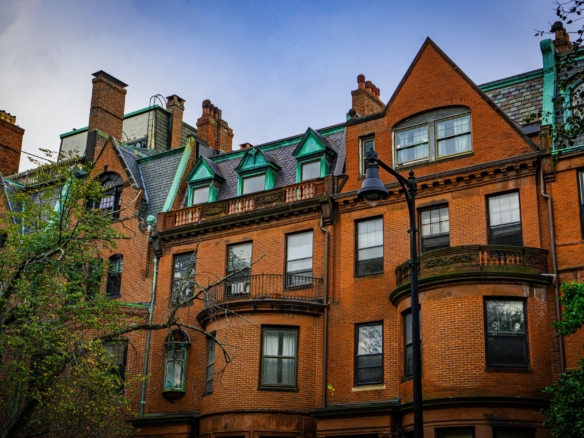
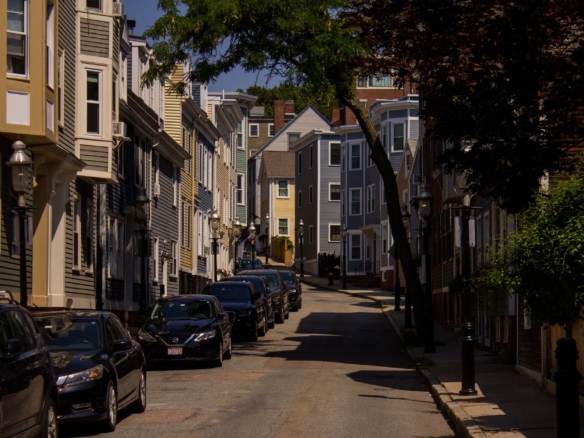
Somerville has completed one of the most remarkable urban transformations of any American city in the past two decades. The same city that was once dismissed as a gritty working-class town wedged between Cambridge and the Route 93 corridor is now one of the most sought-after places to live in Greater Boston, dense with excellent restaurants, thriving arts and music scenes, and a population of young professionals, artists, and graduate students who have collectively built something genuinely special. This guide covers everything you need to know about living in Somerville in 2026, the real experience, not a marketing brochure.
Boston Renter Intelligence Survey
How does your rent compare?
Add your numbers and get an instant read on what share of your income goes to rent, measured against what Boston renters actually report. You will also get the Q3 report free on October 7.
See how your rent compares →Check your numbers against Boston data
See what share of your income goes to rent, and how your neighborhood compares. Free, no email required.
Somerville neighborhoods: which one is right for you?
Somerville isn’t monolithic, its distinct neighborhoods have meaningfully different characters, price points, and T access that affect daily life significantly.
Davis Square is Somerville’s most beloved neighborhood, a dense concentration of independent restaurants, live music venues (The Burren, Precinct), coffee shops (Diesel Café, Bloc 11), and the Somerville Theatre that creates genuine neighborhood energy. Red Line access at Davis makes commuting effortless. Davis Square draws a mix of Tufts faculty and grad students, young professionals, and long-term Somerville residents who’ve watched the neighborhood evolve. 1BR rents: $2,200 to $2,800/month.
Union Square has emerged as Somerville’s hottest neighborhood following the Green Line Extension’s arrival at Union Square station. The food scene has become genuinely exceptional, Journeyman, Sarma, and a constellation of excellent independent restaurants have made Union Square a dining destination that draws visitors from across the metro. The neighborhood retains a genuine working-class character alongside its new restaurants and coffee shops. 1BR rents: $2,100 to $2,700/month.
Winter Hill and Magoun Square offer Somerville at its most affordable and authentic, less polished than Davis or Union, more community-oriented, and meaningfully cheaper. The Orange Line’s Sullivan Square stop provides T access. These neighborhoods appeal to buyers and renters who want Somerville’s community character without Davis Square pricing. 1BR rents: $1,800 to $2,300/month.
East Somerville has been transformed by the Green Line Extension’s East Somerville and Gilman Square stations. The neighborhood has a strong Brazilian and Central American community that has created excellent neighborhood restaurants alongside the new cafes and bars that have followed the transit investment. 1BR rents: $1,900 to $2,500/month.
Inman Square sits on the Cambridge-Somerville border and is claimed equally by both cities. Home to 1369 Coffee House, Bukowski Tavern, and several acclaimed restaurants, Inman has excellent walkability and genuine neighborhood character. 1BR rents: $2,200 to $2,900/month.
Getting around Somerville
The Green Line Extension (completed 2022) has dramatically improved Somerville’s transit connectivity. Somerville now has five T stations: Davis (Red Line), and five Green Line Extension stations, Union Square, Gilman Square, East Somerville, Ball Square, and Medford/Tufts. This network gives most Somerville residents genuine subway access within reasonable walking distance for the first time.
The Minuteman Bikeway and connections to the community path network make cycling a legitimate commuting option for many Somerville residents, particularly those heading to Cambridge or Kendall Square. The path along the Green Line Extension corridor provides protected cycling infrastructure that connects Somerville neighborhoods to the broader bike network.
Driving in Somerville is functional but not pleasant, parking is competitive, and the street grid in some neighborhoods was not designed for modern traffic volumes. For residents who need a car, residential parking permits are available and the city’s size means most destinations are within a short drive.
Somerville restaurants and food scene
Somerville’s restaurant scene has become one of the strongest in Greater Boston, a density of excellent independent restaurants across every price point and cuisine. The city’s diverse population has generated authentic ethnic restaurants in Brazilian, Portuguese, Haitian, and Central American cuisines alongside the farm-to-table and chef-driven restaurants that have followed gentrification. Key highlights: Sarma (modern mezze, Union Square), Journeyman (innovative tasting menus, Union Square), Tasting Counter (one of Boston’s most acclaimed chef’s table experiences), Highland Kitchen (creative American, Magoun Square), and Posto (excellent pizza, Ball Square). The coffee scene is exceptional, Diesel Café, Bloc 11, and Barismo set standards that rival any city in the country.
Are You a Licensed MA Real Estate Agent?
List your Boston rentals and properties free on Homzora. Zero fees. Zero commissions. Direct leads sent to you.
Somerville housing market 2026
Somerville’s housing market has been transformed by the Green Line Extension. Median home prices have risen from approximately $500,000 in 2015 to $750,000 in 2026, a 50% appreciation that reflects both the transit investment and the neighborhood’s broader desirability growth. Triple-deckers, Somerville’s signature housing type, now regularly sell for $700,000 to $950,000 depending on location and condition. Condos converted from triple-deckers represent the majority of purchase transactions and range from $450,000 for smaller units to $900,000+ for renovated units with outdoor space.
For renters, Somerville offers better value than Cambridge and South End at comparable quality. The Green Line Extension has made units near the new stations particularly competitive, expect to act quickly when a quality unit comes available near Union Square or Ball Square. For investment analysis on Somerville multi-families, see our Boston investment guide and use our cash flow calculator.
Somerville schools
Somerville Public Schools have improved significantly over the past decade and now consistently outperform state averages on MCAS assessments. Somerville High School has a strong college prep track with good AP course offerings. The city’s school system benefits from an engaged parent community and city leadership that has prioritized education investment. For families with school-age children, Somerville is a solid choice, not Newton or Brookline tier, but genuinely good and improving.
What people love about living in Somerville
Ask Somerville residents what they love and consistent themes emerge: the genuine community character that persists despite gentrification, the density and quality of the restaurant and coffee scene, the human-scale city size (81,000 people) that makes it possible to actually know your neighborhood, the arts community centered around the Somerville Arts Council and venues like The Burren and PA’s Lounge, and the Somerville community garden network that gives urban residents outdoor space. Somerville has a particular pride of place, residents identify as Somervillians in a way that feels genuine rather than performative.
What to consider before moving to Somerville
Somerville’s density means noise, limited parking, and the general intensity of urban living. The rapid gentrification has displaced long-term residents and created community tensions around development and affordability that prospective residents should be aware of. Housing costs have risen faster than in most comparable neighborhoods. Some streets have limited green space. And the T’s Green Line Extension, while a genuine improvement, is not the Red Line, reliability and frequency are adequate but not exceptional.
For rent budgeting in Somerville, use our Boston rent affordability calculator. For more neighborhood comparisons, see our best Boston neighborhoods for young professionals and our Boston vs. Cambridge cost of living comparison.
Free Download: 2026 Boston Rent Guide
Average rents for 13 Boston neighborhoods, salary requirements by area, and your personalized move-in cost estimate, free PDF download.
No spam. Unsubscribe anytime. Homzora, Greater Boston.
Are You a Licensed MA Real Estate Agent?
List your Boston rentals and properties free on Homzora. Zero fees. Zero commissions. Direct leads sent to you.
Are You a Licensed MA Real Estate Agent?
Partner with Homzora and grow your business with qualified buyer and seller referrals across Greater Boston and Massachusetts.
📋 Free: The Boston Renter’s Move-In Rights Checklist
Monthly insights on Boston rents, home tips, and investment opportunities, delivered free to your inbox.
Data sources and methodology
Rent data compiled from publicly available sources including the U.S. Census Bureau American Community Survey, Massachusetts Association of Realtors, Zillow Research, CoStar Group, and MBTA ridership reports. Neighborhood statistics reflect current market conditions as of 2026. Figures are estimates based on available market data and should be used for informational purposes. For precise current listings and pricing contact a licensed Massachusetts real estate professional.
Related Boston Housing Resources
Recommended for Boston Property Owners
Upgrade your Boston rental property with a reliable automatic gate opener. Easy installation, app control, and built for New England weather.
Power Backup for Boston Homeowners
Power your Boston home or rental property with BLUETTI portable power stations. Perfect backup power for New England winters and storm season.
Furnish your Boston apartment with elegant and affordable modern furniture from Sicotas. Free shipping on many items with 60 day returns.
Elevate your Boston apartment or home with HERNEST modern furniture. Timeless designs built to last with fast delivery to Greater Boston.
Somerville’s arts and culture scene
Somerville has one of the most active arts communities of any city its size in the United States, a legacy of the artists and creative professionals who moved here in the 1990s and 2000s when rents were low enough to support artist livelihoods. The Somerville Arts Council is among the most active municipal arts organizations in Massachusetts, organizing events including ArtBeat (summer arts festival), Open Studios (fall studio tours), and year-round programming that fills the city’s public spaces with music, visual art, and performance. The Somerville Theatre in Davis Square hosts independent and revival films, live music, and special events that give the neighborhood a cultural anchor that most comparable cities lack.
The artist community has been partially displaced by rising rents, the same appreciation that reflects Somerville’s desirability has made it harder for working artists to remain. But the cultural infrastructure built during the affordable era persists: gallery density along Somerville Avenue, the creative professional community in Union Square’s converted industrial spaces, and the general ethos of a city that takes creative expression seriously. For renters and buyers who value proximity to genuine arts culture rather than the performative arts scene of more expensive cities, Somerville remains one of the best options in Greater Boston. For current Somerville rent data, see our Boston Rental Market Report 2026. Use our Boston rent affordability calculator to confirm your Somerville budget.
Somerville’s parks and outdoor amenities
Somerville’s outdoor infrastructure has improved significantly alongside its residential development, driven by the city’s investment in green space as a quality-of-life differentiator and a response to resident demand. Trum Field, the city’s largest athletic facility, provides organized sports infrastructure for residents of all ages. The Community Path, a former rail corridor converted to a linear park and bikeway, provides off-street cycling and walking from Davis Square to the Minuteman Bikeway extension, creating a dedicated active transportation corridor through the city that connects to Cambridge and beyond without interacting with car traffic. The ongoing Assembly Row development along the Mystic River is adding riverfront park space that Somerville historically lacked.
Somerville schools and families
Somerville Public Schools have improved substantially over the past decade, driven by increased city investment reflecting the school-age population growth that followed the neighborhood’s gentrification. The Somerville High School redesign and the K-8 curriculum improvements have raised the system’s academic profile, though most families comparing Somerville to Cambridge, Brookline, or Newton at the school quality level will find those systems more established. The Somerville public school system is worth evaluating directly for families considering long-term residence, the improvement trajectory is real, and the system serves a genuinely diverse student population that provides a different educational experience than the more homogeneous suburban alternatives. For families weighing Somerville against other options, see our best Boston suburbs for families guide.
📚 Related Reading on Homzora
📋 Free: The Boston Renter’s Move-In Rights Checklist
What landlords can legally charge, the 2025 broker-fee rule, and your deposit rights — one printable page.
Download the checklist (PDF) → — and subscribe for the quarterly Boston Renter Report:
Related posts