A cheaper apartment is not always a cheaper place to live. One of the most common mistakes Boston renters make is choosing a neighborhood based on rent alone, without accounting for what the commute adds in both time and money. A unit that saves a few hundred dollars a month in rent can give much of that savings back through transit passes, longer travel times, parking costs, and the simple reality of hours lost every single week. This guide looks at the true cost of living in a Boston neighborhood, combining rent and commute together, and walks through how to weigh those two forces against each other in a way that actually reflects your life.
Boston Renter Intelligence Survey
How does your rent compare?
Add your numbers and get an instant read on what share of your income goes to rent, measured against what Boston renters actually report. You will also get the Q3 report free on October 7.
See how your rent compares →Why Rent Alone Is the Wrong Number
When renters compare Boston neighborhoods, the headline rent is the figure that gets all the attention. It is the number on the listing, the number texted to friends, and the number used to decide whether an apartment is in budget. But the real monthly cost of living somewhere includes getting to work every day, and in a city built around the MBTA and its surrounding infrastructure, that cost varies meaningfully from one neighborhood to the next.
A neighborhood with low rent but a long, multi-transfer commute carries a hidden tax in both money and time. A slightly pricier neighborhood directly on a rapid transit line may deliver a shorter, cheaper, and more reliable commute that offsets much of the rent difference. The right comparison is always rent plus commute cost, not rent alone. Until renters start building that full picture, they are making decisions with incomplete information.
This is especially true in Boston, where neighborhoods are clustered tightly but transit access varies enormously. Two neighborhoods that are geographically close can have completely different commute profiles depending on which MBTA lines serve them, how frequently those lines run, and whether transfers are required. The Boston Neighborhood Finder is a useful starting point for comparing these factors side by side before you even begin touring apartments.
The Money Side of Commuting in Boston
The monetary cost of a Boston commute is relatively predictable for subway riders. A monthly MBTA LinkPass gives unlimited subway and local bus access for a fixed monthly fee, and for most subway commuters the cost is the same whether they ride from East Boston or Dorchester. That baseline cost is the same across much of the city, which can make it feel like commute expenses are equal everywhere. They are not.
Where the money difference grows is at the edges of the system. Renters who move far enough out to need commuter rail rather than the subway face a meaningfully higher monthly expense. Commuter rail passes are zone-based, and the farther out you live, the more expensive the pass becomes. A Zone 1A pass is close in cost to a LinkPass, but passes for Zones 3, 4, or beyond can cost significantly more per month. That difference, multiplied over twelve months, adds up to a real number that belongs in any honest neighborhood comparison.
Driving adds yet another layer of expense. Boston is one of the most expensive cities in the country for parking, and monthly garage costs downtown or near major employment centers like Kendall Square can rival a second rent in some cases. Add gas, tolls, vehicle wear, and insurance into the picture and the car-dependent neighborhood that looked affordable on paper starts to look very different. Renters who would need to drive and pay for parking may find that a higher-rent neighborhood with strong transit access is actually cheaper in total when all costs are counted together.
The Time Side of Commuting
The larger hidden cost of a long commute is usually time, not money, and time is the harder cost to see on a budget. Most renters do not assign a dollar value to their hours when they compare neighborhoods, but those hours are real and they add up quickly.
The difference between a fifteen-minute subway ride and a fifty-minute commute with a bus transfer and a train is roughly an hour per day in each direction, or two hours total. Over a five-day work week, that is ten hours. Over a year of working, that is well over four hundred hours spent traveling rather than living. Those are hours that could go toward sleep, cooking, exercise, family, a side business, or simply decompressing after work. They do not disappear just because they are hard to price.
There is also the quality-of-life dimension that is harder to quantify. A long commute with transfers and crowded platforms at peak hours is a different experience from a ten-minute walk to a Red Line station. Reliability matters too. The MBTA has well-documented service issues on certain lines and branches, and a commute that looks acceptable on paper can become genuinely draining when delays are frequent. Renters who take this seriously should look at real commute times during rush hour, not just the theoretical travel time listed on Google Maps at noon on a Sunday.
Breaking Down Boston Neighborhoods by Commute Profile
Not all Boston neighborhoods are equal when it comes to transit access, and understanding the commute profile of each area is one of the most useful things a renter can do before signing a lease. The following is a broad overview of how major neighborhoods stack up across both rent and commute considerations.
Back Bay, Beacon Hill, and the South End
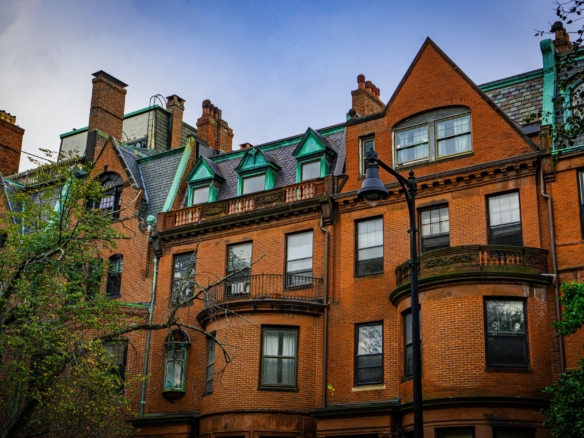
These central neighborhoods consistently rank among the most expensive in Boston, but they offer some of the strongest commute profiles in the city. Multiple Green Line stops, Orange Line access, and proximity to South Station make these areas genuinely transit-rich. For renters whose work is in downtown Boston, the Financial District, or nearby medical campuses, a short walk to multiple train options is a real advantage. The premium in rent reflects both the housing quality and the commute convenience. For many professionals, the total cost of living here, once commute savings are factored in, is less extreme than the rent number suggests.
South Boston and the Seaport
South Boston has historically offered more affordable rents than Back Bay while maintaining solid Red Line access at Broadway and Andrew stations. The Seaport District has grown into a high-rent area with improving transit, including Silver Line service, though the Silver Line’s reliability has been a point of frustration for riders. Renters in South Boston who work in downtown, Kendall Square, or along the Red Line corridor generally have a manageable commute that does not dramatically erode the rent savings compared to more central neighborhoods.
Jamaica Plain and Roslindale
These neighborhoods offer meaningfully lower rents than central Boston neighborhoods and have Orange Line access at multiple stations through Jamaica Plain. For renters who work along the Orange Line corridor, including Downtown Crossing, Back Bay, or Forest Hills, JP can be an excellent value. Roslindale is less well connected and requires either a bus or commuter rail, which adds time and potentially cost. The rent savings are often real, but the commute math depends heavily on where you work and how tolerant you are of longer travel times.
East Boston
East Boston has become one of the most-discussed affordable neighborhoods in Boston, with rents considerably lower than comparable units in many other neighborhoods. The Blue Line provides direct and relatively fast access to Downtown Crossing and Government Center, which means that for workers in central Boston or along the Blue Line, East Boston offers a genuine combination of lower rent and a reasonable commute. The neighborhood is separated from the rest of Boston by the harbor, which creates a psychological distance that does not always translate to a long commute in practice.
Dorchester and Mattapan
These large neighborhoods offer some of the lowest rents in Boston proper, but the commute picture is mixed. Parts of Dorchester near Red Line stations on the Ashmont branch have solid access. Other parts of Dorchester and much of Mattapan are more bus-dependent, and bus service frequency and reliability vary. Renters in these areas who work outside the immediate Red Line corridor may face longer, more unpredictable commutes. Understanding exactly which part of these neighborhoods you are renting in matters enormously for commute planning.
Cambridge and Somerville
These are not Boston neighborhoods technically, but they are where many Boston workers live. Cambridge, particularly near the Red Line, has high rents but excellent transit access, particularly for workers in Kendall Square, Harvard Square, or downtown Boston. Somerville, especially near the new Green Line Extension stations, has seen rent increases as transit access improved. For workers in Cambridge-based tech and biotech companies, renting in Cambridge or neighboring Somerville can reduce commute time to a walk or a single stop, which carries real quality-of-life value.
How to Actually Do the Math
Putting rent and commute together as a single number is the only honest way to compare neighborhoods. Here is a practical framework for doing that math before you sign anything.
Are You a Licensed MA Real Estate Agent?
List your Boston rentals and properties free on Homzora. Zero fees. Zero commissions. Direct leads sent to you.
🧮 Skip the math — free Boston Rent Calculator
Enter your salary and see which Boston neighborhoods actually fit your budget, using Homzora’s real 2026 rent data.
Start with the rent. Then estimate your monthly commute cost based on whether you will use the subway, commuter rail, a car, or some combination. Add those two numbers together. That is your baseline monthly housing and transportation cost for that neighborhood. Then compare it across the neighborhoods you are considering. In many cases, what looks like the cheapest option on rent alone will not be the cheapest option once commute costs are included.
Next, assign a rough value to your commute time. A simple way to do this is to take your hourly earnings and multiply by the number of extra commute hours per month you would spend in the higher-commute neighborhood compared to the lower-commute one. If a cheaper neighborhood costs you an extra forty hours of commute time per month and you value your time at even a modest rate, that is a real number. Add it to the cost comparison. The neighborhood math often shifts when this is included honestly.
The Boston Rent Affordability Calculator is a practical tool for checking whether a given rent fits your income, and you can use it alongside your commute cost estimates to build a more complete monthly budget for any neighborhood you are considering.
Credit, Leases, and Financial Readiness
Lifestyle Costs Beyond Rent and Commute
Rent and commute are the two biggest variables in the neighborhood cost equation, but they are not the only ones. Lifestyle costs, meaning what it actually costs to live your daily life in a given neighborhood, vary across Boston in ways that compound the rent and commute picture.
Grocery costs differ by neighborhood. Residents of neighborhoods with fewer supermarket options often pay more per item or spend time and money traveling to better-priced stores. Dining out is another factor. A neighborhood with vibrant local restaurants and affordable options may cost less day-to-day than a neighborhood where every option is a high-end restaurant or a delivery app. Walkability matters here too. Neighborhoods where you can complete daily errands on foot tend to reduce incidental transportation costs and save time.
Proximity to parks, gyms, cultural venues, and social life is also part of the real cost calculation, even if it does not show up in a spreadsheet. A neighborhood that is affordable on paper but disconnected from the things you actually enjoy and use may push you to spend more on transportation or entertainment to access what you want. A slightly more expensive neighborhood where everything you need is nearby can quietly save money and add quality to daily life.
Making the Right Decision for Your Situation
There is no single right answer to which Boston neighborhood offers the best value, because the answer depends entirely on where you work, how you commute, how much you value your time, and what kind of daily life you want to live. A neighborhood that is a great deal for a remote worker who commutes twice a week may be a poor deal for someone commuting to Kendall Square five days a week. A neighborhood that works perfectly for a single renter may feel isolating or impractical for a couple or a family.
The key is to run the actual numbers for your specific situation rather than accepting the rent number on a listing as the complete picture. Use the full cost framework, rent plus commute money plus commute time plus lifestyle costs, and compare neighborhoods honestly using that complete figure. The Boston Housing Data resource offers current market data across neighborhoods to help you make those comparisons with accurate, up-to-date information rather than guesswork.
Boston is an expensive city, but it is also a city where smart neighborhood choices can make a meaningful difference in both financial comfort and quality of life. The renters who come out ahead are generally the ones who look past the headline rent and do the honest math on everything the neighborhood actually costs them every single month.
Start With the Full Picture
The next time you see an apartment listing that looks affordable, do not stop at the rent number. Pull up your commute time from that address to your workplace during actual rush hour. Calculate your monthly transit or parking cost from that location. Think about what your daily life would look like in that neighborhood, including groceries, errands, social access, and how your commute would feel on a Tuesday in February. Add it all up and compare it to what a slightly more expensive neighborhood would actually cost you in full.
That is the comparison that tells you the truth. And in Boston, where the gap between neighborhoods is wide and transit access varies so dramatically from one block to the next, that full comparison is the only one worth making.
For detailed, current data on Boston neighborhoods, rents, and market trends to support your decision, visit homzorarealty.com/boston-housing-data/ and use the tools available there to build the most informed housing decision possible.
Stay Ahead of the Boston Market
Monthly insights on Boston rents, home tips, and investment opportunities delivered free to your inbox.
Related Boston Housing Resources