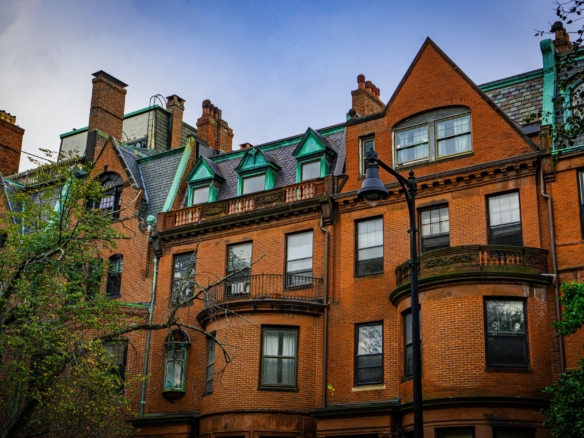
Few cities are shaped by student renters the way Boston is. With dozens of colleges and universities concentrated in and around the city, a large share of the rental market exists to serve students, and the neighborhoods, prices, and timing of that market follow rules of their own. A renter who does not understand the student market can be blindsided by its intensity, while one who does can use its rhythms to find genuine value. This guide explains how Boston’s student housing market works in 2026, where students actually find the best balance of cost and location, and what practical steps lead to securing a good apartment without overpaying or getting burned by the city’s notoriously fast market.
Why Boston’s Student Housing Market Is Unlike Any Other
Boston is home to more than 35 colleges and universities within a relatively compact geographic area. Boston University, Northeastern University, Boston College, Harvard, MIT, Tufts, Emerson, Suffolk, Simmons, Wentworth, and the many institutions clustered around the Longwood Medical Area all feed tens of thousands of students into the private rental market every single year. Unlike cities where university enrollment is a footnote to the broader economy, in Boston the academic calendar is a primary driver of the rental cycle. Understanding that reality is the starting point for any student trying to rent smart in 2026.
The student rental market concentrates demand intensely around the September 1 move-in date, which is by far the most common lease start in the city. That single date creates a surge of turnover unlike anything seen in most American rental markets. Landlords in student neighborhoods plan their entire leasing calendar around it, and the best units in the most desirable locations are often claimed months before the lease even begins. Students who assume they can search casually in July or August and find good options are routinely disappointed. The renters who secure the best apartments at the best per-person prices are typically those who start their search in January or February for a September lease.
The Core Student Housing Neighborhoods in 2026
A handful of Boston neighborhoods carry most of the off-campus student rental demand. Each has its own character, price point, transit access, and mix of housing stock. Knowing what each neighborhood actually offers in 2026 helps students match their priorities to the right part of the city rather than defaulting to wherever their friends happen to be looking.
Allston and Brighton
Allston and Brighton are the classic student strongholds in Boston, and they remain so in 2026. Rents for a one-bedroom in these neighborhoods run approximately $2,200 in Allston and $2,300 in Brighton, which are among the more affordable figures for transit-accessible areas of the city. The housing stock is dominated by older multi-bedroom apartments built specifically for shared living, which means large triple-deckers and wooden apartment buildings with three, four, and even five bedrooms are common. This is exactly the kind of inventory that makes per-person math work for students.
Both neighborhoods sit on or near the Green Line B branch, which runs directly to Boston University, Kenmore Square, and ultimately into downtown. Brighton Center offers the Orange Line via a short connection, and bus routes throughout both neighborhoods connect to the broader MBTA network. Students at Boston University, Boston College, and Harvard Extension programs favor these neighborhoods heavily, but the tenant base is broadly student across nearly every institution in the city. Allston in particular has a dense concentration of student-focused restaurants, bars, grocery stores, and services that cater to the academic calendar.
Fenway and Kenmore
Fenway and Kenmore are dense, exceptionally walkable, and surrounded by campuses. Boston University’s main campus runs directly along Commonwealth Avenue into Kenmore Square, Northeastern is a short walk or one stop on the Green Line, the Longwood Medical Area anchors the western edge of the neighborhood, and Wentworth, MassArt, and the Museum of Fine Arts school are all within easy reach. This concentration of institutions makes Fenway one of the most in-demand student neighborhoods in the city, and rents reflect that. One-bedroom apartments in Fenway average around $2,600, which is meaningfully higher than Allston, but students who split two and three-bedroom units in the neighborhood can still reach reasonable per-person costs.
The appeal of Fenway goes beyond convenience. The neighborhood is genuinely lively, safe, well-served by transit, and has seen significant new development alongside its older housing stock. Students who want to be at the center of activity and do not mind paying a modest premium for it consistently rank Fenway among their top choices.
Mission Hill
Mission Hill sits on a rise above Roxbury Crossing and offers a mix of older triple-deckers and small apartment buildings that have historically attracted students from Northeastern, Wentworth, MassArt, and the various Longwood Medical Area institutions. Rents are generally more affordable than Fenway while maintaining reasonable proximity to those campuses. The Orange Line stop at Roxbury Crossing and the Green Line E branch stop at Heath Street both serve the neighborhood, giving students solid transit options into downtown and across the Longwood corridor.
Mission Hill has a strong community feel and a mix of long-term residents and students that gives it more neighborhood character than pure student enclaves like parts of Allston. Students who want genuine neighborhood life alongside affordability frequently find Mission Hill to be one of the better-kept secrets on the Boston rental map.
Jamaica Plain
Parts of Jamaica Plain, particularly the sections closer to the Orange Line stops at Jackson Square, Stony Brook, and Green Street, draw student renters who prioritize affordability and do not mind a slightly longer commute into the core of the city. Jamaica Plain offers more space per dollar than almost any other transit-accessible neighborhood in Boston proper, and the neighborhood has a well-established arts and culture scene that appeals to students at Emerson, MassArt, and the Berklee College of Music. The tradeoff is commute time, but for students whose daily schedule is not rigidly 9 to 5, that is often an acceptable exchange.
How the Per-Person Rent Calculation Changes Everything
The single most important concept for any student renter in Boston is per-person rent. The headline rent quoted in a listing is almost never the number that actually determines whether an apartment is affordable. A three-bedroom apartment in Allston listed at $3,600 per month sounds expensive in the abstract, but split three ways it becomes $1,200 per person, which is a genuinely competitive figure in the Boston market. A four-bedroom unit at $4,400 per month split among four roommates arrives at $1,100 per person, which is exceptionally affordable by Boston standards.
This math transforms the way students should approach their search. Rather than filtering listings by total rent, students should think first about how many roommates they can realistically bring into a unit and then look for the largest apartments in the most affordable neighborhoods that serve their campuses. Before committing to any apartment, it is also worth running the numbers through a tool like the Boston Rent Affordability Calculator to make sure the per-person share fits within each roommate’s actual budget, not just the optimistic estimate made during the apartment search.
Timing the Boston Student Market Correctly
Timing is one of the most common sources of frustration for student renters in Boston. The market moves on a compressed calendar that rewards early action and punishes hesitation. Most landlords in student neighborhoods begin showing apartments for the following September as early as December and January. By February and March, the best units in Allston, Fenway, and Mission Hill are actively being claimed. By May, many of the desirable options are gone. By July, students searching for September housing are often choosing between the apartments that nobody else wanted.
This timeline feels counterintuitive to first-time renters. Signing a lease in February for an apartment you will not move into until September seems extreme, but it is the norm in Boston student neighborhoods, not the exception. Students who treat this timeline as an exaggeration and begin searching in June regularly find themselves locked into worse apartments at higher prices than their peers who moved quickly in the winter.
Are You a Licensed MA Real Estate Agent?
List your Boston rentals and properties free on Homzora. Zero fees. Zero commissions. Direct leads sent to you.
For students who are new to Boston or unfamiliar with the neighborhoods, using a resource like the Boston Neighborhood Finder early in the process helps narrow down which areas actually make sense for their specific campus location, budget, and lifestyle before they begin touring apartments. That upfront clarity saves significant time when the market is moving quickly.
What to Look for in a Student Apartment Lease
Student renters in Boston frequently sign leases without reading them carefully, which creates significant problems at move-out or during the tenancy. Every lease should clearly specify the rent amount, the lease term, what utilities are included, the security deposit terms, the rules around subletting if a student leaves for a summer internship or semester abroad, and the conditions under which the landlord can enter the unit. In Massachusetts, landlords are required to follow specific rules around security deposits, and students who are unaware of those rules sometimes lose money they are legally entitled to recover.
🧮 Skip the math — free Boston Rent Calculator
Enter your salary and see which Boston neighborhoods actually fit your budget, using Homzora’s real 2026 rent data.
Building Credit While Renting as a Student
Many students arrive in Boston with thin or nonexistent credit histories, which can complicate the rental application process. Landlords in competitive student neighborhoods frequently require credit checks, and a thin credit file can result in a rejection or a requirement to pay additional months of rent upfront as a security deposit. Building credit proactively while still a student creates real advantages, not just for renting in Boston but for every major financial transaction in the years ahead.
What Students Pay and Where the Value Actually Lives
In 2026, per-person rents in Boston student apartments vary considerably depending on neighborhood, unit size, building age, and distance from transit. Students in Allston splitting a four-bedroom apartment can frequently reach per-person costs in the range of $1,000 to $1,200 per month, which represents real value in a city where solo one-bedroom rents average well above $2,000 across most neighborhoods. Students in Fenway splitting a two-bedroom unit will typically land in the $1,300 to $1,500 per person range, which reflects the neighborhood premium but still represents solid value compared to living alone.
The students who find the best value in Boston are consistently those who apply a few practical principles. They start their search early, in January or February for September leases. They prioritize per-person cost over total rent. They choose older buildings and accept some cosmetic wear in exchange for lower rent. They select apartments that are on or very close to MBTA transit lines rather than insisting on proximity to campus itself. They bring as many financially stable roommates into the unit as the apartment comfortably accommodates. And they use current market data rather than assumptions to make their decisions. The Boston Housing Data resource provides current neighborhood-level figures that students can use to benchmark what they are being quoted against what the market is actually charging.
Students Who Plan to Buy After Graduation
Not every student renter is thinking about homeownership, but for graduate students, medical residents, and others who plan to remain in Boston after completing their programs, understanding the path from renting to owning is worth considering early. Boston home prices are high and mortgage qualification requires both strong credit and a solid understanding of current lending costs. Students who begin monitoring rates and understanding the mortgage market before they are ready to buy are better positioned to act decisively when the time comes.
Practical Steps for Students Searching Now
Students beginning their search for 2026 to 2027 housing should follow a clear sequence. Start by confirming your roommate group and establishing a shared budget before looking at any listings. Use the per-person calculation to set a realistic ceiling on total unit rent. Decide which neighborhoods actually serve your campus and transit needs using a neighborhood matching tool. Begin actively searching and touring in January or February. Read every lease in full before signing. Document the condition of the apartment at move-in with photographs and written notes to protect your security deposit at move-out.
The Boston student housing market rewards preparation and punishes passivity. Students who approach it as a serious logistical challenge rather than a casual errand consistently come out with better apartments, better per-person rents, and fewer unpleasant surprises over the course of their tenancy.
Make Informed Decisions With Current Boston Housing Data
Boston’s student rental market in 2026 remains competitive, fast-moving, and full of opportunity for renters who understand how it works. The neighborhoods are well-established, the per-person math in shared apartments creates genuine affordability even in an expensive city, and the strategies that work are clear and repeatable. What separates students who land good apartments from those who end up frustrated is almost always information and timing rather than luck.
Whether you are searching for your first Boston apartment, planning ahead for next September, or trying to understand what a fair price looks like in the neighborhoods you are considering, current data is the foundation of every good decision. Visit Homzora’s Boston Housing Data for up to date neighborhood pricing, rental trends, and market insights that help Boston renters at every stage of the search make decisions grounded in what the market is actually doing right now.
Stay Ahead of the Boston Market
Monthly insights on Boston rents, home tips, and investment opportunities delivered free to your inbox.
Related Boston Housing Resources