Download this data: Every figure in this report is available as a free CSV/JSON dataset at homzorarealty.com/data — free to cite and republish under CC BY 4.0.
Boston Renter Intelligence Survey
How does your rent compare?
Add your numbers and get an instant read on what share of your income goes to rent, measured against what Boston renters actually report. You will also get the Q3 report free on October 7.
See how your rent compares →Boston remains one of the most competitive rental markets in the United States, and heading into 2026, renters and landlords alike are paying close attention to how prices are shifting across the city’s many distinct neighborhoods. Whether you are a first-time renter relocating for work, a student searching for your next apartment, or a seasoned property investor analyzing market trends, understanding what you should actually expect to pay in each pocket of the city is essential. This guide breaks down current Boston rent prices by neighborhood for studios, one-bedroom apartments, and two-bedroom units, and explains the forces driving those numbers every single month.
Why Boston Rent Prices Vary So Dramatically by Neighborhood
Boston is not a city where a single average rent figure tells you much of anything useful. The distance of just a few blocks can mean a difference of several hundred dollars per month, and the reasons are deeply rooted in the city’s infrastructure, culture, and housing supply constraints. Proximity to major employment corridors like the Longwood Medical Area, the Financial District, and the Seaport Innovation District pushes prices upward in the neighborhoods surrounding those hubs. Access to the MBTA, walkability scores, school quality, and the overall character of a neighborhood all contribute to what landlords can realistically charge.
The city also has a notoriously tight housing stock. Boston’s geography is limited, its zoning laws are restrictive in many districts, and new construction has historically lagged behind population growth. For renters, that means supply remains constrained while demand from students, young professionals, healthcare workers, and tech employees continues to climb. For landlords and investors, it means pricing power remains strong in most parts of the city heading into the coming year.
If you want to see how individual neighborhoods stack up in terms of both rent and lifestyle fit, the Boston Neighborhood Finder from Homzora is an excellent starting point before diving into the numbers below.
Downtown Boston and the Seaport District
Studio Apartments
Studio apartments in Downtown Boston and the Seaport District represent some of the highest per-square-foot rents in the entire city. In 2026, renters can expect to pay between $2,400 and $3,200 per month for a studio in these neighborhoods. The Seaport has seen a surge of new luxury development over the past several years, and while that has added some supply, demand from professionals employed in the innovation and financial sectors has kept prices elevated. Downtown studios tend to sit at the lower end of that range, particularly in older buildings, while new construction in the Seaport pushes consistently toward the upper boundary.
One-Bedroom Apartments
One-bedroom apartments in these core neighborhoods typically range from $3,100 to $4,500 per month. Units in renovated buildings with modern amenities, concierge services, and rooftop access command the highest prices. Renters willing to live in older walkup buildings without in-unit laundry or gym facilities can sometimes find one-bedrooms closer to the $3,100 range, though those opportunities are increasingly rare as landlords renovate and reposition their properties.
Two-Bedroom Apartments
Two-bedroom apartments downtown and in the Seaport often exceed $5,000 per month in newer developments. Even in older stock, two-bedrooms rarely fall below $4,200. Roommate arrangements make these units more financially manageable, which is why many younger professionals opt to share a two-bedroom rather than rent a one-bedroom alone. Landlords in these neighborhoods are very aware of this dynamic and price accordingly.
Back Bay and Beacon Hill
Studio Apartments
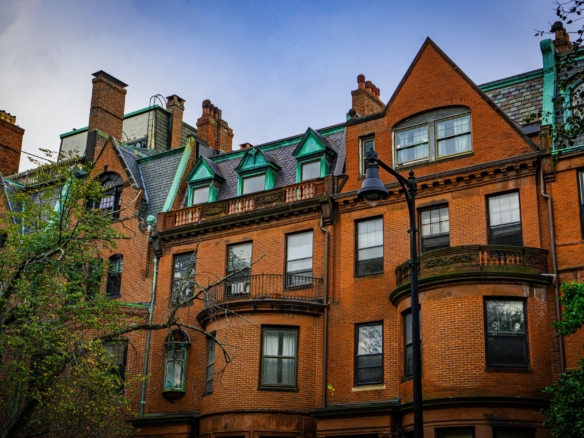
Back Bay and Beacon Hill are among Boston’s most storied neighborhoods, and their rental markets reflect that prestige. Studio apartments in Back Bay typically run from $2,200 to $3,000 per month. Beacon Hill studios are sometimes slightly more affordable due to the age of the housing stock, though beautifully maintained units in landmark brownstones can push well past $2,800 per month. Both neighborhoods attract renters who prioritize walkability, historic character, and easy access to shopping along Newbury Street and the Public Garden.
One-Bedroom Apartments
One-bedroom rents in Back Bay and Beacon Hill generally fall between $2,900 and $4,000 per month. The variance depends heavily on the building’s condition, the floor level, and whether utilities are included. Corner units in brick rowhouses with original architectural details tend to be highly sought after and priced at the top of the range. Renters who can act quickly when listings appear tend to secure better deals before bidding situations develop.
Two-Bedroom Apartments
South End and Roxbury
Studio Apartments
The South End has evolved into one of Boston’s most vibrant and artsy neighborhoods, and rents have followed that trajectory upward. Studio apartments in the South End now range from $1,900 to $2,700 per month. Roxbury, which borders the South End and has seen increasing investment in recent years, offers more affordable entry points, with studios sometimes available in the $1,400 to $1,900 range, making it one of the more accessible neighborhoods for budget-conscious renters who still want to be close to central Boston.
One-Bedroom Apartments
One-bedroom rents in the South End typically fall between $2,500 and $3,500 per month. The neighborhood’s restaurant scene, proximity to the Ink Block development, and access to Columbus Avenue greenways make it popular among young professionals and creatives. Roxbury one-bedrooms are frequently listed in the $1,700 to $2,400 range, offering a meaningful discount while still providing access to public transit options that connect to downtown in under 20 minutes.
Two-Bedroom Apartments
Two-bedroom apartments in the South End generally command $3,200 to $4,800 per month, with newer construction pushing toward the higher end. Roxbury two-bedrooms can be found for $2,200 to $3,200 per month, representing one of the better value propositions in the Boston rental market for families or roommate pairs seeking more square footage without stretching their budgets to the breaking point.
Jamaica Plain, Roslindale, and West Roxbury
Studio Apartments
These three neighborhoods located in the southwestern part of Boston represent the most affordable areas within city limits. Studio apartments in Jamaica Plain range from $1,500 to $2,200 per month, while Roslindale and West Roxbury offer some of the lowest rents in the city at $1,200 to $1,800 per month for studios. These neighborhoods appeal strongly to long-term Boston residents, families, and renters who prioritize value and community character over proximity to nightlife or the downtown core.
One-Bedroom Apartments
Jamaica Plain one-bedrooms typically rent for $1,800 to $2,600 per month. The neighborhood’s access to the Orange Line and its concentration of parks, local restaurants, and independent businesses create strong demand. Roslindale and West Roxbury one-bedrooms often range from $1,600 to $2,200 per month, and the relative availability of two-family and three-family homes in these areas means renters sometimes have access to larger apartments with outdoor space at prices that would be unheard of in the inner neighborhoods.
Are You a Licensed MA Real Estate Agent?
List your Boston rentals and properties free on Homzora. Zero fees. Zero commissions. Direct leads sent to you.
Two-Bedroom Apartments
Two-bedroom units in Jamaica Plain generally list between $2,400 and $3,400 per month. In Roslindale and West Roxbury, two-bedrooms can still be found in the $2,000 to $3,000 range in many cases, making these among the most practical neighborhoods for roommates, young couples, and small families who need more than a one-bedroom setup without paying premium inner-city prices.
Allston, Brighton, and Mission Hill
These three neighborhoods represent the traditional student and young professional rental zones in Boston, and they continue to play that role in 2026. The heavy concentration of college students from Boston University, Boston College, and Northeastern University creates an annual rental cycle that is both predictable and intense. Landlords in these areas rarely have trouble finding tenants, and prices have been rising steadily.
Studio apartments in Allston and Brighton range from $1,500 to $2,100 per month. One-bedrooms typically fall between $1,900 and $2,700 per month. Two-bedroom apartments, which are extremely popular for sharing among students and young professionals, generally range from $2,400 to $3,500 per month. Mission Hill, located adjacent to the Longwood Medical Area, sees strong demand from medical students and healthcare workers, which keeps prices competitive with Allston and Brighton across all unit types.
Charlestown, East Boston, and Somerville Adjacent
Charlestown has long been viewed as a family-oriented neighborhood with strong demand from buyers, but the rental market remains active. Studios here range from $1,900 to $2,600 per month, one-bedrooms from $2,400 to $3,200, and two-bedrooms from $3,000 to $4,200. East Boston has experienced significant gentrification pressure and corresponding rent increases over the past several years, driven in part by its waterfront access and proximity to Logan Airport. East Boston studios start around $1,600 and can reach $2,200, while two-bedrooms range from $2,600 to $3,600.
For a more comprehensive breakdown of how these numbers are tracked and updated, visiting the Boston Housing Data resource from Homzora gives renters and investors access to regularly refreshed market metrics and historical trend lines.
Key Factors Affecting Boston Rents in 2026
Interest Rates and the For-Sale Market
Lease Renewal Trends and Vacancy Rates
Boston’s overall vacancy rate in 2026 remains well below national averages, hovering in the range of two to four percent depending on the neighborhood. Low vacancy rates give landlords strong negotiating leverage at renewal time, and many tenants are accepting rent increases of five to twelve percent upon renewal rather than face the uncertainty and cost of moving to a new unit. This is particularly true in sought-after neighborhoods where competition for available apartments can be intense from the moment a listing goes live.
New Construction and Its Limited Impact
While new apartment construction has been underway in the Seaport, South Boston, and select areas of Dorchester, the volume of new units coming to market has not been sufficient to meaningfully soften rents across the city as a whole. Most new construction targets the luxury segment, leaving the middle and affordable rental markets with minimal relief. Renters at lower price points face perhaps the most competitive conditions in the entire market.
Practical Tips for Renters Navigating the Boston Market
- Start your apartment search at least 60 to 90 days before your target move-in date, especially for September 1 leases which dominate the Boston market.
- Have all your documentation ready including pay stubs, bank statements, and a copy of your credit report before you tour apartments.
- Consider neighborhoods one zone further from your workplace than your first instinct suggests, as the rent savings can be substantial.
- Read every lease carefully before signing, and use a resource like templates to understand what standard lease terms look like and what provisions to watch for.
- Ask about utility inclusions, pet policies, and subletting rights before committing to any apartment.
- Factor in renter’s insurance and consider whether a or similar protection plan might apply to any appliances included in your unit.
Tips for Landlords and Investors in Boston’s 2026 Rental Market
For property owners and investors, Boston continues to offer strong fundamentals. Low vacancy, rising rents, and persistent demand from an educated workforce and student population create a resilient income environment. Pricing your unit appropriately for its neighborhood and condition is critical, as overpriced listings can linger and cost more in vacancy than a realistic price would have saved in monthly rent. Staying current on neighborhood-level data, maintaining properties in competitive condition, and having clean lease documentation in place all contribute to better tenant relationships and lower turnover costs.
Monthly Updates and How to Stay Current
Boston’s rental market does not stand still for long. Prices shift with the academic calendar, interest rate announcements, new development openings, and broader economic conditions. The figures provided in this guide reflect the best available data heading into 2026, and Homzora is committed to keeping these numbers as current as possible through monthly reviews and updates. Checking back regularly ensures you are working with information that reflects actual current market conditions rather than figures that may already be several months out of date.
Understanding rent by neighborhood is only one piece of the puzzle. The best decisions come from combining current pricing data with a clear understanding of your lifestyle preferences, financial picture, and longer term housing goals. Whether you are renting for a year while you save for a down payment or looking to establish yourself in a neighborhood for the long haul, having accurate and detailed local knowledge is the single greatest advantage you can bring to the process.
Explore More at Homzora
Boston’s rental market rewards preparation, research, and local expertise. Homzora is dedicated to giving renters, buyers, landlords, and investors the tools and data they need to navigate this competitive city with confidence. From neighborhood guides and housing market data to mortgage resources and lease tools, everything you need to make a smart housing decision is available in one place.
Visit homzorarealty.com today to explore updated neighborhood guides, access current Boston housing market data, and connect with real estate professionals who understand the Boston market at a level of detail that makes a real difference in the decisions you make.
Stay Ahead of the Boston Market
Monthly insights on Boston rents, home tips, and investment opportunities delivered free to your inbox.
Related Boston Housing Resources