The Boston rental market continues to be one of the most competitive and closely watched housing ecosystems in the entire United States. As we move through 2026, landlords, tenants, investors, and real estate professionals are all paying close attention to shifting vacancy rates, rising rents, and the evolving landscape of Boston neighborhoods. Whether you are a first-time renter trying to find an affordable apartment or a seasoned property investor looking to expand your portfolio, understanding the data behind this market is essential. This comprehensive report from Homzora breaks down everything you need to know about the Boston rental market in 2026, including neighborhood-by-neighborhood analysis, rent trends, vacancy data, and actionable insights for both renters and landlords.
Boston Renter Intelligence Survey
How does your rent compare?
Add your numbers and get an instant read on what share of your income goes to rent, measured against what Boston renters actually report. You will also get the Q3 report free on October 7.
See how your rent compares →Boston Rental Market Overview for 2026
Boston has long been defined by its tight housing supply, world-class universities, thriving healthcare industry, and a robust technology sector that continues to attract high-income professionals from across the country and around the world. These demand drivers have not softened in 2026. If anything, the city’s attractiveness as a place to live and work has intensified, putting continued upward pressure on rental prices across virtually every neighborhood.
The average monthly rent for a one-bedroom apartment in Boston as of mid-2026 sits at approximately $2,850. Two-bedroom units are averaging $3,600 per month, while studio apartments remain in high demand at an average of $2,200 per month. These figures are flat year over year, within one percent in either direction. Rents remain near record highs, reflecting the persistent imbalance between housing supply and demand that has defined the Boston market for over a decade. Figures are Homzora Q2 2026 baseline estimates derived from public listing and municipal data; our first survey-derived release publishes October 7, 2026. See our full methodology.
Citywide vacancy rates have remained historically low, hovering around 3.8 percent. This figure is well below the 5 percent threshold that economists typically consider a balanced market, meaning renters continue to face intense competition for available units. Landlords, by contrast, are enjoying strong occupancy rates and reliable rental income, making Boston one of the most attractive cities in the Northeast for buy-and-hold real estate investment strategies.
Key Factors Driving Boston Rent Growth in 2026
University and Student Enrollment Numbers
Boston is home to more than 35 colleges and universities, including Harvard University, the Massachusetts Institute of Technology, Boston University, and Northeastern University. Combined enrollment across these institutions brings tens of thousands of students into the metro area each year. Student demand for off-campus housing directly competes with professional renters in neighborhoods like Allston, Brighton, Mission Hill, and the Fenway area, keeping rental prices elevated even in units that might otherwise be considered lower-tier.
Life Sciences and Technology Sector Expansion
The Kendall Square corridor in Cambridge and the Seaport District in Boston continue to attract major life sciences and technology employers. Companies ranging from biotech startups to established pharmaceutical giants have expanded their Boston area footprints, bringing thousands of well-paid employees who can afford above-average rents. This professional demand pushes prices upward in neighborhoods like the South End, Back Bay, and East Boston, as workers seek proximity to transit lines and employment centers.
Limited New Construction Pipeline
Despite years of optimistic projections, Boston’s housing construction pipeline has consistently fallen short of what the market needs. Zoning challenges, neighborhood opposition to density, and rising construction costs have slowed new unit delivery. The units that do reach completion tend to be luxury properties that command top-tier rents, doing little to relieve pressure on the middle and lower segments of the rental market. Until the supply side of the equation improves meaningfully, rents are unlikely to decline in any significant or sustained way.
Boston Neighborhood Rental Data for 2026
Understanding rent and vacancy trends at the neighborhood level is critical for anyone making a housing decision in Boston. The city’s neighborhoods vary dramatically in terms of pricing, amenity access, transit connectivity, and overall character. Use the Boston Neighborhood Finder from Homzora to explore detailed profiles of each area and match your priorities to the right community.
Back Bay
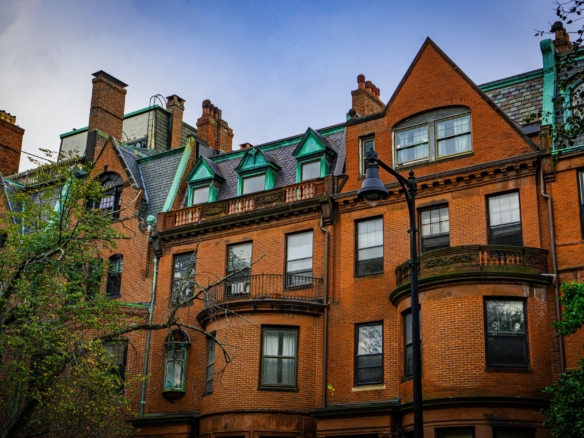
Back Bay remains one of the most prestigious and expensive neighborhoods in the entire city. Average rents for a one-bedroom unit in this area have reached $3,800 per month, with luxury two-bedroom apartments frequently exceeding $5,500 per month. The neighborhood’s Victorian brownstones, upscale shopping on Newbury Street, and immediate access to the Green Line and commuter rail make it perpetually desirable. Vacancy rates here are remarkably low at just 2.4 percent, reflecting the near-constant demand from high-income professionals and relocating executives.
South End
The South End consistently ranks among Boston’s most sought-after neighborhoods, known for its restaurant scene, art galleries, and beautifully preserved historic architecture. One-bedroom rents average around $3,400 per month in 2026, a figure that reflects both the neighborhood’s desirability and its ongoing gentrification. The vacancy rate sits at approximately 2.9 percent. The neighborhood appeals to a diverse mix of creative professionals, young families, and longtime residents who have chosen to stay as the area evolved.
Fenway and Kenmore
Fenway and Kenmore attract a mix of students, young professionals, and sports enthusiasts drawn by proximity to universities, Fenway Park, and excellent transit access. Average one-bedroom rents here sit around $2,950 per month. While this is lower than Back Bay or the South End, it is still well above the national average. Vacancy rates in this area fluctuate seasonally due to the student population, peaking briefly between May and September before snapping back down to around 3.5 percent by October.
East Boston
East Boston has undergone remarkable transformation over the past decade and continues to attract renters priced out of more central neighborhoods. Average one-bedroom rents are approximately $2,400 per month, making it one of the more affordable options with direct access to downtown via the Blue Line. The neighborhood’s waterfront views, growing restaurant scene, and diverse community have made it genuinely popular rather than simply a last resort. Vacancy rates here hover around 4.2 percent, slightly above the citywide average, offering renters a bit more breathing room during their search.
Allston and Brighton
Allston and Brighton remain the go-to destinations for Boston University and Boston College students, as well as budget-conscious young professionals. One-bedroom rents average around $2,300 per month, with many units available as shared apartments that bring per-person costs significantly lower. The area has a high unit turnover rate, especially around September 1st when the notorious Boston Moving Day reshuffles the city’s student population. Vacancy rates briefly spike to nearly 7 percent in late summer before returning to around 4.5 percent for the remainder of the year.
Seaport District
The Seaport District represents the newest and most polished chapter in Boston’s real estate story. This former industrial waterfront has been transformed into a neighborhood of gleaming residential towers, innovative office campuses, and high-end dining. Average rents for a one-bedroom unit have reached $4,100 per month, among the highest in the city. Vacancy rates are tight at 3.1 percent, driven by the thousands of technology and life sciences workers who prefer to live close to their Seaport employers.
Jamaica Plain
Jamaica Plain offers a more relaxed, community-oriented atmosphere while still providing reasonable access to downtown via the Orange Line. One-bedroom rents average $2,600 per month, representing good value by Boston standards. The neighborhood’s parks, including the Arnold Arboretum, its thriving local business district, and its diverse population make it a perennial favorite for people seeking a more neighborhood-feel experience within the city. Vacancy rates sit at approximately 3.7 percent, close to the citywide average.
Are You a Licensed MA Real Estate Agent?
List your Boston rentals and properties free on Homzora. Zero fees. Zero commissions. Direct leads sent to you.
What the Data Means for Renters in 2026
Budget carefully. The general guideline of spending no more than 30 percent of gross income on housing is increasingly difficult to follow in Boston. Many renters in the city are allocating closer to 40 percent of their income to rent, which leaves less room for savings and other financial goals. If renting is stretching your budget significantly, it may be worth exploring whether homeownership could actually be a more financially sound option given your circumstances.
What the Data Means for Landlords and Investors in 2026
For landlords and real estate investors, the 2026 Boston rental market continues to present compelling opportunities. Strong occupancy rates, reliable rent collection, and steady appreciation in property values make Boston a fundamentally attractive long-term investment destination despite its high entry price points.
For deeper analysis of investment opportunities across specific Boston neighborhoods, Homzora’s comprehensive Boston Housing Data resource provides detailed breakdowns of price trends, rental yields, vacancy rates, and neighborhood growth indicators to help you make informed investment decisions.
Forecast: Where Is the Boston Rental Market Headed?
Looking ahead through the remainder of 2026 and into 2027, most analysts expect Boston rents to continue their gradual upward trajectory. Absent a significant increase in housing supply or a major economic disruption, the fundamental demand drivers that have fueled rent growth for years remain firmly in place. The ongoing expansion of the life sciences sector, continued university enrollment growth, and Boston’s position as a global center for innovation all point toward sustained housing demand.
Some relief may come in neighborhoods where new construction projects are finally delivering units to the market. Areas like the Seaport, East Boston waterfront, and sections of Dorchester are seeing new residential projects that could modestly improve supply conditions locally. However, the scale of new construction remains insufficient to fundamentally shift the market in favor of renters citywide.
Renters who can lock in a longer lease term at a fixed rate may benefit from doing so now before further rent increases materialize. Landlords and investors, meanwhile, can expect continued strong performance from well-located Boston rental properties throughout the near term forecast horizon.
Making Smart Decisions in the Boston Rental Market
Whether you are a renter searching for your next apartment, a landlord managing your portfolio, or an investor evaluating your next acquisition, having accurate and current market data is the foundation of every good decision. The Boston rental market rewards those who do their homework, understand the neighborhood dynamics at play, and act decisively when the right opportunity presents itself.
At Homzora, our mission is to provide Boston area renters, buyers, sellers, and investors with the tools and insights they need to navigate one of America’s most dynamic real estate markets. From detailed neighborhood guides to up-to-date market statistics, we are here to support every step of your real estate journey.
Visit homzorarealty.com today to access our full suite of Boston real estate resources, connect with local market experts, and take the next step toward achieving your housing goals in 2026 and beyond. Our team is ready to help you make the most of everything the Boston rental market has to offer.
Stay Ahead of the Boston Market
Monthly insights on Boston rents, home tips, and investment opportunities delivered free to your inbox.
Related Boston Housing Resources