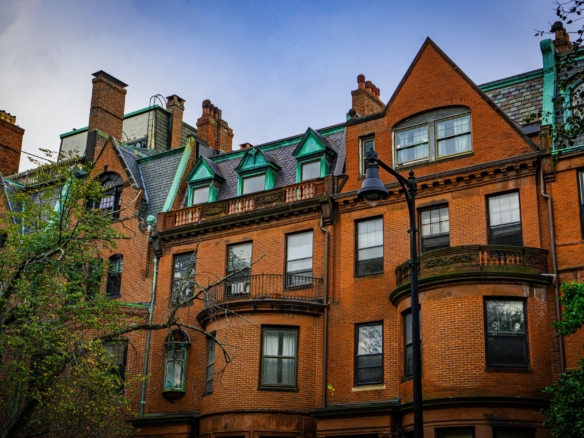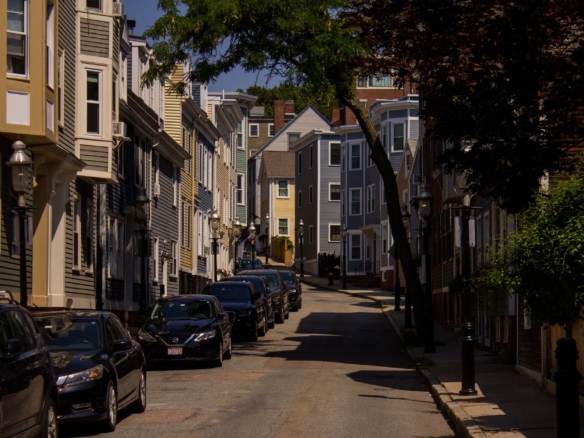
Boston has always rewarded patient investors, but not every neighborhood rewards them equally. The difference between a 28 percent gain and a 67 percent gain over five years often comes down to a single question: did you buy in the right place at the right time? This analysis cuts through the noise and delivers what serious buyers and investors actually need, a ranked forecast of Boston neighborhood appreciation potential through 2030, grounded in historical data, infrastructure pipelines, employment growth, and supply constraints. Whether you are buying a primary residence or building a portfolio, understanding where appreciation is likely to accelerate before the broader market catches on is the most valuable edge you can have.
Boston Renter Intelligence Survey
How does your rent compare?
Add your numbers and get an instant read on what share of your income goes to rent, measured against what Boston renters actually report. You will also get the Q3 report free on October 7.
See how your rent compares →How We Rank Appreciation Potential: The Scoring Framework
This ranking is not based on median price alone. Each neighborhood is scored across five weighted dimensions: projected job growth within commuting distance, infrastructure investment already approved or under construction, historical appreciation trajectory over the past decade, current price relative to its comparable peers, and housing supply constraints that limit new inventory. Neighborhoods that score high across all five dimensions rank at the top. Areas with strong job growth but excessive new construction, for example, receive a moderate score because supply can absorb demand and moderate price gains. This methodology gives investors a more honest picture than simple median price comparisons.
Before diving into the rankings, it is worth noting that your entry price matters as much as the appreciation rate. A neighborhood appreciating at 6 percent annually from a lower base delivers stronger absolute returns than a neighborhood appreciating at 5 percent from an already elevated baseline. The comparison section later in this article addresses that directly.
Boston Neighborhood Appreciation Rankings for 2026 Through 2030
1. East Boston: Highest Appreciation Potential
East Boston sits at the top of this ranking for reasons that compound on each other. The neighborhood has already demonstrated exceptional momentum, with median home values rising approximately 82 percent over the past decade according to data tracked at Boston Housing Data. Yet despite this climb, East Boston remains one of the most affordable entry points within one mile of Downtown Boston, a geographic advantage that continues to attract younger buyers and renters priced out of the South End and Seaport.
The primary appreciation drivers here are transit accessibility and continuing demographic transformation. The Blue Line provides a five minute connection to Government Center and nine minutes to State Street, making East Boston genuinely competitive with Beacon Hill for commuting purposes at roughly half the price per square foot. The planned improvements to the Maverick and Airport stations, combined with the ongoing waterfront development along Bremen Street and Jeffries Point, are drawing significant developer interest. New restaurant and retail openings along Meridian Street have continued to accelerate the neighborhood’s desirability among younger professional households.
Risk factors include the concentration of flight noise from Logan Airport, which creates a persistent ceiling on appeal for certain buyer profiles, and the relatively narrow streets that limit large scale redevelopment. Still, with a five year appreciation forecast of 38 to 46 percent, East Boston leads the rankings by a meaningful margin.
2. Roxbury: High Potential, Transformative Catalysts
Roxbury is the most compelling undervalued story in Boston right now. The neighborhood is experiencing a genuine inflection point driven by two forces that historically predict rapid appreciation: biotech job proximity and significant public infrastructure investment. The continued expansion of Longwood Medical Area, the largest concentration of healthcare and biotech employment in New England, places Roxbury within a short commute of more than 50,000 high income jobs. As workers from Mass General Brigham, Dana Farber, and the expanding Fenway health corridor seek housing, Roxbury’s price point relative to Mission Hill and Jamaica Plain becomes increasingly difficult to ignore.
The MBTA’s Orange Line, which serves Roxbury heavily, received substantial federal investment through the infrastructure bill, with signal upgrades and station improvements at Jackson Square, Roxbury Crossing, and Ruggles already in progress. Completed transit improvements historically add 8 to 14 percent to values within a quarter mile of affected stations in Boston’s inner neighborhoods. Five year appreciation forecast: 32 to 41 percent.
3. Dorchester: Steady Compounding With Lower Entry Risk
Dorchester is the largest and most internally varied neighborhood in Boston, which means neighborhood specific analysis matters enormously here. The Fields Corner and Savin Hill corridors have consistently outperformed the broader Dorchester average, driven by Red Line access, strong community investment in commercial corridors, and significant Vietnamese and Cape Verdean community anchors that provide neighborhood stability often overlooked by institutional analysts.
Historical appreciation in Dorchester’s strongest corridors averaged 61 percent over the past decade, lower than East Boston but delivered from a more stable baseline with lower volatility. New construction activity has been moderate, keeping supply constrained without the overdevelopment risk seen in parts of South Boston. Five year appreciation forecast: 26 to 35 percent.
4. Jamaica Plain: Sustained but Moderating Growth
Jamaica Plain has already completed much of its transformation. The neighborhood attracted strong buyer demand through the 2015 to 2022 period, and today it sits at a price point that limits the remaining appreciation upside compared to earlier entry windows. That said, JP still benefits from Green Street and Stony Brook Orange Line access, a deeply established retail and restaurant scene, and proximity to both Longwood and downtown employment hubs.
The primary risk for Jamaica Plain investors is that the neighborhood is no longer undervalued. You are buying into a recognized quality neighborhood, which means you will likely see steady appreciation in the 18 to 24 percent range over five years rather than the transformative gains seen in the previous decade. This makes JP an excellent primary residence purchase but a less compelling pure investment play compared to Roxbury or East Boston at current prices.
5. South Boston: Appreciation Moderating as Market Matures
South Boston had one of the most remarkable appreciation runs in Boston’s history between 2012 and 2022, with median values in some blocks nearly tripling. The Seaport District transformation drove enormous spillover demand into traditional South Boston neighborhoods. However, the neighborhood now faces a meaningful supply challenge. New luxury condo construction has been substantial, and inventory levels are no longer as constrained as they were during the peak scarcity period.
South Boston remains an excellent neighborhood by every quality of life measure, but investors entering today should calibrate their expectations accordingly. Five year appreciation forecast: 14 to 22 percent, which still outperforms most national markets but represents a significant moderation from recent historical rates.
6. Charlestown: Premium Pricing, Limited Upside
Charlestown is Boston’s most supply constrained neighborhood in terms of developable land, which historically supports price floors. However, the neighborhood has fully priced in its advantages. Proximity to North Station, walkability scores in the top decile for the city, and the historic rowhouse aesthetic all command premium multiples. New buyers are largely paying for established quality rather than future transformation, and that distinction matters for appreciation modeling. Five year forecast: 12 to 18 percent.
Historical Appreciation Data: The Past Decade by Neighborhood
Looking backward at the 2014 to 2024 period reveals the patterns that inform forward forecasts. East Boston led all Boston neighborhoods with approximately 82 percent median appreciation over the decade. South Boston followed at approximately 74 percent, driven by the Seaport effect. Roxbury delivered approximately 58 percent, impressive but widely viewed as underperforming its fundamentals given job proximity, suggesting meaningful catch up potential remains. Jamaica Plain delivered approximately 63 percent. Charlestown produced approximately 51 percent, consistent with its mature premium positioning. Dorchester’s strongest corridors delivered approximately 61 percent.
The neighborhoods that produced the highest appreciation over the past decade shared a consistent profile: they were within one mile of major job centers, had reliable rapid transit access, had active commercial corridor development, and were entering their appreciation cycle from a relatively low base. That same profile describes Roxbury and East Boston today, which is precisely why they rank first and second in the forward forecast.
What Drives Appreciation in Each Area
Transit Development as an Appreciation Catalyst
In Boston, rapid transit proximity is the single strongest predictor of residential appreciation. Properties within a quarter mile of Red Line stations in Cambridge historically outperform comparable properties a half mile away by 11 to 17 percent over five year periods. The same pattern holds for the Orange Line corridor from Forest Hills to Back Bay. When transit improvements are announced but not yet complete, sophisticated buyers have a window of opportunity to purchase before the market fully prices in the coming access improvement. The Roxbury Orange Line upgrades currently represent exactly this type of pre completion opportunity.
Biotech and Healthcare Employment Growth
Boston’s Longwood Medical Area, Kendall Square, and the Seaport Innovation District collectively employ more than 120,000 workers in high income life sciences, healthcare, and technology roles. Neighborhoods with strong transit connections to these employment hubs consistently see demand driven appreciation that outpaces supply. As Kendall Square continues to expand and Longwood adds research capacity, the residential neighborhoods within two transit stops of these clusters retain structural demand advantages that protect values even during broader market softening.
Are You a Licensed MA Real Estate Agent?
List your Boston rentals and properties free on Homzora. Zero fees. Zero commissions. Direct leads sent to you.
New Construction: Catalyst or Suppressor
New construction plays a dual role in appreciation dynamics. In neighborhoods transitioning from neglect to desirability, new construction acts as a signal and a catalyst, drawing new residents, improving street level activity, and reducing the perception of risk among buyers who might otherwise hesitate. In already desirable neighborhoods, excessive new construction adds inventory that competes with existing stock and moderates price growth. South Boston has crossed into the oversupply risk zone in certain condo segments. East Boston and Roxbury are still in the constructive early stage of new development activity.
Risk Factors That Could Slow Appreciation
Neighborhood specific risks include zoning changes that unlock large new housing supply in constrained areas, employer relocations that weaken the job proximity advantage, and delayed transit projects that push back the timeline for access improvements. East Boston’s airport noise issue remains a ceiling factor for a portion of potential buyers. Roxbury faces a perception challenge that, while diminishing, still affects some buyer hesitation and could moderate the pace of appreciation if demographic transition stalls.
For investors specifically, rent regulation changes at the state level represent a structural risk worth monitoring, as they would affect cash flow assumptions and investor demand that currently supports values in multi family heavy neighborhoods like Dorchester and Roxbury.
How to Identify an Undervalued Neighborhood Before It Appreciates
The most reliable early indicators of coming appreciation follow a consistent pattern across Boston’s history. The first signal is a surge in permit activity for commercial renovation and restaurant openings in a previously quiet corridor. When chefs and restaurant operators pay their own capital to open in a neighborhood, they have typically done more thorough demand analysis than most residential buyers. The second signal is increasing transit ridership at neighborhood stations, which reflects organic population growth and employment access improvement before it is widely reported. The third signal is a compression of days on market for entry level properties while luxury properties in the same area still sit longer, indicating that affordability seekers are arriving ahead of the broader wave.
The fourth and most actionable signal is a price per square foot gap of more than 25 percent between a target neighborhood and its geographically adjacent peers when transit access is comparable. That gap currently exists between Roxbury and Jamaica Plain. It existed between East Boston and the North End five years ago. Gaps of this size do not persist indefinitely in a supply constrained city like Boston, and buyers who enter during the gap period capture the compression as appreciation.
Using a resource like the Boston Neighborhood Finder can help buyers compare current price per square foot across neighborhoods and identify where gaps relative to transit access or job proximity suggest undervaluation.
Appreciation Potential Versus Current Entry Price: The Investor Comparison
Raw appreciation percentages only tell part of the story. A 40 percent gain on a $500,000 property generates $200,000 in wealth. A 20 percent gain on a $900,000 property generates $180,000. The entry price and leverage structure determine actual dollar returns, which is why the highest appreciation percentage neighborhood is not automatically the best investment.
East Boston wins the five year appreciation forecast at an estimated 38 to 46 percent, and it also wins the entry price comparison because its current median is roughly 35 to 40 percent below comparable neighborhoods with similar transit access. The combination of higher percentage appreciation from a lower base makes East Boston the strongest absolute dollar return opportunity in the current analysis. Roxbury follows closely with a lower median but a slightly wider variance in appreciation estimates due to the pace of demographic transition.
South Boston and Charlestown offer lower appreciation forecasts and higher entry prices, meaning investors take on more capital exposure for smaller percentage and absolute gains. These neighborhoods suit buyers who prioritize stability and quality of life over maximum appreciation potential.
Preparing Your Financial Position for a Boston Purchase
A buyer who improves their credit score from 700 to 740 before applying for a mortgage on a $650,000 East Boston property can save tens of thousands in interest over the life of the loan, directly enhancing the total return on the investment. The appreciation forecast means nothing if unfavorable financing terms eat into the gains.
Final Ranking Summary and Key Takeaways
The five year appreciation ranking for Boston neighborhoods places East Boston first with a forecast of 38 to 46 percent, driven by transit access, waterfront development, and relative value versus Downtown proximity. Roxbury ranks second at 32 to 41 percent, powered by biotech job proximity, Orange Line improvements, and meaningful price per square foot undervaluation relative to neighboring Jamaica Plain. Dorchester ranks third at 26 to 35 percent, benefiting from Red Line access and commercial corridor investment. Jamaica Plain ranks fourth at 18 to 24 percent, reflecting a mature neighborhood with steady but moderate gains. South Boston ranks fifth at 14 to 22 percent, constrained by new supply and an already elevated baseline. Charlestown ranks sixth at 12 to 18 percent, offering stability over transformation.
The neighborhoods with the strongest appreciation potential are not the ones with the most amenities today. They are the ones where job proximity, transit access, and demographic momentum are converging with a price point that has not yet caught up. That combination produces the appreciation events that build generational wealth for buyers who identify them early.
Boston’s long term fundamentals remain among the strongest of any American city. A world class university ecosystem, an expanding life sciences industry, and genuine housing supply constraints ensure that patient buyers in the right neighborhoods will continue to see their equity grow. The question is not whether to be in Boston, it is where in Boston to position yourself for the next five years.
Stay Ahead of the Boston Market
Monthly insights on Boston rents, home tips, and investment opportunities delivered free to your inbox.