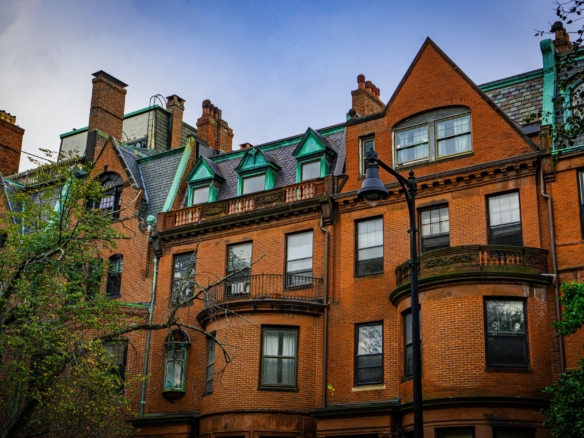
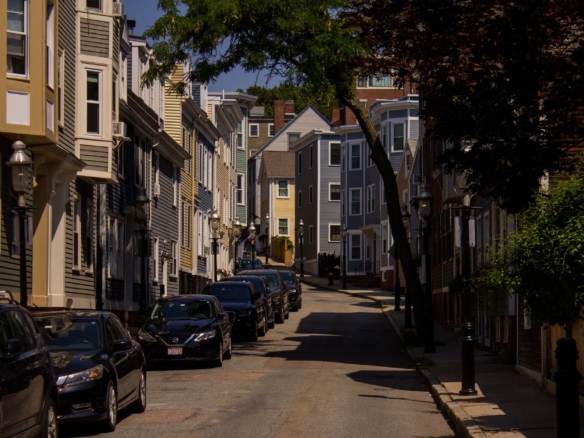
Cambridge is one of the most intellectually stimulating, walkable, and genuinely interesting cities in the United States, and it happens to sit directly across the Charles River from Boston, accessible by Red Line in under 15 minutes. Home to MIT, Harvard, and the world’s most concentrated biotech cluster in Kendall Square, Cambridge has a character that no marketing description adequately captures: a city where world-changing research happens alongside excellent restaurants, independent bookstores, and a coffee shop culture that’s deeply serious about the craft. This guide covers the real Cambridge experience in 2026.
Boston Renter Intelligence Survey
How does your rent compare?
Add your numbers and get an instant read on what share of your income goes to rent, measured against what Boston renters actually report. You will also get the Q3 report free on October 7.
See how your rent compares →Check your numbers against Boston data
See what share of your income goes to rent, and how your neighborhood compares. Free, no email required.
Cambridge neighborhoods: a genuine diversity
Harvard Square is Cambridge’s most famous neighborhood, the concentration of bookstores (Harvard Book Store, Raven Used Books), coffee shops, restaurants, and the Harvard campus creates a neighborhood center unlike anywhere else in America. The Square has gentrified significantly from its bohemian 1970s peak, but retains genuine character through the university’s physical presence, the street performers, and the density of academic activity. 1BR rents: $2,900 to $3,800/month, among the highest in the metro.
Central Square is Cambridge at its most urban and diverse, a genuine mix of long-term residents, MIT students and faculty, and the service workers and recent immigrants who have historically defined Central’s character. The restaurant scene is excellent and more affordable than Harvard Square (Central Kitchen, Toscano, Mamaleh’s), the music venues (The Middle East, TT the Bear’s) give it genuine nightlife, and the Red Line makes it the most transit-accessible neighborhood in Cambridge. 1BR rents: $2,400 to $3,200/month.
Inman Square sits on the Cambridge-Somerville border and is one of Greater Boston’s finest neighborhood destinations, walkable, dense with excellent restaurants, and with genuine community character. The concentration of acclaimed restaurants (Oleana, Puritan & Company, 1369 Coffee House) in a compact area makes Inman Square a regular destination for diners from across the metro. 1BR rents: $2,400 to $3,000/month.
Kendall Square / MIT has transformed from an industrial wasteland into one of the most economically vibrant neighborhoods in America. The biotech and tech employment concentration, Biogen, Moderna, Google, Amazon, and hundreds of others, has generated a dining and retail ecosystem that serves a high-income professional workforce. 1BR rents: $2,800 to $3,800/month, with new luxury construction pushing the high end further.
Porter Square is Cambridge at its most affordable and residential, a genuine neighborhood center with good restaurants, the landmark Porter Square Books, and Red Line access. Porter appeals to Cambridge buyers and renters who want the city’s character without Harvard Square or Kendall premiums. 1BR rents: $2,200 to $2,900/month.
East Cambridge has been transformed by development pressure from Kendall Square. The neighborhood’s working-class character is giving way to new construction and renovated units, but prices remain more accessible than Central and Harvard. 1BR rents: $2,100 to $2,700/month.
Cambridge’s intellectual culture: what it actually feels like
The most distinctive thing about Cambridge, the thing that makes people stay long after their university affiliations end, is the intellectual environment that permeates daily life. MIT OpenCourseWare events, Harvard Extension School lectures open to the public, the Brattle Theatre’s independent film programming, the density of bookstores hosting author readings, and the general sense that the people around you in coffee shops are working on genuinely interesting problems creates an ambient intellectual energy that you simply can’t replicate in most American cities.
This culture is not exclusive or elitist in practice, Cambridge has always been a city where blue-collar trades workers and Nobel laureates have shared neighborhoods and neighborhood institutions. The diversity of Central Square and the working-class history of East Cambridge coexist with the academic concentration in ways that make Cambridge feel more grounded than its reputation suggests.
Are You a Licensed MA Real Estate Agent?
List your Boston rentals and properties free on Homzora. Zero fees. Zero commissions. Direct leads sent to you.
Cambridge restaurants and coffee
Cambridge’s food scene is excellent and getting better. The concentration of acclaimed restaurants per square mile rivals neighborhoods three times the size: Oleana (Mediterranean, James Beard nominated), Craigie on Main (farm-to-table pioneer), Mamaleh’s (Jewish deli), The Kirkland Tap & Trotter (excellent neighborhood bar and kitchen), and dozens of exceptional international restaurants reflecting Cambridge’s diverse population. The coffee scene is genuinely world-class, 1369 Coffee House (multiple locations), Barismo, and Thinking Cup all meet the standard expected by a population that includes many of the country’s most analytically rigorous minds.
Cambridge housing market 2026
Cambridge is among the most expensive housing markets in Massachusetts, median home prices of $875,000 reflect the combination of employment proximity, university prestige, supply constraints, and genuine neighborhood quality. The rent stabilization ordinance (enacted 2022) limits annual increases for covered units to CPI-linked percentages, providing protection for established tenants while not affecting new market-rate leases.
Cambridge’s lower residential property tax rate ($5.85 per $1,000 vs. Boston’s $10.50) provides meaningful savings for homeowners, approximately $2,900/year less on a comparable $700,000 property. For buyers choosing between Cambridge and Boston proper, this tax differential is real money over a long hold period. For investment analysis, use our Boston landlord cash flow calculator and see our Boston vs. Cambridge cost of living comparison.
Who Cambridge is right for
Cambridge is an outstanding choice for professionals working in Kendall Square’s biotech and tech cluster (for whom living in Cambridge eliminates the commute entirely), for academics at Harvard and MIT, for people who place high value on intellectual environment and independent cultural institutions, and for buyers who can afford the premium and want the city’s property tax advantage. It’s less ideal for budget-conscious renters (Boston has more affordable options), for families who prioritize suburban space and school districts (Cambridge schools are adequate but not Newton or Lexington tier), and for residents who find academic density overwhelming rather than energizing. For more resources, see our Boston Rental Market Report 2026 and our best Boston neighborhoods for young professionals.
Free Download: 2026 Boston Rent Guide
Average rents for 13 Boston neighborhoods, salary requirements by area, and your personalized move-in cost estimate, free PDF download.
No spam. Unsubscribe anytime. Homzora, Greater Boston.
Are You a Licensed MA Real Estate Agent?
Partner with Homzora and grow your business with qualified buyer and seller referrals across Greater Boston and Massachusetts.
Are You a Licensed MA Real Estate Agent?
List your Boston rentals and properties free on Homzora. Zero fees. Zero commissions. Direct leads sent to you.
📋 Free: The Boston Renter’s Move-In Rights Checklist
Monthly insights on Boston rents, home tips, and investment opportunities, delivered free to your inbox.
Data sources and methodology
Rent data compiled from publicly available sources including the U.S. Census Bureau American Community Survey, Massachusetts Association of Realtors, Zillow Research, CoStar Group, and MBTA ridership reports. Neighborhood statistics reflect current market conditions as of 2026. Figures are estimates based on available market data and should be used for informational purposes. For precise current listings and pricing contact a licensed Massachusetts real estate professional.
Related Boston Housing Resources
Recommended for Boston Property Owners
Upgrade your Boston rental property with a reliable automatic gate opener. Easy installation, app control, and built for New England weather.
Power Backup for Boston Homeowners
Power your Boston home or rental property with BLUETTI portable power stations. Perfect backup power for New England winters and storm season.
Furnish your Boston apartment with elegant and affordable modern furniture from Sicotas. Free shipping on many items with 60 day returns.
Elevate your Boston apartment or home with HERNEST modern furniture. Timeless designs built to last with fast delivery to Greater Boston.
Cambridge’s housing market for buyers
Cambridge’s home purchase market is among the most competitive in the Boston metro, and the most expensive outside of a handful of exclusive suburban enclaves. The median home price of $875,000 reflects the employment premium of MIT, Harvard, and Kendall Square biotech, the rent stabilization ordinance that limits landlord upside and creates long-term tenant stability, and the genuine quality of life that Cambridge delivers. Single-family homes in Cambridge proper are rare and expensive, most sales are condominiums, with multi-family properties commanding significant premiums when they come to market.
For buyers considering Cambridge, the rent stabilization ordinance creates a counterintuitive dynamic: covered units are protected from dramatic rent increases, which benefits tenants but constrains investor returns. Owner-occupants who plan to live in their Cambridge home benefit from the stability without the investor constraint. For investors underwriting Cambridge multi-family acquisitions, modeling rent growth at CPI-linked rates (2.5-5% annually) rather than market-rate growth produces more accurate projections. Use our Boston rent vs. buy calculator to model your Cambridge decision and see our Boston vs. Cambridge cost of living comparison for a detailed financial analysis.
Cambridge’s daily life advantages
Cambridge residents enjoy daily quality-of-life advantages that are hard to fully quantify but genuinely significant. Free public lectures at MIT and Harvard, covering everything from climate science to economic policy to literary criticism, happen multiple times per week and are open to anyone. The Cambridge Public Library system is exceptional. The density of independent bookstores, specialty food shops, and quality restaurants creates a daily shopping and dining experience that most American cities can’t replicate. And the Cambridge bike network, the most developed in the Boston metro, makes car-free living genuinely comfortable for most daily activities. Connect with a Homzora partner agent who specializes in Cambridge for current market guidance.
Getting around Cambridge without a car
Cambridge is one of the few American cities where car-free living is genuinely comfortable, not just theoretically possible but practically convenient for most daily needs. The Red Line serves all major Cambridge neighborhoods with reliable frequency, putting downtown Boston 10-20 minutes away from any station. The Hubway bikeshare network has exceptional coverage in Cambridge, with stations every few blocks in the densely developed areas. The Cambridge bike network, the most developed in the Boston metro, with dedicated protected lanes on major corridors, makes cycling to MIT, Harvard, or Kendall Square faster than driving during peak hours. For daily errands, Cambridge’s exceptional walkability (93 walk score) means most residents can handle grocery shopping, pharmacy, and casual dining entirely on foot.
Cambridge neighborhoods for families
Cambridge is less commonly discussed as a family destination than Newton or Brookline, but it has genuine family amenities that those suburbs can’t match. The Cambridge Public Schools have strong academic programs at the K-8 level, with Cambridge Rindge and Latin School providing a genuinely diverse and academically strong high school experience. The city’s park system, Magazine Beach on the Charles, Fresh Pond Reservation, and the network of neighborhood playgrounds, provides outdoor infrastructure. The museum density (MIT Museum, Harvard Natural History Museum, Harvard Art Museums) gives children access to world-class educational institutions within walking distance. For families comfortable with urban density and willing to pay Cambridge’s premium, the city offers an extraordinary educational and cultural environment. Use our Boston rent vs. buy calculator to model your Cambridge decision.
📚 Related Reading on Homzora
📋 Free: The Boston Renter’s Move-In Rights Checklist
What landlords can legally charge, the 2025 broker-fee rule, and your deposit rights — one printable page.
Download the checklist (PDF) → — and subscribe for the quarterly Boston Renter Report:
Related posts