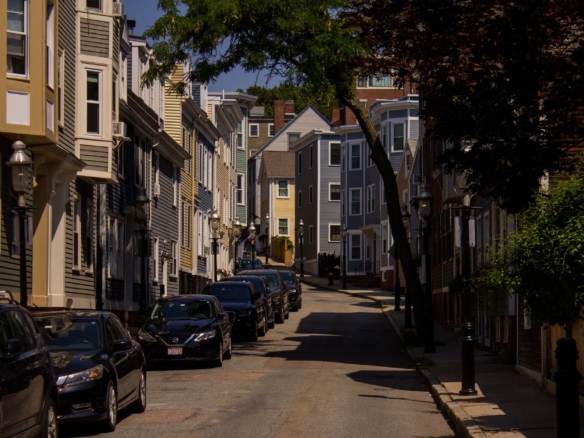
South Boston has undergone the most dramatic transformation of any Boston neighborhood in the past 25 years. The historically Irish-American working-class enclave that was once fiercely resistant to outside change is now one of Boston’s most sought-after addresses for young professionals, a neighborhood that combines genuine community identity, an excellent social scene, Red Line access, and the best waterfront amenities of any Boston residential neighborhood. “Southie” means something specific to Bostonians, and what it means has changed fundamentally while retaining the neighborhood character that makes it genuinely distinctive. This guide covers the real South Boston in 2026.
Boston Renter Intelligence Survey
How does your rent compare?
Add your numbers and get an instant read on what share of your income goes to rent, measured against what Boston renters actually report. You will also get the Q3 report free on October 7.
See how your rent compares →Check your numbers against Boston data
See what share of your income goes to rent, and how your neighborhood compares. Free, no email required.
South Boston neighborhoods: residential vs. Seaport
South Boston has two distinct sections with very different characters. Residential South Boston, west of Broadway, the area most residents mean when they say “Southie”, retains genuine neighborhood character with the bars, restaurants, and community identity that define the South Boston experience. The Seaport District, the waterfront development on the eastern end, is effectively a different neighborhood: newer, more expensive, more corporate, and less rooted in the community history that defines Southie proper. This guide focuses primarily on residential South Boston.
West Broadway corridor is the social heart, the concentration of bars, restaurants, and weekend energy that defines Southie’s reputation. The Playwright, Lincoln, Capo, and dozens of other bars and restaurants along West Broadway and side streets create the social ecosystem that attracts young professionals from across the metro. 1BR rents: $2,200 to $2,800/month.
East Broadway and L Street have a slightly quieter residential character while maintaining walkable access to the waterfront and amenities. More families and longer-term residents, still excellent access to the beach and Castle Island. 1BR rents: $2,000 to $2,600/month.
Andrew Square area is South Boston’s most affordable section and the area most affected by ongoing gentrification pressure from the main Southie neighborhoods to the north. Good Red Line access at Andrew. 1BR rents: $1,900 to $2,400/month.
Castle Island and the South Boston waterfront
Castle Island is South Boston’s crown jewel and one of the most beloved public spaces in all of Boston. The peninsula jutting into Boston Harbor, with a historic fort, a 2.2-mile perimeter walking path, stunning harbor views, and Sullivan’s hot dog stand (a Boston institution), draws residents and visitors from across the metro. On a summer evening, the Castle Island path is packed with joggers, families, couples, and the general public enjoying what is genuinely one of the finest urban waterfronts in America. Living within walking distance of Castle Island is one of the underrated privileges of South Boston residency.
Carson Beach and M Street Beach provide the metro’s best urban beach access, a fact that surprises many newcomers who don’t realize Boston has genuine swimming beaches within the city limits. The beaches are popular in summer and the waterfront promenade provides year-round walking and cycling access along the harbor.
South Boston social scene
South Boston has Boston’s most active young professional social scene, a concentration of bars and restaurants that creates genuine neighborhood energy particularly on weekends. The St. Patrick’s Day parade in March is the neighborhood’s most famous annual event, drawing massive crowds. But the daily social infrastructure, the packed bars on a Thursday evening, the brunch crowds on Sunday, the informal social networks that develop in a neighborhood where many residents are in similar life stages, is what keeps South Boston’s reputation for social life well-earned year-round.
The flip side of this social energy is noise and the general intensity of a neighborhood that generates significant foot traffic on weekend evenings. Residents who value quiet evenings or early bedtimes sometimes find the West Broadway corridor’s energy more than they bargained for. Choosing an apartment even a few blocks from the main bar corridor makes a meaningful difference in noise levels.
Are You a Licensed MA Real Estate Agent?
List your Boston rentals and properties free on Homzora. Zero fees. Zero commissions. Direct leads sent to you.
Getting around South Boston
South Boston has excellent Red Line access via Broadway and Andrew stations, providing direct service to downtown Boston (10 15 minutes to Downtown Crossing), Cambridge (20 25 minutes), and the full Red Line corridor. The Silver Line serves the Seaport end and provides connections to South Station and the airport. Southie is also very walkable, the neighborhood’s compact grid makes most destinations accessible on foot.
Parking is competitive, particularly near the West Broadway corridor on weekend evenings when visitors add to resident parking demand. Street cleaning regulations require moving cars twice weekly on most South Boston streets, a logistical requirement that catches newcomers off guard until it becomes routine.
South Boston housing market 2026
South Boston’s housing market has been transformed by two decades of gentrification. Median condo prices run $600,000 to $850,000 for quality units; the triple-deckers that dominated South Boston’s housing stock have largely been converted to condos, with remaining multi-family buildings commanding $800,000 $1.1M. Rental prices of $2,000 to $2,800/month for 1-bedrooms represent a premium over comparable-distance neighborhoods like Dorchester but a discount to South End and Back Bay.
South Boston investment properties have delivered strong appreciation, triple-deckers purchased for $300,000 to $400,000 in 2010 now sell for $800,000 $1.1M. The neighborhood’s transformation trajectory has largely run its course, suggesting more moderate future appreciation than the dramatic gains of the 2010s. For current pricing, see our Boston Rental Market Report 2026. Use our Boston rent vs. buy calculator to model your specific situation in South Boston.
Free Download: 2026 Boston Rent Guide
Average rents for 13 Boston neighborhoods, salary requirements by area, and your personalized move-in cost estimate, free PDF download.
No spam. Unsubscribe anytime. Homzora, Greater Boston.
Are You a Licensed MA Real Estate Agent?
Partner with Homzora and grow your business with qualified buyer and seller referrals across Greater Boston and Massachusetts.
Are You a Licensed MA Real Estate Agent?
List your Boston rentals and properties free on Homzora. Zero fees. Zero commissions. Direct leads sent to you.
📋 Free: The Boston Renter’s Move-In Rights Checklist
Monthly insights on Boston rents, home tips, and investment opportunities, delivered free to your inbox.
Data sources and methodology
Rent data compiled from publicly available sources including the U.S. Census Bureau American Community Survey, Massachusetts Association of Realtors, Zillow Research, CoStar Group, and MBTA ridership reports. Neighborhood statistics reflect current market conditions as of 2026. Figures are estimates based on available market data and should be used for informational purposes. For precise current listings and pricing contact a licensed Massachusetts real estate professional.
Related Boston Housing Resources
Recommended for Boston Property Owners
Upgrade your Boston rental property with a reliable automatic gate opener. Easy installation, app control, and built for New England weather.
Power Backup for Boston Homeowners
Power your Boston home or rental property with BLUETTI portable power stations. Perfect backup power for New England winters and storm season.
Furnish your Boston apartment with elegant and affordable modern furniture from Sicotas. Free shipping on many items with 60 day returns.
Elevate your Boston apartment or home with HERNEST modern furniture. Timeless designs built to last with fast delivery to Greater Boston.
South Boston’s transformation
South Boston’s transformation from a predominantly Irish-American working-class neighborhood to one of Boston’s most sought-after young professional destinations is one of the metro’s most dramatic stories of the past 20 years. The change was driven by proximity to downtown, Red Line access, the Seaport District’s development creating spillover demand, and the neighborhood’s genuine physical assets, wide streets, solid triple-decker housing stock, Castle Island and Carson Beach providing waterfront access unmatched by any other Boston neighborhood, and the Broadway commercial corridor that has become one of the city’s best casual dining concentrations.
The residential section of South Boston, west of Broadway, distinct from the Seaport, has maintained more of its neighborhood character than the Seaport’s developer-driven monoculture. Long-term residents coexist with young professionals in a neighborhood that still has genuine community roots alongside the new restaurants and bars. This balance is part of what makes South Boston feel more authentically Boston than the Seaport, it has a history and an identity beyond the most recent development cycle. For current rent data and neighborhood comparisons, see our Boston Rental Market Report 2026 and our best neighborhoods for young professionals guide.
South Boston real estate 2026
South Boston’s median condo price of $700,000-$850,000 and single-family prices of $900,000-$1.2M+ reflect the neighborhood’s premium positioning. Multi-family properties, once the dominant housing type, have been heavily converted to condos over the past decade, reducing the rental supply and pushing rents upward. For buyers, South Boston offers strong appreciation history and the lifestyle amenities that command premium pricing. For investors, the condo conversion trend has reduced multi-family availability but properties that remain generate strong rental demand. Use our Boston rent vs. buy calculator to model your South Boston decision and connect with a Homzora partner agent.
South Boston’s waterfront and outdoor life
South Boston’s outdoor assets are the neighborhood’s strongest differentiator from other Boston neighborhoods at comparable price points. Castle Island, a 22-acre recreation area on a peninsula jutting into Boston Harbor, is one of the most beloved public spaces in the city, packed with walkers, joggers, families, and the devoted regulars who make multiple visits per week year-round. Sullivan’s, the seasonal food stand at Castle Island, is a Boston institution with lines that persist well into October. Carson Beach and Pleasure Bay provide additional ocean access within easy walking distance of most South Boston apartments, giving the neighborhood a coastal character unusual for an urban neighborhood this close to downtown.
South Boston’s community character
South Boston’s community character is more complex than its reputation as a young professional party neighborhood suggests. The neighborhood still has a significant population of long-term Irish-American families who have lived here for generations, an authentic community substrate that gives Southie a sense of place and history that more thoroughly gentrified neighborhoods lack. The tension between this legacy community and the newer arrivals is real and occasionally visible, but the overall neighborhood dynamic is generally functional, both communities use Castle Island, the same bars, and the same grocery stores, creating a social mix that is more diverse than the neighborhood’s demographic reputation suggests. For the full young professional Boston perspective, see our complete young professional neighborhood guide.
📚 Related Reading on Homzora
📋 Free: The Boston Renter’s Move-In Rights Checklist
What landlords can legally charge, the 2025 broker-fee rule, and your deposit rights — one printable page.
Download the checklist (PDF) → — and subscribe for the quarterly Boston Renter Report:
Related posts