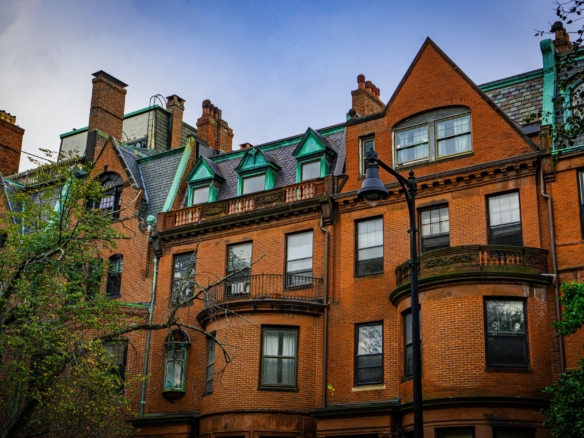
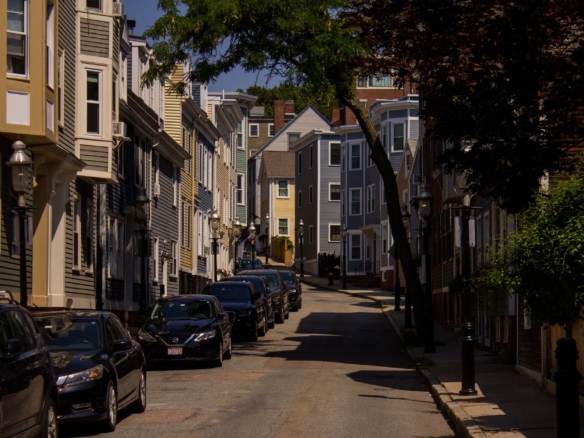
East Boston is the most interesting neighborhood in Greater Boston right now, a place in genuine transformation where the energy of change is palpable and the investment thesis is clear. Separated from downtown Boston by the harbor and connected by the Blue Line, two tunnels, and the MBTA ferry, East Boston has spent the past decade attracting the artists, young professionals, and entrepreneurs who recognized its combination of harbor views, transit access, excellent Latin American food, and relative affordability before the broader market caught on. The broader market has now caught on, and East Boston is still worth understanding deeply. This is the real East Boston in 2026.
Boston Renter Intelligence Survey
How does your rent compare?
Add your numbers and get an instant read on what share of your income goes to rent, measured against what Boston renters actually report. You will also get the Q3 report free on October 7.
See how your rent compares →Check your numbers against Boston data
See what share of your income goes to rent, and how your neighborhood compares. Free, no email required.
East Boston neighborhoods: a geographic primer
Maverick Square is East Boston’s most transit-accessible neighborhood, the Blue Line’s Maverick station puts downtown Government Center under 10 minutes away. The area around Maverick has seen the most development and gentrification pressure, with new residential buildings and restaurants establishing themselves alongside the long-standing Latin American community. 1BR rents: $2,100 to $2,700/month.
Jeffries Point is East Boston’s most rapidly gentrifying neighborhood, the waterfront area adjacent to the East Boston Greenway has attracted acclaimed restaurants (Cunard Tavern, Santarpio’s pizza), new residential development with harbor views, and the concentration of young professionals who are defining East Boston’s emerging identity. The greenway provides excellent cycling and walking infrastructure along the waterfront. 1BR rents: $2,200 to $2,800/month.
Orient Heights offers East Boston at its most established and community-oriented, a residential neighborhood with Blue Line access at Orient Heights station, strong community character, and prices meaningfully more accessible than Jeffries Point and Maverick. The neighborhood has avoided much of the intense gentrification pressure affecting the waterfront neighborhoods. 1BR rents: $1,900 to $2,400/month.
Eagle Hill is a residential hillside neighborhood with some of the best harbor and skyline views in East Boston, properties on the hill’s crest look directly across the harbor at downtown Boston’s skyline, a view that commands significant premiums. The neighborhood’s physical separation from the busier commercial areas gives it a quieter character. 1BR rents: $2,000 to $2,500/month.
East Boston’s Latin American community and food scene
East Boston has one of Greater Boston’s most vibrant Latin American communities, predominantly Central American and South American immigrants who have established the neighborhood’s character and created a food scene that is genuinely exceptional. The concentration of authentic Salvadoran, Guatemalan, Colombian, and Mexican restaurants along Bennington Street and in the squares around the Blue Line stations represents some of the most authentic and affordable ethnic food in the entire Boston metro.
Alongside the long-established Latin American restaurants, East Boston’s gentrification has brought a new generation of restaurants that are drawing diners from across the metro. Santarpio’s Pizza, a Boston institution since 1903, draws pilgrims from across New England. Cunard Tavern has become one of Boston’s most acclaimed neighborhood restaurants. The combination of authentic ethnic dining and the new restaurant wave creates a food scene that is genuinely more interesting than most Boston neighborhoods.
The East Boston Greenway and waterfront
The East Boston Greenway, a linear park and multi-use path running along the waterfront from Bremen Street Park to Piers Park, is East Boston’s great public infrastructure success story. The greenway provides protected cycling and walking access along the harbor, with views of the downtown skyline and Logan Airport activity that are uniquely East Boston. Piers Park at the northern end has harbor access, a fishing pier, and one of the finest views of Boston’s skyline available anywhere in the city.
The waterfront development along Jeffries Point has added new public spaces, restaurants, and residential buildings that have elevated the neighborhood’s amenity quality while creating the gentrification pressure that longtime residents have mixed feelings about. The balance between investment and displacement is East Boston’s central community tension, one that the neighborhood’s civic organizations engage with actively.
Are You a Licensed MA Real Estate Agent?
List your Boston rentals and properties free on Homzora. Zero fees. Zero commissions. Direct leads sent to you.
Getting around East Boston
East Boston’s Blue Line access is excellent, three stations (Airport, Maverick, Orient Heights) plus the Wood Island and Suffolk Downs stops provide coverage across the neighborhood. The Blue Line to Government Center runs under 10 minutes from Maverick, making East Boston’s commute genuinely competitive with more expensive inner neighborhoods. The MBTA ferry from Long Wharf to East Boston provides a scenic alternative commute that takes approximately 7 minutes.
The Sumner and Callahan Tunnels connect East Boston to downtown by car, but tunnel traffic during peak hours can make driving significantly slower than the Blue Line. Most East Boston residents rely primarily on transit, and the Blue Line’s frequency and reliability (better than the Green Line) makes car-free living genuinely feasible for most daily needs.
East Boston housing market and investment 2026
East Boston has delivered the strongest appreciation of any Boston neighborhood over the past decade, properties purchased in 2015 have appreciated 60 80% in many cases, driven by the combination of transit access improvement, waterfront development, and the outward migration of buyers priced out of Cambridge and South Boston. Current median condo prices run $450,000 to $650,000; multi-family properties (2-3 units) sell for $600,000 to $900,000 depending on location and condition.
For investors, East Boston still offers gross yields of 6 7.5%, among the best in Boston’s inner ring, with appreciation momentum that remains strong. The neighborhood’s ongoing development pipeline and continued demand pressure from buyers priced out of more expensive neighborhoods support continued appreciation. For detailed investment analysis, see our East Boston investment guide, use our Boston landlord cash flow calculator, and see our Boston Rental Market Report 2026 for current pricing.
Free Download: 2026 Boston Rent Guide
Average rents for 13 Boston neighborhoods, salary requirements by area, and your personalized move-in cost estimate, free PDF download.
No spam. Unsubscribe anytime. Homzora, Greater Boston.
Affiliate link, Homzora earns a commission at no cost to you.