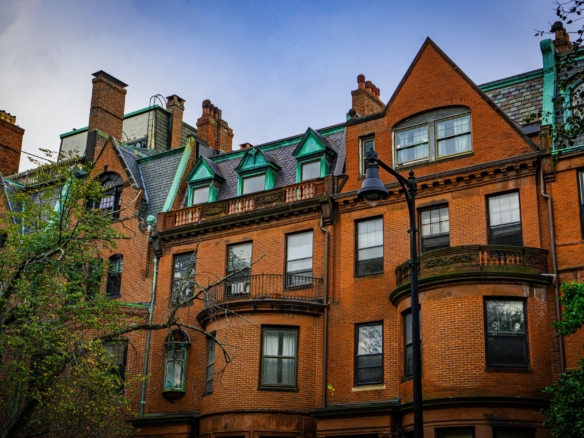
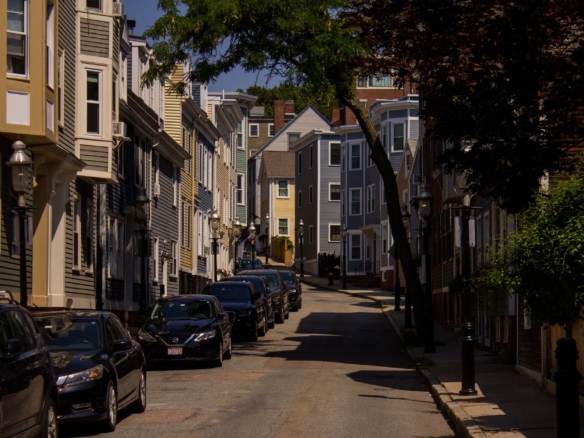
Dorchester is Boston’s largest, most diverse, and most misunderstood neighborhood. At 6 square miles, larger than many Massachusetts cities, Dorchester contains multitudes: Victorian triple-deckers on tree-lined streets, the best Vietnamese food in New England, a Red Line spine that makes downtown genuinely accessible, and a community fabric woven from generations of Irish, Caribbean, Vietnamese, Cape Verdean, and Latino residents who have made Dorchester Boston’s most genuinely cosmopolitan neighborhood. This guide covers the real Dorchester in 2026.
Boston Renter Intelligence Survey
How does your rent compare?
Add your numbers and get an instant read on what share of your income goes to rent, measured against what Boston renters actually report. You will also get the Q3 report free on October 7.
See how your rent compares →Check your numbers against Boston data
See what share of your income goes to rent, and how your neighborhood compares. Free, no email required.
Dorchester sub-neighborhoods
Savin Hill, one of Boston’s best-kept secrets. A waterfront neighborhood on Dorchester Bay with beautiful Victorian homes, a small beach, and Red Line access at Savin Hill station. Young professionals who discover Savin Hill rarely leave. 1BR rents: $1,800 to $2,300/month.
Fields Corner, the heart of Boston’s Vietnamese community. The concentration of authentic Vietnamese restaurants, bakeries, and markets along Dorchester Avenue makes Fields Corner the destination for pho, banh mi, and Vietnamese coffee in Greater Boston. Red Line access at Fields Corner station. 1BR rents: $1,600 to $2,000/month.
Codman Square, a neighborhood undergoing investment and improvement with strong community organization and improving commercial character. More affordable than Savin Hill with good bus access. 1BR rents: $1,500 to $1,900/month.
Meeting House Hill, a hilltop neighborhood with some of Dorchester’s finest Victorian architecture and sweeping views of the Boston Harbor and surrounding neighborhoods. 1BR rents: $1,700 to $2,100/month.
Port Norfolk, a small peninsula jutting into the Neponset River with waterfront views and a tight-knit community character. Among the most quietly desirable spots in all of Dorchester. 1BR rents: $1,800 to $2,200/month.
Dorchester’s food scene: genuinely exceptional
Dorchester’s culinary diversity is among its greatest assets. The Vietnamese restaurant concentration along Dorchester Avenue, Pho Pasteur, Ba Le Bakery, Pho 2000, and dozens of others, is unmatched outside of Vietnam itself. Caribbean restaurants reflect the Jamaican, Haitian, and Trinidadian communities that give Dorchester its cultural richness. The Dot Ave corridor has become increasingly destination-worthy with new independent restaurants alongside the long-established ethnic eateries. The weekly Dorchester Farmers Market brings local food culture to the community in season.
Getting around Dorchester
Dorchester’s Red Line spine is its transit backbone, the Ashmont branch runs through the neighborhood with stops at Broadway (South Boston border), Andrew, JFK/UMass, Savin Hill, Fields Corner, Shawmut, and Ashmont. Downtown Crossing is 15 20 minutes from most Dorchester Red Line stations, making the commute genuinely competitive with more expensive neighborhoods. The Mattapan High Speed Line (an antique streetcar system) extends service from Ashmont through Mattapan and into Milton. Bus routes provide coverage to areas between Red Line stations.
Are You a Licensed MA Real Estate Agent?
List your Boston rentals and properties free on Homzora. Zero fees. Zero commissions. Direct leads sent to you.
Dorchester housing market 2026
Dorchester offers Greater Boston’s best combination of accessibility, community, and relative affordability. Triple-deckers, Dorchester’s iconic housing type, sell for $600,000 to $850,000 depending on condition and proximity to the Red Line. Condos converted from triple-deckers run $350,000 to $550,000. Rental 1-bedrooms average $1,600 to $2,200/month, meaningfully less than comparable-quality units in South Boston or Jamaica Plain. For investors, gross yields of 5.5 7% are achievable in well-selected Dorchester multi-families, among the best in Boston proper. Use our Boston landlord cash flow calculator to analyze specific properties.
What people love about Dorchester
Residents consistently cite Dorchester’s genuine diversity, the food scene, the Red Line access, and the community fabric as reasons for their loyalty. The neighborhood avoids the monoculture that affects some more aggressively gentrified Boston neighborhoods, the mix of long-term residents, recent immigrants, and young professionals creates an authenticity that feels earned rather than performed. For more Boston neighborhood resources, see our complete Boston neighborhood guide and our Boston Rental Market Report 2026.
Free Download: 2026 Boston Rent Guide
Average rents for 13 Boston neighborhoods, salary requirements by area, and your personalized move-in cost estimate, free PDF download.
No spam. Unsubscribe anytime. Homzora, Greater Boston.
Are You a Licensed MA Real Estate Agent?
Partner with Homzora and grow your business with qualified buyer and seller referrals across Greater Boston and Massachusetts.
Are You a Licensed MA Real Estate Agent?
List your Boston rentals and properties free on Homzora. Zero fees. Zero commissions. Direct leads sent to you.
📋 Free: The Boston Renter’s Move-In Rights Checklist
Monthly insights on Boston rents, home tips, and investment opportunities, delivered free to your inbox.
Data sources and methodology
Rent data compiled from publicly available sources including the U.S. Census Bureau American Community Survey, Massachusetts Association of Realtors, Zillow Research, CoStar Group, and MBTA ridership reports. Neighborhood statistics reflect current market conditions as of 2026. Figures are estimates based on available market data and should be used for informational purposes. For precise current listings and pricing contact a licensed Massachusetts real estate professional.
Related Boston Housing Resources
Recommended for Boston Property Owners
Upgrade your Boston rental property with a reliable automatic gate opener. Easy installation, app control, and built for New England weather.
Power Backup for Boston Homeowners
Power your Boston home or rental property with BLUETTI portable power stations. Perfect backup power for New England winters and storm season.
Furnish your Boston apartment with elegant and affordable modern furniture from Sicotas. Free shipping on many items with 60 day returns.
Elevate your Boston apartment or home with HERNEST modern furniture. Timeless designs built to last with fast delivery to Greater Boston.
Dorchester’s neighborhoods in depth
Dorchester is Boston’s largest neighborhood by area and population, but it’s not a single community. It’s a collection of distinct sub-neighborhoods with meaningfully different characters, price points, and trajectories. Savin Hill, adjacent to the Savin Hill Red Line station, has gentrified significantly over the past decade, triple-deckers here now sell for $700,000-$900,000 and rents approach South Boston levels. Fields Corner, the neighborhood’s commercial heart, has a strong Vietnamese community and excellent pho restaurants that draw visitors from across the metro. Ashmont, at the southern Red Line terminus, has an improving restaurant scene and is popular with young professional buyers priced out of Savin Hill. Four Corners and Codman Square are more affordable and more working-class in character, with greater variability in housing quality and street-level safety that rewards block-level research before renting or buying.
The Red Line serves Dorchester with multiple stations, Savin Hill, Fields Corner, Shawmut, and Ashmont, making much of the neighborhood genuinely T-accessible. This transit coverage, combined with prices meaningfully below comparable inner-ring neighborhoods, makes Dorchester the most compelling value investment neighborhood in Boston proper. For investment analysis, use our Boston landlord cash flow calculator and see our Boston investment properties guide. For current rent data, see our Boston Rental Market Report 2026.
Who Dorchester is right for
Dorchester is excellent for budget-conscious renters who need Red Line access, first-time buyers who want Boston proper ownership at accessible prices, investors seeking strong rental yields with improving neighborhood quality, and people who value genuine community diversity and cultural depth over neighborhood prestige. The neighborhood requires more due diligence than premium neighborhoods, block-level research matters here, but rewards buyers and renters who do that work with some of the best value available in Boston proper.
Dorchester’s food scene
Dorchester’s food scene is one of Boston’s most underappreciated culinary assets, a genuine multicultural dining landscape driven by the neighborhood’s diverse communities rather than by food trend cycles or developer-driven restaurant recruitment. The Vietnamese concentration in Fields Corner produces some of the metro’s best pho, banh mi, and boba tea at prices that reflect neighborhood economics rather than tourist premiums. The Caribbean dining scene along Blue Hill Avenue serves the neighborhood’s significant Haitian, Jamaican, and Cape Verdean communities with authentic cooking that restaurant-focused Bostonians travel specifically to experience. Ashmont’s restaurant corridor has developed into a legitimate dining destination with thoughtful independent spots that would be celebrated in the South End at half the price.
Dorchester parks and outdoor space
Dorchester has outdoor amenities that surprise visitors unfamiliar with the neighborhood. Tenean Beach, on Dorchester Bay, provides ocean access minutes from the Red Line. Ronan Park and Morrissey Boulevard offer running and cycling infrastructure with harbor views. Pope John Paul II Park, bordering the Neponset River, is one of the larger green spaces in Boston proper, 65 acres of meadows, trails, and river access that rival Jamaica Pond for outdoor amenity without the Jamaica Plain price premium. The Neponset Greenway, a multi-use path running from Dorchester to Milton along the Neponset River, provides one of the best cycling corridors in the city. For comprehensive Dorchester investment analysis, use our Boston landlord cash flow calculator.
Dorchester investment strategy for 2026
Investors approaching Dorchester in 2026 need to think sub-neighborhood rather than treating Dorchester as a monolithic market. Savin Hill and Lower Mills have largely completed their gentrification cycle, prices have risen to the point where cap rates of 4.5-5% are more typical, appreciation has moderated, and value-add opportunities are scarcer. These areas suit buyers who want stable, lower-risk returns with appreciation driven by broader Boston market dynamics rather than neighborhood-specific improvement. Fields Corner, Ashmont, and Four Corners remain in earlier stages of the improvement cycle, higher cap rates of 5.5-7%, more value-add opportunity, higher management intensity, and more upside for buyers who can identify the right specific properties. Codman Square and Bowdoin-Geneva are the earliest-stage areas, cap rates of 6-8% are achievable, but require the most thorough due diligence and the highest tolerance for management complexity. For investors with the time and expertise to do genuine underwriting, Dorchester’s earlier-stage neighborhoods offer the best risk-adjusted returns available in Boston proper. See our Massachusetts multi-family guide and use our cash flow calculator for deal analysis.
For renters considering Dorchester, the most important research step is visiting specific blocks and streets rather than relying on neighborhood-level reputation. The variation within Dorchester is significant, a street in Savin Hill near the Red Line feels completely different from a street in Four Corners, and both are technically Dorchester. Spending time in your target area at different times of day, talking to residents, and researching specific building ownership and management history will give you reliable information that neighborhood-level guides can’t provide. Use our Boston rent affordability calculator to confirm your Dorchester budget and our Boston neighborhood finder to compare Dorchester against other value options across Greater Boston.
📚 Related Reading on Homzora
📋 Free: The Boston Renter’s Move-In Rights Checklist
What landlords can legally charge, the 2025 broker-fee rule, and your deposit rights — one printable page.
Download the checklist (PDF) → — and subscribe for the quarterly Boston Renter Report:
Related posts