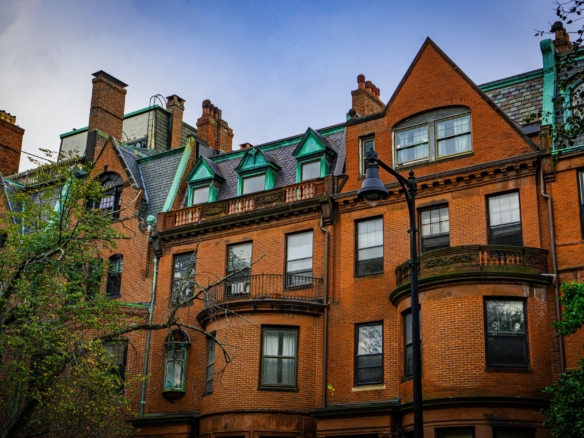
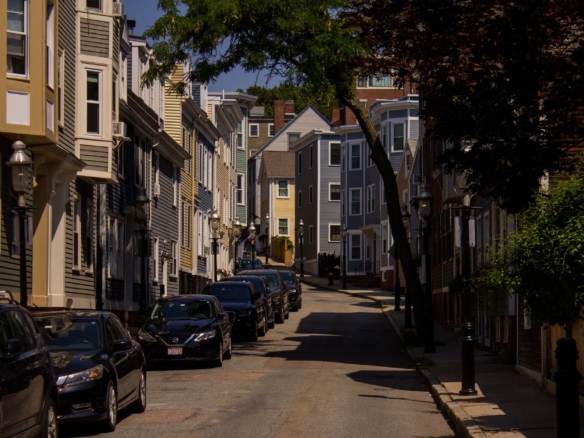
Allston and Brighton occupy a unique position in Boston’s neighborhood hierarchy, the most affordable inner neighborhoods in the city, separated from Fenway and the Back Bay by just the Muddy River, yet meaningfully cheaper than any comparable-proximity alternative. The combination of Boston University, Boston College, and their collective student populations has kept Allston-Brighton rents anchored at levels that make it Boston’s entry-level neighborhood for people who want urban access without South End pricing. This guide covers the real Allston-Brighton in 2026.
Boston Renter Intelligence Survey
How does your rent compare?
Add your numbers and get an instant read on what share of your income goes to rent, measured against what Boston renters actually report. You will also get the Q3 report free on October 7.
See how your rent compares →Check your numbers against Boston data
See what share of your income goes to rent, and how your neighborhood compares. Free, no email required.
Allston vs. Brighton: two distinct neighborhoods
Allston proper, centered on Harvard Avenue and the Allston Village neighborhood, is the more urban, student-heavy, and socially active half. Harvard Ave’s concentration of cheap restaurants, bars, record stores, and the independent music venues that have made Allston a legitimate music scene destination give it an energy that’s chaotic in the best way. The Green Line B branch runs through Allston. 1BR rents: $1,600 to $2,100/month.
Brighton is Allston’s quieter, slightly more residential sibling, more families, more long-term residents, and a commercial center along Washington Street and Brighton Avenue that’s lower-key than Allston Village but functional. The Green Line B and C branches serve Brighton. 1BR rents: $1,700 to $2,100/month.
Allston’s restaurant scene: the best cheap food in Boston
Allston has Boston’s finest collection of cheap, excellent, diverse restaurants, a direct product of the student population that demands quality at accessible prices. The concentration of Korean, Chinese, Japanese, and pan-Asian restaurants along Harvard Avenue and Brighton Avenue is exceptional. Mike’s City Diner is a Boston breakfast institution. The international food corridor along Harvard Ave represents some of the most authentic and affordable ethnic food in the metro. Allston’s restaurant scene is genuinely superior to many neighborhoods that cost twice as much.
Getting around Allston-Brighton
The Green Line B branch runs through Allston-Brighton from Kenmore through multiple stops to Boston College, providing downtown access, but the B branch is famously the slowest line in the MBTA system. The combination of street-level running, frequent stops, and surface traffic makes the B branch significantly slower than the subway lines that serve comparable-distance neighborhoods. Depending on your destination and tolerance for slow transit, the B branch is either adequate or frustrating. Cyclists have reasonable infrastructure for commuting to the Longwood Medical Area and the Back Bay.
Who Allston-Brighton is right for
Allston-Brighton is excellent for: budget-conscious renters who want urban access without premium pricing, BU and BC students and staff who want campus proximity, music lovers who value the live music scene, and food enthusiasts who want the best ethnic restaurant value in the city. It’s less ideal for people who value quiet, those with long downtown commutes (the B branch is slow), and anyone seeking the polished neighborhood aesthetic of South End or Back Bay. For budget planning, use our Boston rent affordability calculator and see our best Boston neighborhoods for young professionals.
Are You a Licensed MA Real Estate Agent?
List your Boston rentals and properties free on Homzora. Zero fees. Zero commissions. Direct leads sent to you.
Free Download: 2026 Boston Rent Guide
Average rents for 13 Boston neighborhoods, salary requirements by area, and your personalized move-in cost estimate, free PDF download.
No spam. Unsubscribe anytime. Homzora, Greater Boston.
Are You a Licensed MA Real Estate Agent?
Partner with Homzora and grow your business with qualified buyer and seller referrals across Greater Boston and Massachusetts.
📋 Free: The Boston Renter’s Move-In Rights Checklist
Monthly insights on Boston rents, home tips, and investment opportunities, delivered free to your inbox.
Data sources and methodology
Rent data compiled from publicly available sources including the U.S. Census Bureau American Community Survey, Massachusetts Association of Realtors, Zillow Research, CoStar Group, and MBTA ridership reports. Neighborhood statistics reflect current market conditions as of 2026. Figures are estimates based on available market data and should be used for informational purposes. For precise current listings and pricing contact a licensed Massachusetts real estate professional.
Related Boston Housing Resources
Are You a Licensed MA Real Estate Agent?
List your Boston rentals and properties free on Homzora. Zero fees. Zero commissions. Direct leads sent to you.
Recommended for Boston Property Owners
Upgrade your Boston rental property with a reliable automatic gate opener. Easy installation, app control, and built for New England weather.
Power Backup for Boston Homeowners
Power your Boston home or rental property with BLUETTI portable power stations. Perfect backup power for New England winters and storm season.
Furnish your Boston apartment with elegant and affordable modern furniture from Sicotas. Free shipping on many items with 60 day returns.
Elevate your Boston apartment or home with HERNEST modern furniture. Timeless designs built to last with fast delivery to Greater Boston.
Allston Brighton rental market 2026
Allston and Brighton’s rental market is defined by one dominant force: Boston University and its 34,000 students. The academic calendar drives everything, September 1st lease starts are more concentrated here than almost anywhere else in the city, the spring market (March-May) is intensely competitive for quality units, and October through February offers more flexibility and negotiating room than any other time of year. For renters who can time their search for the off-season, Allston and Brighton offer the most negotiating leverage of any Boston neighborhood.
Average 1BR rents of $1,600-$2,100/month represent the lowest prices for an inner Boston neighborhood with any meaningful T access. The trade-off is housing stock quality, Allston’s triple-deckers and apartment buildings are generally older and less well-maintained than premium neighborhoods, and the landlord-tenant dynamic reflects a market where demand is reliable enough that some landlords defer maintenance. Doing thorough apartment inspections and researching specific landlords before signing is more important here than in better-managed markets. For budget planning, use our Boston rent affordability calculator.
Who Allston Brighton is right for
Allston and Brighton work best for recent graduates and early-career professionals who need to minimize housing costs while building savings, students at Boston University and Boston College, young professionals who prioritize social scene and nightlife over neighborhood prestige, and anyone who values low rent above most other considerations. The neighborhood is a poor fit for families with children, professionals who prioritize quiet and community stability, or anyone sensitive to the student-heavy demographic that dominates the neighborhood’s character. For comparison with other affordable Boston options, see our complete neighborhood guide for young professionals and our Boston Rental Market Report 2026.
Allston Brighton dining and nightlife
Allston’s dining scene is one of Boston’s best-kept secrets, a concentration of affordable, high-quality restaurants driven by the neighborhood’s diverse student population and the economic pressure to deliver value. Korean BBQ spots, late-night ramen shops, cheap but excellent Vietnamese pho, and the kind of casual dining that disappears from neighborhoods when rents rise past a certain threshold. Lone Star Taco Bar, Deep Ellum, and Cityside have anchored the more upscale end of the dining scene while maintaining the neighborhood’s unpretentious character. Brighton’s Faneuil Street corridor has a different, quieter dining character, neighborhood spots rather than destination restaurants, reflecting Brighton’s more residential composition.
Nightlife in Allston is genuinely active by Boston standards, the Great Scott music venue (recently reopened after COVID closure) remains one of the best small venues in New England for discovering new music, and the bar concentration along Harvard Avenue provides the kind of late-night social infrastructure that disappears from more expensive neighborhoods. The trade-off is the student-heavy weekend crowd that makes some Allston bars feel more like college bars than neighborhood bars. Brighton’s nightlife is more subdued, reflecting its slightly older and more settled demographic.
Allston Brighton transportation
The Green Line B branch is Allston’s primary T connection, running along Commonwealth Avenue with stops at Packards Corner, Harvard Avenue, Griggs Street, and Allston Street before continuing inbound to Kenmore, Copley, and Park Street. Journey times to downtown run 25-35 minutes depending on the stop and time of day. The B branch is one of the slower Green Line branches due to surface running and frequent stops, which is a real daily frustration for regular commuters. Allston residents who work in Kendall Square or the Seaport may find the commute frustratingly slow and prefer biking or the 66 bus to Harvard Square for Red Line access. For commute cost analysis, use our Boston MBTA commute estimator.
Allston Brighton vs. other affordable Boston neighborhoods
Allston and Brighton’s closest budget competitor is Dorchester, both offer rents below $2,200/month with T access, but the neighborhoods serve different demographics and lifestyles. Allston wins on social energy, restaurant density, and proximity to the Fenway and Back Bay; Dorchester wins on space, community diversity, and investment potential. Malden and Medford offer comparable rents with Orange and Green Line access but require a longer commute for downtown workers. For renters who specifically value being close to Boston University, Boston College, or Harvard, Allston and Brighton have no real competitor at the price point. The neighborhood’s affordability advantage will likely compress over the next 5-7 years as the Green Line B upgrades improve service reliability, locking in lower rents now while the B branch remains slow is a legitimate strategy for budget-conscious renters with a medium-term Boston timeline. Use our Boston neighborhood finder to compare Allston against other options based on your specific priorities, and our rent affordability calculator to confirm your budget.
For renters ready to start their Allston or Brighton search, the best strategy is to begin 60-75 days before your target move-in date, have first month, last month, and security deposit liquid before viewing apartments, and be prepared to apply the same day you find a unit you want. The spring market moves extremely fast. Use our Boston moving checklist to prepare and our MBTA commute estimator to calculate your exact commute cost from any Allston or Brighton address before signing a lease.
For more Greater Boston neighborhood comparisons, current rent data, and free planning tools, visit Homzora Boston Rental Market Report 2026 and use our Boston neighborhood finder to compare all 14 Greater Boston neighborhoods side by side based on your budget, commute, lifestyle, and household situation. All tools are free and updated for 2026 market conditions.
📚 Related Reading on Homzora
📋 Free: The Boston Renter’s Move-In Rights Checklist
What landlords can legally charge, the 2025 broker-fee rule, and your deposit rights — one printable page.
Download the checklist (PDF) → — and subscribe for the quarterly Boston Renter Report:
Related posts