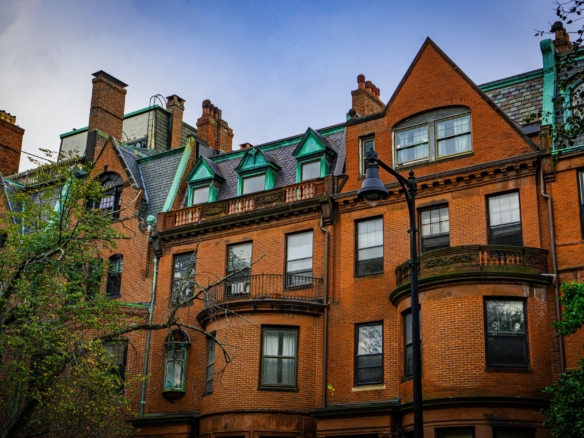
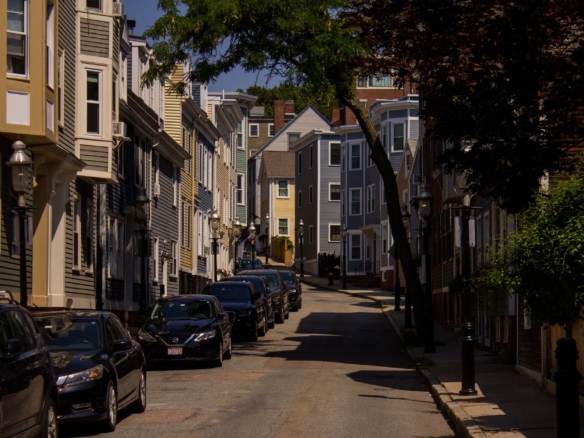
Quincy represents the most compelling value proposition in the Greater Boston residential market, a city with four Red Line stations, improving downtown amenities, genuine community character, and home prices 20 30% below comparable neighborhoods with equivalent transit access. While Cambridge and Somerville have been transformed by investment and appreciation into premium markets, Quincy retains accessibility that first-time buyers and value-conscious renters increasingly recognize. This guide covers the real Quincy experience in 2026.
Boston Renter Intelligence Survey
How does your rent compare?
Add your numbers and get an instant read on what share of your income goes to rent, measured against what Boston renters actually report. You will also get the Q3 report free on October 7.
See how your rent compares →Check your numbers against Boston data
See what share of your income goes to rent, and how your neighborhood compares. Free, no email required.
Quincy neighborhoods
Quincy Center, the downtown core served by Quincy Center Red Line station, has undergone significant revitalization with new restaurants, the renovated Quincy Market area, and improving retail that has elevated the neighborhood’s daily life quality meaningfully over the past decade. 1BR rents: $1,800 to $2,200/month.
North Quincy, served by the North Quincy Red Line station, has the strongest mix of residential quality and transit access in Quincy. The neighborhood has attracted significant young professional migration from Boston proper and Cambridge. 1BR rents: $1,800 to $2,300/month.
Wollaston, served by Wollaston station, is quieter and more residential with good access to Wollaston Beach on Quincy Bay. 1BR rents: $1,700 to $2,100/month.
Quincy Point and South Quincy, the southernmost areas near the Quincy Adams Red Line terminus, have good parking-to-transit access for South Shore commuters who drive to the T. More car-dependent character. 1BR rents: $1,600 to $2,000/month.
Quincy’s improving food and cultural scene
Quincy’s large Chinese-American community, one of the largest outside of Chinatown in Greater Boston, has generated an exceptional concentration of authentic Chinese restaurants, bakeries, and markets along Hancock Street and in the Quincy Center area. The weekend dim sum scene at Quincy’s Chinese restaurants draws diners from across the metro. Korean restaurants, Vietnamese pho shops, and a growing independent restaurant scene have made Quincy’s food landscape genuinely interesting rather than merely functional. The Korean cultural community has grown significantly over the past decade, adding Korean barbecue, karaoke, and cultural events that give Quincy a distinct character.
Getting around Quincy
Quincy’s four Red Line stations, North Quincy, Wollaston, Quincy Center, and Quincy Adams, give it unmatched transit coverage for a community at its price point. The Red Line to Downtown Crossing runs 15 25 minutes from most Quincy stations, providing direct service to downtown Boston, Cambridge, and the full Red Line corridor. Commuter rail (Providence/Stoughton line) serves Quincy Center as an additional transit option. Route 93 access makes driving to downtown practical for those who occasionally need a car for south of Boston destinations.
Are You a Licensed MA Real Estate Agent?
List your Boston rentals and properties free on Homzora. Zero fees. Zero commissions. Direct leads sent to you.
Quincy housing market 2026
Quincy’s housing market offers the best value of any Red Line-accessible community in Greater Boston. Median condo prices of $400,000 to $550,000 and single-family prices of $500,000 to $650,000 represent a 20 30% discount to comparable South Boston and Cambridge properties with equivalent Red Line commute times. Multi-family investment properties generate gross yields of 6 7.5%, among the best available in the transit-accessible metro. The appreciation trajectory has been strong (5.2% annually) as buyers recognize the value. For investment analysis, use our Boston landlord cash flow calculator. For the full commuter town comparison, see our best commuter towns near Boston guide.
Free Download: 2026 Boston Rent Guide
Average rents for 13 Boston neighborhoods, salary requirements by area, and your personalized move-in cost estimate, free PDF download.
No spam. Unsubscribe anytime. Homzora, Greater Boston.
Are You a Licensed MA Real Estate Agent?
Partner with Homzora and grow your business with qualified buyer and seller referrals across Greater Boston and Massachusetts.
📋 Free: The Boston Renter’s Move-In Rights Checklist
Monthly insights on Boston rents, home tips, and investment opportunities, delivered free to your inbox.
Data sources and methodology
Rent data compiled from publicly available sources including the U.S. Census Bureau American Community Survey, Massachusetts Association of Realtors, Zillow Research, CoStar Group, and MBTA ridership reports. Neighborhood statistics reflect current market conditions as of 2026. Figures are estimates based on available market data and should be used for informational purposes. For precise current listings and pricing contact a licensed Massachusetts real estate professional.
Related Boston Housing Resources
Are You a Licensed MA Real Estate Agent?
List your Boston rentals and properties free on Homzora. Zero fees. Zero commissions. Direct leads sent to you.
Recommended for Boston Property Owners
Upgrade your Boston rental property with a reliable automatic gate opener. Easy installation, app control, and built for New England weather.
Power Backup for Boston Homeowners
Power your Boston home or rental property with BLUETTI portable power stations. Perfect backup power for New England winters and storm season.
Furnish your Boston apartment with elegant and affordable modern furniture from Sicotas. Free shipping on many items with 60 day returns.
Elevate your Boston apartment or home with HERNEST modern furniture. Timeless designs built to last with fast delivery to Greater Boston.
Quincy’s neighborhoods in detail
Quincy is not a monolithic suburb, it’s a city of distinct neighborhoods with meaningfully different characters and price points. Quincy Center, surrounding the commuter rail station and Red Line terminus, is the most urban area with the densest commercial development and the most walkable daily-errand infrastructure. North Quincy, served by its own Red Line station, has a more residential character with a mix of single-family homes and condominiums popular with young professional buyers. Wollaston is quieter and more suburban, popular with families for its beach access and school quality. Quincy Point and Germantown offer the most affordable prices in the city but are more car-dependent without direct T access.
Quincy’s commercial revitalization has accelerated meaningfully over the past five years, new restaurants, independent coffee shops, and retail have opened in Quincy Center and along Hancock Street, improving the city’s quality of life and its appeal to young professionals who previously looked past it. The combination of Red Line access, improving amenities, and prices 20-25% below comparable Boston neighborhoods makes Quincy the most compelling value proposition in the metro for transit-dependent renters and buyers. For investment analysis, use our Boston landlord cash flow calculator. For current rent data, see our Boston Rental Market Report 2026.
Who Quincy is right for
Quincy is an excellent choice for renters who want Red Line access at prices below Boston proper, buyers who want their first home at accessible prices without sacrificing T commuting ability, families who value space and outdoor access over urban density, and investors seeking strong rental yields with Boston-quality tenant demand. The city is a poor fit for people who need maximum urban walkability, nightlife concentration, or the cultural density of Cambridge or the South End. For more commuter value options, see our complete commuter towns guide.
Quincy outdoor amenities
Quincy’s outdoor amenities are genuinely exceptional relative to its price point, a combination of ocean access, harbor beaches, and green space that no inner Boston neighborhood can match at comparable rents. Wollaston Beach, a 1.7-mile stretch of public beach on Quincy Bay, is one of the longest public beaches in the Boston metro, accessible by Red Line and free to use. Granite Links Golf Club sits on the former Quarry Hills landfill site, now transformed into one of the metro’s best public golf facilities with harbor views. Blue Hills Reservation, bordering Quincy’s western edge, offers 7,000 acres of hiking, mountain biking, and winter skiing, the closest wilderness to downtown Boston available to residents without a car.
Quincy’s historical character
Quincy has a historical significance that most Boston-area cities can’t claim, it’s the birthplace of both John Adams and John Quincy Adams, the second and sixth Presidents of the United States. The Adams National Historical Park preserves the family’s homes and farm, providing residents with a living history resource that anchors Quincy’s identity as something more than a Boston bedroom community. The United First Parish Church, where both Adams presidents are buried, is one of the few presidential burial sites easily accessible to the public by public transit. This historical depth gives Quincy a civic character and self-identity that newer suburbs lack, and contributes to the community attachment that keeps long-term residents rooted even as they could afford to move elsewhere. For current market data, see our Boston Rental Market Report 2026.
Quincy vs. other Red Line value options
Quincy’s closest competitors on the Red Line value spectrum are Dorchester (closer to downtown, more urban, slightly higher rents) and Milton (adjacent to Quincy, excellent schools, but limited T access). For renters specifically seeking the best value with direct Red Line access, Quincy wins decisively, four stations, improving amenities, and prices 20-25% below comparable Dorchester locations. For buyers, Quincy’s single-family and condo market offers entry-level ownership at $400,000-$600,000 that Boston proper can’t match without significant quality or location compromises. The investment case for Quincy is also compelling, cap rates of 5.5-7% are achievable, tenant demand is strong driven by the employment base at South Shore Hospital, Quincy’s growing downtown, and the Red Line’s daily commuter population. For comprehensive investment analysis, use our Boston landlord cash flow calculator and see our Boston neighborhood finder to compare Quincy against other options.
Quincy’s trajectory over the next decade is positive, the downtown revitalization is ongoing, new residential development is adding amenities and improving the commercial streetscape, and the Red Line’s reliability improvements are reducing the commute friction that has historically kept some renters and buyers looking elsewhere. For renters and buyers who get in now, the combination of current value pricing and an improving neighborhood profile creates a compelling medium-term proposition. Use our Boston neighborhood finder to compare Quincy against other options and our MBTA commute estimator to calculate your exact commute cost from Quincy to your workplace before making a decision.
For more Greater Boston neighborhood comparisons, current rent data, and free planning tools, visit Homzora Boston Rental Market Report 2026 and use our Boston neighborhood finder to compare all 14 Greater Boston neighborhoods side by side based on your budget, commute, lifestyle, and household situation. All tools are free and updated for 2026 market conditions.
sionally need it, and the Southeast Expressway connects to Route 3 for South Shore destinations.
Parking and Car Ownership in Quincy
Unlike Boston proper, Quincy offers relatively accessible street parking and reasonably priced garage options near its Red Line stations. Many apartment buildings include dedicated parking spots, a genuine advantage for households maintaining one vehicle alongside transit commuting. Residents who work in suburbs unreachable by the Red Line particularly benefit from this flexibility. The Quincy Adams station park and ride lot serves South Shore commuters effectively, offering one of the most practical intermodal connections in the entire MBTA system for those balancing city access with suburban lifestyle preferences.
📚 Related Reading on Homzora
📋 Free: The Boston Renter’s Move-In Rights Checklist
What landlords can legally charge, the 2025 broker-fee rule, and your deposit rights — one printable page.
Download the checklist (PDF) → — and subscribe for the quarterly Boston Renter Report:
Related posts