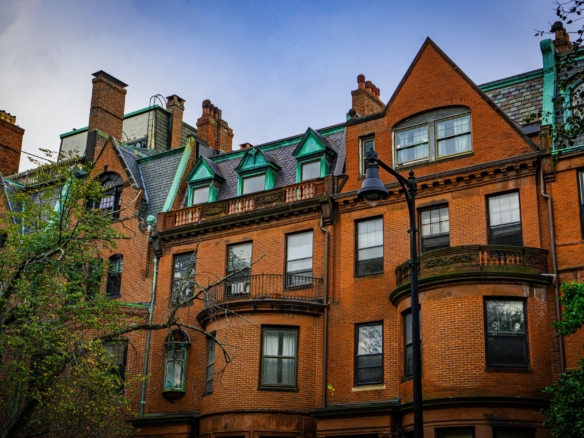
Boston’s rental market is shaped as much by who is moving in and out as by what is being built. Understanding migration patterns, where new residents come from, why they come, and where they go when they leave, helps explain why some neighborhoods stay perpetually competitive while others see steadier turnover. This analysis looks at the forces driving migration into and out of Greater Boston in 2026 and what those flows mean for renters, buyers, and anyone trying to understand the market they are entering. Whether you are relocating for a job, starting a graduate program, or simply trying to make sense of why rents in Somerville or Cambridge never seem to soften, the migration story behind Greater Boston tells you more than any vacancy rate ever could.
Boston Renter Intelligence Survey
How does your rent compare?
Add your numbers and get an instant read on what share of your income goes to rent, measured against what Boston renters actually report. You will also get the Q3 report free on October 7.
See how your rent compares →Who Moves to Boston in 2026, and Why
Greater Boston’s in-migration is unusually concentrated in two groups: students and skilled professionals. The region’s dense cluster of universities draws tens of thousands of new arrivals each year, the overwhelming majority of them renters, and its hospitals, biotech firms, and technology companies pull in early-career and mid-career professionals from across the country and abroad. This produces a steady, renewing stream of rental demand that does not depend on the broader housing cycle. Even when home buying slows under high interest rates, the universities keep enrolling and the employers keep hiring, so the inflow of renters continues. It is one of the central reasons Boston’s rental market stays tight through conditions that would soften other cities.
In 2026, that two-track pipeline remains intact. Harvard, MIT, Boston University, Northeastern, Tufts, and dozens of smaller institutions collectively enroll hundreds of thousands of students, graduate researchers, and postdoctoral fellows. Many of those individuals arrive from other states or other countries with no prior connection to the Boston housing market, no existing social network to help them find an apartment, and a very short window to secure housing before their program begins. That combination of inexperience, urgency, and sheer volume is one reason the market around universities behaves so differently from the broader metro.
On the professional side, the Kendall Square biotech and life sciences corridor continues to attract researchers and scientists relocating from other major research hubs, including San Francisco, San Diego, New York, and international cities like London, Toronto, and Singapore. The Route 128 technology belt and the downtown financial and consulting sectors add another layer of professional migration, drawing workers who may earn enough to eventually buy but who enter the market as renters first. For this group, the entry point into Boston housing is almost always a rental, and their first apartment is often in one of the neighborhoods closest to their employer or the nearest Red Line or Green Line stop.
The International and Out-of-State Pipeline
A significant share of Boston’s in-migrants arrive from outside Massachusetts entirely, drawn by graduate programs, research positions, and jobs in the knowledge economy. These arrivals tend to land first in the dense, transit-rich core, near campuses and employment centers, because they often do not yet own cars and need to be close to work or school. This pipeline matters for renters because it concentrates demand in a predictable set of neighborhoods, the ones near the Red Line, the universities, and the medical and biotech corridors, year after year, regardless of what the rest of the market is doing.
Out-of-state arrivals from high-cost markets like New York City, Washington D.C., and California sometimes find Boston’s rents high but still comparable to what they left behind. This relative familiarity with expensive housing markets means they are less likely to be shocked out of the market and more likely to absorb rent increases without leaving. It also means they are willing to compete aggressively for units in the neighborhoods they have already targeted, which further tightens supply in those specific areas. If you are trying to understand why Beacon Hill or the South End or Harvard Square rents stay elevated even during slower economic periods, this out-of-state migration from other expensive metros is a significant part of the answer.
Where New Arrivals Are Settling in 2026
The geography of new arrivals in Boston is not random. It follows the transit map, the university map, and the employer map with remarkable consistency. The neighborhoods that absorb the largest share of in-migration year after year include Allston and Brighton, which sit at the intersection of Boston University, Boston College, Harvard’s professional schools, and an extensive bus network. They are also among the most affordable inner neighborhoods, which makes them a logical first stop for people arriving with limited savings or student budgets.
Somerville, particularly the areas around Davis Square and Union Square now served by the Green Line Extension, has become an increasingly popular landing zone for young professionals who want transit access without the premium of Cambridge or downtown Boston. East Boston has attracted a growing share of new arrivals, both from Latin America and from other parts of the country, drawn by its Blue Line connection to downtown, its relatively lower rents compared to the rest of the inner core, and its growing food and cultural scene. South Boston and the Seaport have attracted higher-earning professionals, particularly those working in financial technology, consulting, and life sciences companies based near the waterfront.
Using a tool like the Boston Neighborhood Finder can help new arrivals and relocating professionals identify which neighborhood actually matches their commute, budget, and lifestyle priorities before they begin their search. The difference between landing in the right neighborhood for your situation and settling for whatever was available during a rushed search can mean years of paying more than necessary or commuting longer than you should.
The September 1 Migration Wave
Boston’s migration is also seasonal in a way few other American cities experience. More than half of Greater Boston leases begin on September 1, driven by the academic calendar, which compresses a huge share of the region’s annual move-ins into a single late-summer window. The result is an annual migration wave that floods neighborhoods near universities and transit each year, then quiets through the winter. For renters, the practical consequence is enormous. Competition, prices, and stress all peak in the weeks around September 1, while the slower months from roughly October through February typically offer more availability and less competition.
Renters with any flexibility in their timing hold a real advantage by moving outside the wave. Landlords who cannot fill a unit in the September 1 rush often become more willing to negotiate on price, offer shorter initial lease terms, or waive fees that they would not budge on during peak season. A renter who can move in November or January is a rare commodity in a market built around September, and that scarcity has real value. If you are relocating for a job and have even a few weeks of flexibility, timing your move to avoid September 1 is one of the single most effective ways to reduce your housing costs and your stress.
For those who do need to move during peak season, understanding the timeline matters enormously. Many units near universities are listed in February and March for the following September, which means renters who wait until July or August to search are already looking at leftovers. The early-season search is uncomfortable but often rewarding. Before signing any lease during this competitive window, it is worth using a LawDepot Lease Agreement template to understand what you are agreeing to, especially around move-in dates, deposit terms, and renewal clauses that are often skewed toward landlords in a tight market.
Are You a Licensed MA Real Estate Agent?
List your Boston rentals and properties free on Homzora. Zero fees. Zero commissions. Direct leads sent to you.
Why People Leave the Urban Core, and Where They Go
Out-migration from the urban core is driven largely by cost and life stage rather than by people leaving the Greater Boston region altogether. As renters form households, partner up, and seek more space, many move outward to the inner suburbs while remaining within commuting distance of Boston. This creates a predictable outward migration pattern that benefits towns like Medford, Malden, Quincy, Waltham, and Newton, which absorb a large share of households that have graduated from the apartment-in-Allston phase of their Boston life.
Some out-migration from Boston goes further afield, to Rhode Island, New Hampshire, and Connecticut, driven by households that have decided that remote or hybrid work has reduced the value of the Boston commute enough to justify leaving the metro entirely. This trend accelerated during the early 2020s and has not fully reversed, though it has slowed as employers have pulled workers back toward the office more regularly. The cities that benefited most from this outer migration, Providence, Portsmouth, and Hartford among them, have seen their own rental markets tighten as a result.
What Migration Patterns Mean for Boston’s Housing Market in 2026
The net result of all these migration flows is a Boston housing market that remains structurally constrained at the core. The in-migration pipeline of students and professionals is large enough and consistent enough to absorb most of the new rental supply that gets added in a given year, which is itself limited by Boston’s geography, its zoning rules, and its construction costs. The Boston Housing Data resource captures just how persistent that imbalance has been across years of changing economic conditions, and it helps renters and buyers understand where the pressure points are likely to remain through 2026 and beyond.
For renters trying to navigate this market, understanding the migration story is not just academic. It tells you which neighborhoods will stay competitive regardless of what happens in the broader economy, which timing windows give you an advantage, and which neighborhoods are absorbing more newcomers and therefore likely to see the most change in character and cost over the next few years. It also tells you something about who your competition is when you are applying for an apartment, which matters when you are preparing your application, setting your budget, and deciding how quickly to move when you find the right unit.
Financial Preparation for Boston’s Competitive Market
Whether you are arriving in Boston for the first time or moving within the metro, financial preparation is not optional in a market this competitive. Landlords in Greater Boston routinely require proof of income at two and a half to three times the monthly rent, credit scores above 700, and first and last month’s rent plus a security deposit upfront. For a two-bedroom apartment in Cambridge or Somerville, that can mean bringing fifteen thousand dollars or more to a lease signing before you have unpacked a single box.
The Bottom Line on Boston Migration in 2026
Boston’s migration patterns in 2026 follow a logic that has been consistent for decades, shaped by the academic calendar, the research economy, the transit system, and the cost pressures that push households outward as their needs change. The students and professionals arriving this year will fill apartments in Allston, Somerville, East Boston, and Kendall Square. They will compete fiercely for units near transit and universities. They will pay September 1 premiums if they are not careful about timing, and many of them will eventually move to the suburbs as their households grow and their priorities shift.
For anyone navigating this market, whether you are arriving from another country, relocating from another city, or moving from one Boston neighborhood to another, understanding these patterns gives you a real edge. You can time your search better, target the right neighborhoods for your situation, prepare your finances properly, and avoid the most expensive and stressful mistakes that come from treating Boston’s rental market like an ordinary city’s housing market. It is not ordinary, and the migration forces shaping it in 2026 make it more competitive than ever in the places where demand concentrates most heavily.
For comprehensive, up-to-date data on Boston’s housing market, vacancy trends, and neighborhood-level rental conditions, visit Boston Housing Data at Homzora. Whether you are renting, buying, or simply trying to understand the market before you make your next move, it is the most detailed and current resource available for Greater Boston real estate in 2026.
Stay Ahead of the Boston Market
Monthly insights on Boston rents, home tips, and investment opportunities delivered free to your inbox.
Related Boston Housing Resources