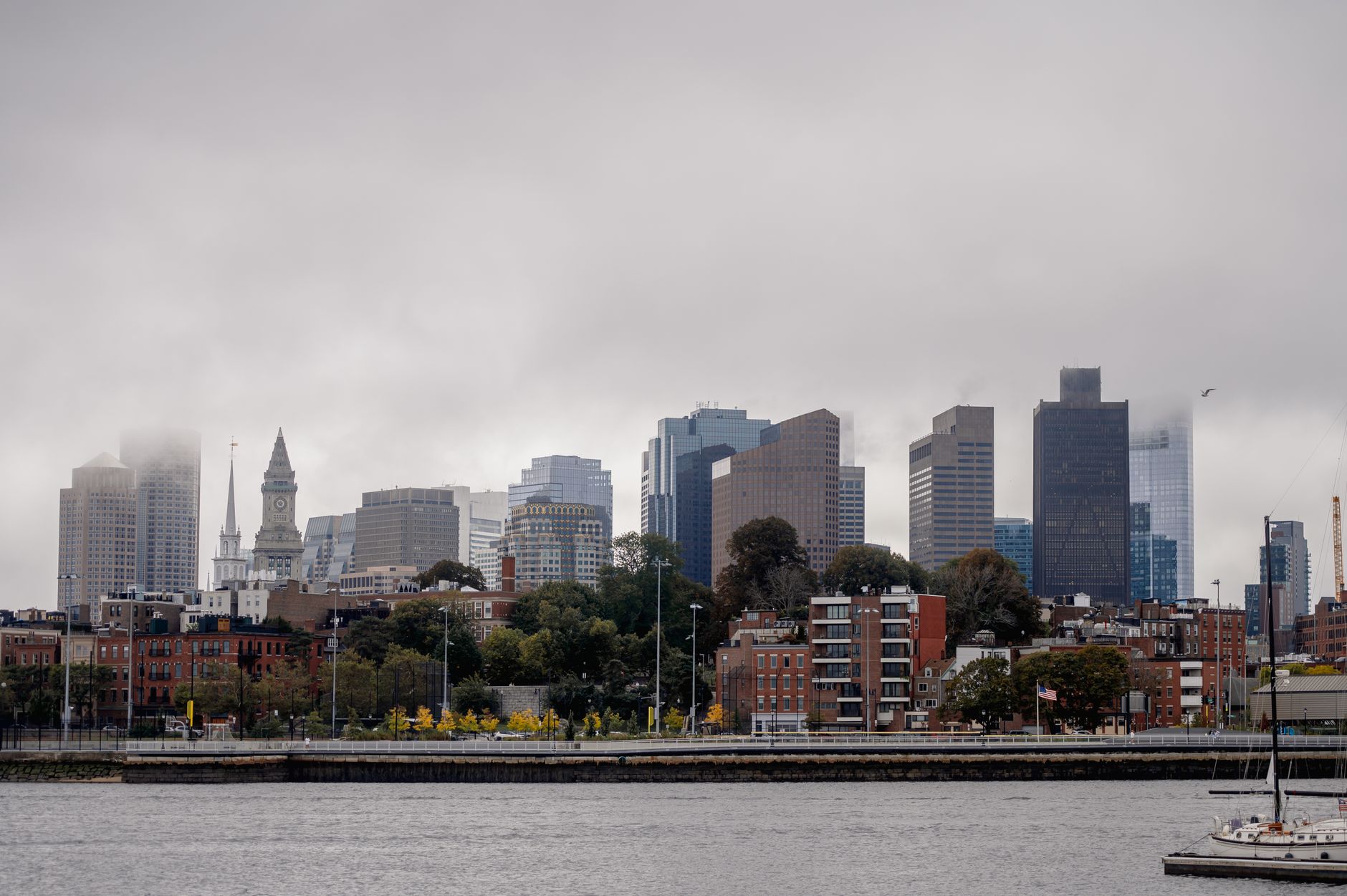
East Boston has always been a neighborhood of arrivals. For generations, it welcomed immigrants who stepped off boats and planes, built lives in triple deckers, and wove a cultural fabric that made Eastie one of the most authentically working class communities in all of New England. Today, a different kind of arrival is reshaping everything. Luxury waterfront condos are rising along the harbor. Rents that were once affordable to working families have climbed past the reach of longtime residents. And a corridor of rapid transit investment along the Blue Line has accelerated a transformation that was already underway. In 2026, East Boston stands at a crossroads, and the choices made here will reverberate for decades.
Boston Renter Intelligence Survey
How does your rent compare?
Add your numbers and get an instant read on what share of your income goes to rent, measured against what Boston renters actually report. You will also get the Q3 report free on October 7.
See how your rent compares →The Numbers Behind the Displacement Story
Gentrification is often discussed in emotional terms, but the data tells the clearest story. Over the past decade, median rents in East Boston have climbed at a pace that consistently outstrips wage growth for the neighborhood’s predominantly working class and immigrant population. What was once one of Boston’s most affordable inner neighborhoods now commands rents that rival parts of Cambridge and Somerville that were considered expensive just a few years ago.
According to data tracked through Boston Housing Data, average asking rents for a two bedroom apartment in East Boston have increased by more than 60 percent over the last eight years. That figure is not abstract. It represents families who can no longer afford the apartments they have lived in for a decade. It represents small business owners who cannot renew commercial leases. It represents a slow, steady erasure of the community that made East Boston worth investing in in the first place.
The median home sale price in East Boston crossed the $600,000 threshold in late 2024 and has continued climbing into 2025 and early 2026. For context, that price point is simply out of reach for the vast majority of households who built their lives in this neighborhood. The people who grew up here, whose parents came through Logan Airport and settled in Jeffries Point or Orient Heights, are watching their neighborhood change in ways that feel both inevitable and deeply unjust.
The Blue Line Effect: Transit Investment and Its Double Edged Reality
No conversation about East Boston gentrification is complete without examining the Blue Line and the role that transit accessibility plays in driving up property values. The Blue Line connects East Boston directly to downtown Boston in under fifteen minutes. That commute time, combined with waterfront views and a neighborhood that still has relatively more space per dollar than most Boston neighborhoods, has made Eastie irresistible to developers and to a new wave of higher income residents.
How Transit Corridors Drive Speculation
Urban planners have long understood that transit investment functions as a double edged tool. On one side, it brings genuine quality of life improvements to existing residents. Better connectivity means better access to jobs, healthcare, and services. On the other side, improved transit signals to investors that an area is poised for appreciation, which triggers a wave of speculative buying and development that prices out the very residents who were supposed to benefit from the transit improvements.
The Blue Line corridor from Maverick to Orient Heights has seen this dynamic play out in real time. As station areas have been targeted for transit oriented development, land values around those stations have spiked. The result is a neighborhood in which longtime renters are competing for apartments with young professionals who earn three times their income. The transit system that was supposed to serve the community is now, paradoxically, one of the engines of that community’s displacement.
Station Area Development and Community Impact
Around the Maverick Square and Airport stations, new mixed use developments have added hundreds of market rate units to the housing stock. These developments often include a small percentage of income restricted units, typically somewhere between 10 and 15 percent of total units, which falls far short of addressing the affordable housing deficit created by the overall pressure on the market. Community advocates have pushed for higher inclusionary percentages and for policies that prioritize existing residents in affordable unit lotteries, but progress has been slow and uneven.
The Orient Heights neighborhood, located at the northern end of the Blue Line corridor in East Boston, has seen somewhat less dramatic change, but that is shifting rapidly as developers look further from the waterfront for opportunities. Long time homeowners in Orient Heights are fielding unsolicited offers from investors. Renters are receiving notices of rent increases that stretch the definition of what is legally permissible under Massachusetts law.
Waterfront Luxury vs. Affordable Housing: The Central Debate
The most visible and contentious front in the East Boston gentrification story is the waterfront. The stretch of shoreline from Jeffries Point toward Bremen Street Park has attracted a level of luxury development that was unimaginable to residents even fifteen years ago. Glass condos with harbor views. Rooftop amenities. Units priced at $800,000 to over $1.5 million. These developments have transformed the visual character of the neighborhood and have attracted buyers from across Boston and beyond.
What Luxury Development Actually Does to a Neighborhood
Supporters of luxury development argue that adding any housing supply to the market, even at the high end, helps relieve pressure across the entire housing ladder. This is sometimes called the filtering theory, and while it has some support in economic literature, the timeline involved is deeply problematic. It takes decades for luxury units to filter down to affordability, and in the meantime, the construction activity itself drives up land values and displaces existing residents through rising rents and property taxes.
Critics, including many longtime East Boston community members and housing justice advocates, point out that the luxury waterfront development has produced virtually no community benefit proportionate to the harm it has caused. The tax revenue generated by these developments does not flow directly back to affordable housing creation in the neighborhood. The jobs created during construction are not primarily filled by East Boston residents. And the cultural institutions and small businesses that gave the neighborhood its character are being priced out as commercial rents rise in response to the influx of higher income residents.
The Affordable Housing Gap
Boston’s inclusionary development policy requires that developers of market rate projects above a certain size include a percentage of affordable units or contribute to an affordable housing fund. In East Boston, this policy has been applied inconsistently, and the affordable housing fund contributions, while valuable, have not been sufficient to produce affordable units at anywhere near the rate needed to offset displacement.
Community land trusts have emerged as one promising tool for creating permanently affordable housing in East Boston. By removing land from the speculative market and holding it in trust for the benefit of the community, land trusts can create affordable homeownership opportunities that survive even the most intense gentrification pressure. The East Boston Community Development Corporation and allied organizations have worked to expand the community land trust model in the neighborhood, but funding constraints have limited the scale of these efforts.
What This Means for Renters in 2026
If you are renting in East Boston right now, you are navigating one of the most challenging rental markets in the city’s history. Understanding your rights and your options is more important than ever.
Protecting Yourself as a Renter
Massachusetts has relatively strong tenant protections compared to many states, but those protections require renters to actively understand and assert their rights. Landlords cannot raise rent during a fixed lease term. At lease expiration, they can raise rent by any amount, which is why so many East Boston renters face sticker shock when renewal notices arrive. Understanding exactly what your lease says, and what it does not say, is the foundation of protecting yourself in this market.
Before signing or renewing any lease, it is worth taking the time to review it carefully. Using a resource like LawDepot Lease Agreement can help both renters and landlords ensure that lease terms are clear, legally sound, and appropriately documented. Clarity in the lease document is protection for both parties and is especially important in a market where disputes over rent increases and security deposits are becoming increasingly common.
Are You a Licensed MA Real Estate Agent?
List your Boston rentals and properties free on Homzora. Zero fees. Zero commissions. Direct leads sent to you.
Community Resources and Tenant Organizing
East Boston has a strong tradition of community organizing, and tenant organizations have become increasingly active in response to the displacement crisis. Organizations like the Neighborhood of Affordable Housing (NOAH) and City Life Vida Urbana have worked to support renters facing eviction and to advocate for stronger tenant protections at the city and state level. These organizations can connect renters with legal assistance, help tenants understand their rights in eviction proceedings, and provide a community of solidarity in a moment when individual renters can feel powerless against large landlords and institutional investors.
What This Means for Investors in 2026
East Boston remains one of the most compelling investment markets in the greater Boston area, but the investment thesis is more complicated in 2026 than it was even a few years ago. Understanding both the opportunity and the risk is essential for making sound decisions.
The Investment Case
The fundamentals driving East Boston appreciation are real and durable. Proximity to downtown Boston and Logan Airport, improving transit access along the Blue Line, continued waterfront development, and a national housing shortage that shows no signs of resolving in the near term all support the case for continued appreciation. Investors who purchased in East Boston five or ten years ago have seen remarkable returns, and many analysts expect above average appreciation to continue through the remainder of the decade.
For investors interested in the single family or small multifamily space, East Boston offers opportunities that are increasingly difficult to find in Charlestown, South Boston, or the South End. Triple deckers with upside potential, mixed use properties with commercial tenants, and condos in established buildings all represent viable strategies depending on an investor’s goals and risk tolerance.
Navigating Risk in a Gentrifying Market
Investing in a gentrifying neighborhood is not without meaningful risk. Policy risk is real. Boston and Massachusetts legislators are actively considering stronger rent stabilization measures, expanded tenant protections, and higher inclusionary requirements for new development. Any of these changes could affect the economics of owning rental property in East Boston. Investors who are not accounting for policy risk in their underwriting are making a potentially expensive mistake.
For investors trying to identify which specific streets and micro markets within East Boston offer the best combination of upside and risk adjusted return, granular neighborhood data is invaluable. The Boston Neighborhood Finder from Homzora provides detailed, current information on pricing trends, inventory levels, and neighborhood characteristics that can help investors make more informed decisions in a rapidly changing market.
The Cultural Question That Numbers Cannot Fully Answer
Every conversation about gentrification eventually arrives at a question that market data cannot resolve. What is a neighborhood for? Is it primarily an asset class, a collection of properties whose value should be maximized for their owners? Or is it a community, a network of relationships, institutions, and shared history that has inherent value independent of what any individual property is worth?
East Boston’s Latino community, which has been the backbone of the neighborhood’s culture for decades, is facing existential pressure. Restaurants, bodegas, cultural organizations, and churches that anchor community life are being displaced or are struggling to survive as rents rise and their customer base is pushed to the margins. The question of whether East Boston in 2030 will still be recognizable to the families who built it is not purely economic. It is moral and civic as well.
Policymakers, developers, community organizations, and residents are all wrestling with how to answer that question in ways that honor both the economic realities of a supply constrained housing market and the human reality of communities that deserve stability and belonging. There are no easy answers, but there are better and worse choices, and 2026 is a year in which many of those choices are being made in real time.
Looking Ahead: Scenarios for East Boston Through 2030
The trajectory of East Boston over the next four years will depend significantly on decisions made at multiple levels of government and community. If stronger tenant protections are enacted and adequately enforced, some of the sharpest edges of displacement may be blunted. If community land trust funding is expanded and inclusionary requirements are strengthened, a meaningful supply of permanently affordable housing could be preserved. If neither of those things happens, the displacement will continue and likely accelerate.
For investors, the scenario that produces the strongest short term returns may not be the scenario that produces the most resilient long term community, and a community that loses its social fabric eventually loses some of the qualities that made it attractive to investment in the first place. The smart money in 2026 is paying attention not just to cap rates and appreciation projections, but to the community conditions that underpin sustainable neighborhood value.
For renters, 2026 is a year to get informed, get organized, and explore every available option, whether that means tenant organizing, pursuing homeownership, accessing community land trust waitlists, or making decisions about where else in the Boston metro area might offer a more stable housing situation. The Boston Neighborhood Finder is a useful tool for anyone evaluating alternatives across the broader Boston market.
Take the Next Step with Homzora
Whether you are a longtime East Boston renter trying to understand your options, a prospective buyer evaluating whether now is the right time to enter the market, or an investor analyzing where Eastie fits in your portfolio strategy, navigating this market requires current, local, and trustworthy information. Homzora specializes in the Boston market and brings a deep understanding of the forces shaping neighborhoods like East Boston in 2026 and beyond.
Visit homzorarealty.com to explore detailed neighborhood data, connect with experienced local agents, and access tools designed to help you make confident, informed real estate decisions in one of America’s most dynamic and complex urban housing markets. The East Boston story is still being written. Make sure you understand all the chapters before you make your next move.
Stay Ahead of the Boston Market
Monthly insights on Boston rents, home tips, and investment opportunities delivered free to your inbox.
Related Boston Housing Resources