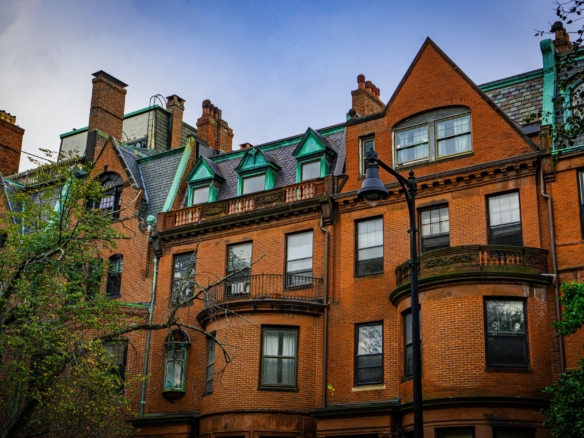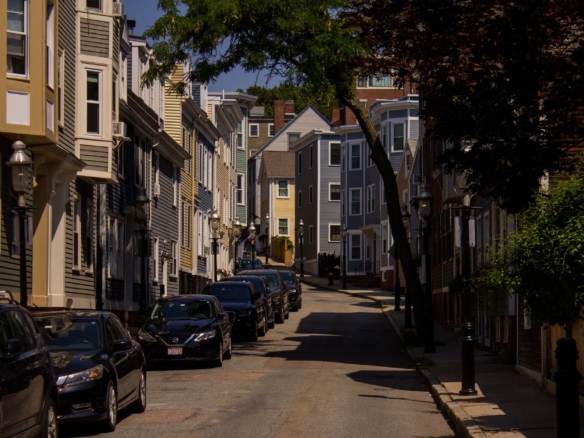
Choosing between Waltham and Woburn in 2026 means navigating two of Greater Boston’s most competitive suburban markets, each with a distinct personality, commute profile, and lifestyle promise. Both towns sit within fifteen miles of downtown Boston, both have seen serious price appreciation over the past five years, and both attract the kind of working professionals who want suburban breathing room without sacrificing career proximity. But the similarities stop there. Once you dig into transit options, tech campus access, school performance, walkable dining, and the specific needs of remote workers versus daily office commuters, these two towns reveal dramatically different identities. This guide from Homzora breaks it all down so you can make a genuinely informed decision before your next move.
Boston Renter Intelligence Survey
How does your rent compare?
Add your numbers and get an instant read on what share of your income goes to rent, measured against what Boston renters actually report. You will also get the Q3 report free on October 7.
See how your rent compares →Setting the Stage: Why These Two Towns in 2026
The Greater Boston housing market in 2026 continues to punish buyers who wait. Inventory remains tight across the metro area, and the suburban ring within Route 128 has become extraordinarily competitive. Waltham and Woburn both sit inside that ring, making them perennial targets for buyers priced out of Cambridge, Somerville, and Brookline. Tech sector employment has been a major driver in both markets. Waltham has long been recognized as a satellite tech hub, while Woburn has quietly accumulated a growing cluster of biotech and pharmaceutical firms along its Interstate 93 corridor. Understanding which town aligns with your actual daily life, not just your aspirations, is what separates a smart purchase from an expensive regret.
If you are still exploring neighborhoods across the broader metro area, the Boston Neighborhood Finder at Homzora is an excellent starting point before narrowing your search to any single community.
Tech Job Proximity: Who Wins for Which Worker
Waltham as a Tech Campus Town
Waltham’s reputation as a technology suburb is well earned. The Route 128 corridor running through Waltham hosts dozens of established tech and life sciences employers including Raytheon Technologies, Thermo Fisher Scientific, and a rotating roster of mid size software and biotech firms. For professionals employed directly along this corridor, living in Waltham can eliminate the Boston commute entirely. Many Waltham residents work within a five mile radius of their own front door. This is a rare and genuinely valuable quality in the Greater Boston market.
The town’s Brandeis University presence also generates a steady ecosystem of research adjacent startups and healthcare technology firms. If your employer sits anywhere on the Route 128 belt from Burlington down through Weston and into Newton, Waltham offers some of the shortest tech commutes in the region.
Woburn’s Interstate 93 Biotech Belt
Woburn has developed its own tech and biotech identity along the Interstate 93 and Route 128 interchange, sometimes called the Unicorn Park corridor. Companies in pharmaceutical research, contract manufacturing, and medical devices have clustered here for decades. If your employer is in Burlington, Wilmington, Woburn itself, or even southern New Hampshire, living in Woburn makes practical geographic sense.
For workers commuting into Cambridge’s Kendall Square biotech district, Woburn presents a longer surface road option through Somerville and Cambridge, which can stretch travel time significantly during peak hours. Waltham workers heading to Kendall Square face similar surface road challenges but can supplement with transit options discussed below.
Commuter Rail vs Bus: The Transit Reality Check
Waltham’s Fitchburg Line Access
Waltham is served by the MBTA Fitchburg commuter rail line, which connects directly to North Station in downtown Boston. Depending on the specific train, the ride takes roughly thirty to forty minutes. For traditional office commuters heading into the Financial District, Back Bay, or the Seaport, this is a genuinely competitive option that requires no parking or highway navigation. The Waltham commuter rail station sits close enough to central Waltham that some residents walk or bike to the platform, particularly during warmer months.
This rail connection is one of Waltham’s most significant lifestyle advantages over Woburn. It gives office commuters a predictable, weather resilient route into the city and positions Waltham as a legitimate option even for professionals who work in the urban core rather than along the suburban tech belt.
Woburn’s Bus Dependent Transit Picture
Woburn’s transit situation requires honest assessment. The town does not have its own commuter rail station in active use for regular passenger service in the same convenient configuration as Waltham. Residents who want to reach downtown Boston without driving typically rely on MBTA bus routes that connect to the Wellington or Alewife Red Line stations. This is a workable system, but it involves at least one transfer, longer total travel times, and the unpredictability of surface bus schedules.
For car dependent commuters heading north toward the Interstate 93 corridor or west toward Route 128 employment centers, Woburn’s highway access is genuinely excellent. The town sits at a major interchange that connects northward toward New Hampshire and southward toward Cambridge and Boston. If your commute is by car to a suburban campus, Woburn’s highway position is a real advantage. If you need reliable rail access to an urban office, Waltham holds a clear edge.
Home Prices in 2026: What Your Budget Actually Buys
Waltham Pricing Trends
Waltham has experienced consistent appreciation driven by its transit access, tech employment density, and relative walkability in its downtown core. In 2026, median single family home prices in Waltham generally range from the mid six hundreds into the low seven hundreds, with condominiums offering entry points closer to the four hundred to five hundred thousand range depending on size and location. New construction near the commuter rail station commands premium pricing, as do single family homes with garage space and finished basements in the more residential western sections of town.
Woburn Pricing Trends
Woburn has historically offered a modest price discount relative to Waltham, and that pattern has largely continued into 2026, though the gap has narrowed. Median single family prices in Woburn generally fall in the mid five hundreds to mid six hundreds, making it one of the more accessible markets within the inner suburban ring. Buyers can often find three bedroom colonials and split level homes in Woburn that would command sixty to one hundred thousand dollars more in comparable Waltham neighborhoods.
This relative affordability has made Woburn attractive to first time buyers and growing families who want to maximize square footage and lot size within a reasonable budget. The trade off is the transit limitation described above, which matters more to some buyers than others. For households with two cars and at least one remote working member, this trade off often works well.
For current and historical pricing context across both towns, the Boston Housing Data resource from Homzora provides detailed neighborhood level breakdowns that can help you benchmark any specific listing against market trends.
Restaurant Scenes: Dining Culture and Neighborhood Walkability
Waltham’s Moody Street Advantage
Waltham’s Moody Street corridor is one of the most legitimate restaurant districts in the entire suburban Boston market. It features a genuinely diverse mix of independent restaurants covering Indian, Thai, Japanese, Italian, and American cuisines alongside wine bars, craft beer pubs, and specialty coffee shops. On a Friday evening, Moody Street has real urban energy that most suburbs simply cannot replicate. Residents can walk from their condominiums or nearby apartments to dinner, dessert, and a drink without touching a car.
This walkable dining culture is a major quality of life differentiator that consistently appears in buyer feedback for Waltham properties. For remote workers who want the texture of an active neighborhood as part of their daily environment, Waltham’s downtown delivers something that feels genuinely urban rather than purely suburban.
Are You a Licensed MA Real Estate Agent?
List your Boston rentals and properties free on Homzora. Zero fees. Zero commissions. Direct leads sent to you.
Woburn’s Dining Development
Woburn’s restaurant scene has grown meaningfully in recent years, particularly around the Woburn Village mixed use development near the intersection of Montvale Avenue and Route 38. This planned development has introduced chain and semi independent dining options alongside retail, creating a walkable node that did not exist in previous years. There are solid options for Italian, American bistro, and casual dining across Woburn’s commercial corridors.
However, Woburn’s dining scene in 2026 still skews more car dependent and chain oriented compared to Waltham’s Moody Street. Residents looking for adventurous independent restaurant culture will find Waltham more satisfying on a consistent basis. Woburn suits buyers who prioritize home size and commute access over walkable dining density.
School Ratings: Evaluating Both Districts for Families
Waltham Public Schools
Waltham’s public school system shows meaningful variation across its elementary schools, with some schools performing at or above state averages in mathematics and English language arts while others reflect the challenges associated with a more economically diverse student population. Waltham High School has made steady progress on college readiness metrics and offers a reasonable selection of Advanced Placement coursework. Families moving to Waltham should research specific elementary school zones carefully, as a few blocks of distance can place students in meaningfully different building assignments.
Private school access from Waltham is strong, with several independent and parochial options within a short drive including schools along the Newton corridor.
Woburn Public Schools
Woburn’s school district has received generally favorable assessments in recent state evaluations, with Woburn Memorial High School showing competitive MCAS scores and a robust slate of extracurricular programming. Elementary schools in Woburn have seen investment in STEM curriculum integration, and the district has benefited from local tax base growth tied to commercial development along its biotech corridors. For families, Woburn’s school system represents a genuine positive, often scoring slightly better on aggregate metrics than Waltham’s district, which manages a more diverse and complex demographic picture.
For families where school performance is the primary driver of location choice, Woburn’s consistency across its elementary and middle school offerings gives it a measurable edge in this specific category.
Remote Workers vs Office Commuters: Which Town Fits Your Work Life
Why Waltham Works for Hybrid and Office Commuters
If you are in the office three or more days per week and your destination is downtown Boston or Kendall Square, Waltham’s commuter rail access makes it the rational choice. You can budget your commute time accurately, avoid parking costs, and arrive without the stress of Interstate 93 or the Massachusetts Turnpike during peak hours. The walkable downtown also means you can run errands, meet a colleague for lunch, or decompress after work without getting back in a car.
Hybrid workers who need occasional rail access but also spend significant time at home will appreciate Waltham’s coffee shops, coworking adjacent spaces near Moody Street, and the general urban texture that makes working from a neighborhood feel less isolating than a purely residential suburb.
Why Woburn Suits Remote and Car Commuting Households
For fully remote workers, Woburn’s relative price advantage unlocks a materially larger home for the same budget. A household that does not need daily transit access can instead prioritize dedicated home office space, a larger yard, and proximity to the kinds of big box retail and service businesses that cluster along Woburn’s commercial corridors. Woburn’s Interstate 93 access is also ideal for households where one partner commutes north toward Burlington, Andover, or southern New Hampshire while the other works from home.
Remote workers who buy in Woburn and eventually return to office work face the transit limitation described above, so buyers in this category should honestly assess how permanent the remote arrangement is before committing to a location built around car commuting.
Practical Considerations Before You Sign
The Bottom Line on Waltham vs Woburn in 2026
Waltham wins for professionals who value walkable dining, commuter rail reliability, and direct transit to downtown Boston or Kendall Square. Its Moody Street district creates genuine neighborhood energy that remote workers who want urban texture will appreciate, and its tech campus density along Route 128 makes it a first choice for professionals employed in that corridor. The trade off is a higher price point and more competitive bidding dynamics on the most desirable properties.
Woburn wins for households prioritizing square footage per dollar, strong school consistency, and highway access to northern suburban employment centers. Its biotech corridor provides local employment anchors, its Woburn Village development continues to improve the retail and dining experience, and its pricing gives budget conscious buyers room to breathe. The trade off is a transit experience that depends heavily on personal vehicle use.
Neither town is universally superior. The right answer depends entirely on your employment situation, your household structure, your commute pattern, and whether walkable neighborhood energy or quiet residential space matters more to your daily life in 2026.
Start Your Search with Homzora
Homzora specializes in helping buyers navigate exactly these kinds of nuanced decisions across the Greater Boston suburban market. Whether you are leaning toward Waltham, Woburn, or still comparing multiple communities, the team at Homzora can provide current market data, neighborhood insight, and transaction guidance tailored to your specific needs. Visit homzorarealty.com today to connect with an agent, explore current listings in both markets, and access tools designed to make your next move in the Greater Boston area as informed and confident as possible.
Stay Ahead of the Boston Market
Monthly insights on Boston rents, home tips, and investment opportunities delivered free to your inbox.
Related Boston Housing Resources