New England summers are genuinely uncomfortable. Boston and surrounding communities regularly experience heat indices exceeding 95°F from June through August, with humidity levels that make the actual temperature feel significantly worse. For the millions of Greater Boston residents living in older housing stock without central air conditioning, triple-deckers, Victorian single-families, and pre-war condos built long before modern HVAC was standard, a portable air conditioner offers the most practical path to summer comfort without the permanent installation, high cost, and landlord permissions that central AC or window units sometimes require. This guide covers everything homeowners and renters need to know before buying a portable AC in 2026.
Boston Summers: Why Cooling Matters More Than Most Realize
Greater Boston’s reputation as a cold-weather city leads many new residents to underestimate summer heat and humidity. The reality is that Boston experiences 15 25 days per summer with temperatures exceeding 90°F, with peak July and August conditions frequently reaching heat index values of 95 100°F when humidity is factored in. For upper-floor apartments in older buildings, where heat rises and insulation is minimal, indoor temperatures can reach 85 90°F even with windows open during heat waves.
Heat-related health risks are real and disproportionately affect elderly residents, young children, and anyone with cardiovascular or respiratory conditions. Beyond health, extreme heat significantly disrupts sleep quality, productivity for remote workers, and the general liveability of a home during the peak summer months. For renters and homeowners in buildings without central air, a portable AC unit is a practical health and quality-of-life investment that pays returns every hot day from June through September.
Portable vs. Window Air Conditioners: Which Is Right for You?
Portable and window air conditioners both cool individual rooms effectively, but serve different situations. Window ACs are generally more energy-efficient and quieter for equivalent cooling capacity, they mount in the window frame and exhaust hot air directly outside without the efficiency losses inherent in portable unit exhaust hose design. However, window units require window frame compatibility (not all windows accommodate them), permanent-ish installation that may require landlord approval, and storage challenges when the cooling season ends.
Portable ACs sit on the floor and vent hot air through a flexible exhaust hose that fits in a window slider kit, a kit that takes minutes to install and remove without permanent modification. They’re fully moveable between rooms as needs change, require no installation approval, and store in a closet during winter. The trade-off is slightly lower efficiency and somewhat more noise than equivalent window units. For renters who can’t install window units, residents with casement or sliding windows that don’t accommodate standard window ACs, and anyone who moves between rooms during the day, portable ACs are the practical choice.
Key Features to Look For in a Portable Air Conditioner
BTU Rating and Room Coverage
BTU (British Thermal Units) measures a portable AC’s cooling capacity. The general guideline is 20 BTU per square foot of floor space under standard conditions. A 10,000 BTU unit covers approximately 300 to 400 square feet; a 12,000 BTU unit covers 400 to 550 square feet; a 14,000 BTU unit covers 550 to 700 square feet. These are baseline estimates, rooms with high ceilings, significant sun exposure, multiple occupants, or poor insulation require more BTU per square foot.
For Boston’s typical room sizes, most bedrooms in triple-deckers and older condos run 150 to 250 square feet, living rooms 200 to 400 square feet, a 10,000 12,000 BTU portable AC handles most individual room cooling needs. For open-plan living areas or larger primary rooms, step up to 14,000 BTU for confident cooling on the hottest days.
Single-Hose vs. Dual-Hose Design
Single-hose portable ACs use one exhaust hose to vent hot air outside, which creates negative pressure in the room as it draws indoor air for cooling and exhaust. This negative pressure pulls hot unconditioned air in through gaps around doors, windows, and the hose kit itself, reducing the unit’s effective cooling efficiency. Dual-hose units use one hose for intake and one for exhaust, maintaining neutral pressure and operating significantly more efficiently.
Dual-hose units cost more but cool faster, maintain lower temperatures more efficiently, and run their compressors less frequently, meaning lower electricity consumption and longer compressor life. For Boston residents running a portable AC through multiple summers, the dual-hose efficiency premium pays back in lower electricity bills and better comfort during peak heat events.
Energy Efficiency Rating (EER/CEER)
The Combined Energy Efficiency Ratio (CEER) measures how many BTU of cooling a unit delivers per watt of electricity consumed. Higher CEER means lower operating costs. For Massachusetts residents on National Grid or Eversource, among the most expensive electricity rates in the country, energy efficiency in a continuously running appliance matters significantly. Look for portable ACs with CEER ratings of 8.0 or higher; the best units reach 10 12 CEER, representing meaningful operating cost savings over a full cooling season.
Dehumidification Mode
Boston’s summer humidity is often the most uncomfortable element of hot weather, the sticky, airless feeling that makes even moderate temperatures feel oppressive. Quality portable ACs include a dedicated dehumidification mode that removes moisture from the air without maximum cooling, making the room feel significantly more comfortable on humid-but-not-scorching days without the energy consumption of full cooling mode. For Boston’s frequent “warm and humid” summer days where full cooling isn’t necessary but dehumidification would dramatically improve comfort, this mode is a valuable feature.
Programmable Timer and Sleep Mode
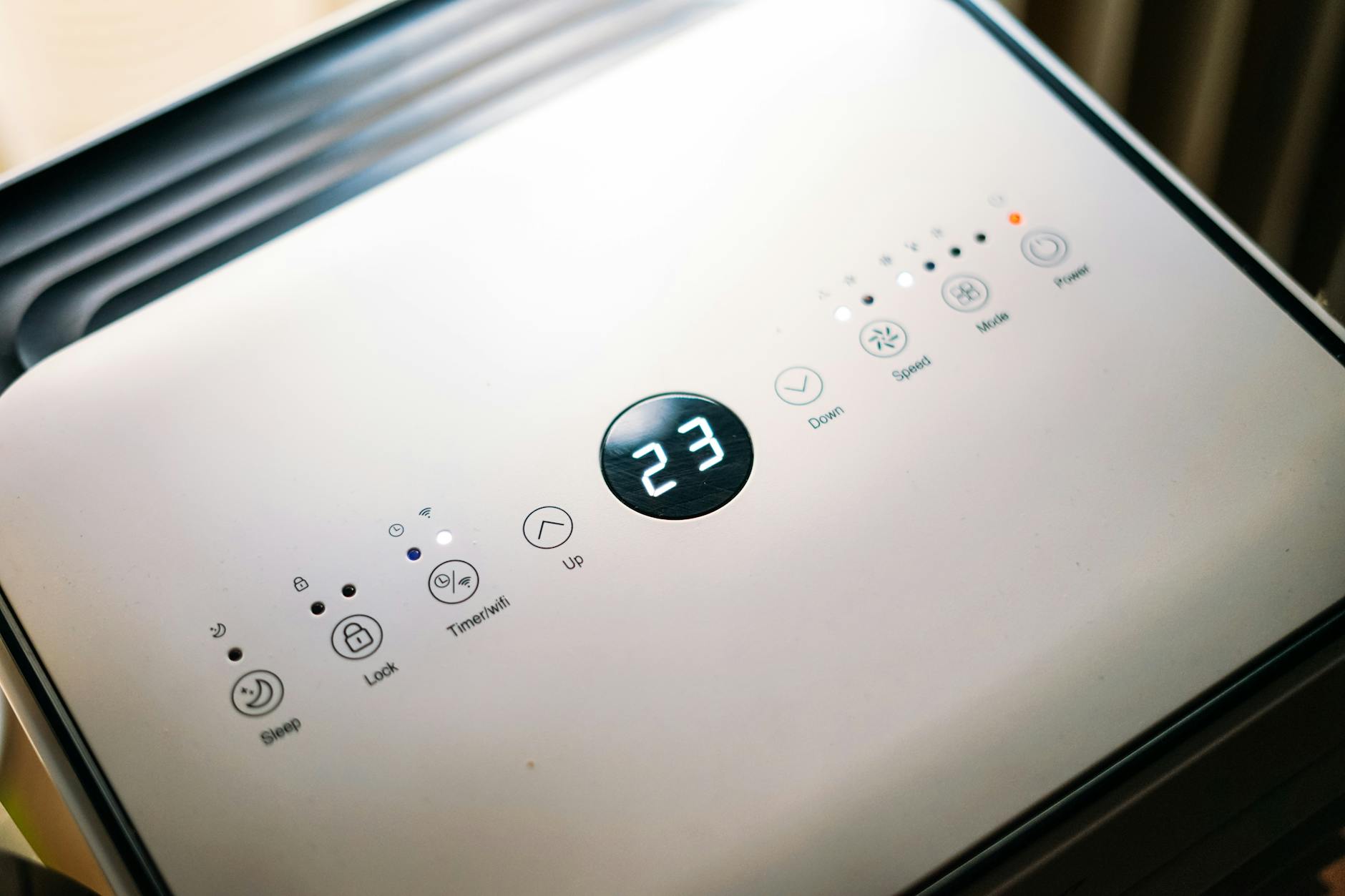
A programmable timer lets you pre-cool a room before you arrive home or before bedtime, ensuring comfort without running the unit continuously throughout the day. Sleep mode gradually raises the set temperature by 1 2°F over several hours as you sleep, matching the natural drop in body temperature and comfort requirements during sleep while reducing energy consumption. Both features are standard on quality portable ACs and contribute meaningfully to overall operating efficiency.
Noise Level
Portable ACs are inherently noisier than window units because the compressor sits inside the room rather than outside. Quality portable ACs operate at 50 55 dB on low setting, equivalent to a quiet conversation or moderate rainfall. Budget units can reach 60 65 dB, which is noticeably disruptive in a bedroom. For bedroom cooling specifically, check dB ratings carefully and prioritize units with confirmed quiet operation at low cooling settings.
Top Portable AC Picks for Boston Homes
LG LP1419IVSM (14,000 BTU, Dual Inverter)
LG’s dual inverter portable AC is one of the highest-rated units for efficiency and quiet operation. The inverter compressor adjusts speed rather than cycling on and off, maintaining more consistent temperatures, consuming less electricity, and operating significantly more quietly than conventional compressors. At 14,000 BTU with a CEER of 10+, it handles larger rooms effectively. The single-hose design is a limitation relative to dual-hose competitors, but the inverter technology partially compensates through efficiency gains.
Are You a Licensed MA Real Estate Agent?
List your Boston rentals and properties free on Homzora. Zero fees. Zero commissions. Direct leads sent to you.
Whynter ARC-14S (14,000 BTU, Dual Hose)
The Whynter ARC-14S is consistently recommended as the best overall portable AC for buyers who prioritize cooling performance and efficiency. The dual-hose design eliminates the negative pressure problem, the 14,000 BTU capacity handles most large room configurations, and the unit includes a self-evaporating system that eliminates the manual water drainage that some portable ACs require. For Boston renters and homeowners who want maximum cooling effectiveness from a portable unit, the Whynter ARC-14S is the benchmark.
hOmeLabs 10,000 BTU Portable AC
For smaller rooms, bedrooms up to 350 square feet, home offices, or smaller living spaces, the hOmeLabs portable AC delivers reliable performance at an accessible price. The same brand behind the hOmeLabs dehumidifier we reviewed, see our hOmeLabs dehumidifier review, applies the same value-focused approach to portable AC. It’s not the most efficient or the quietest unit available, but it cools reliably and consistently earns strong reviews for value relative to cost.
Installation and Setup
Setting up a portable AC takes 10 15 minutes. Most units include a window slider kit, an adjustable panel that fits in a standard sliding or double-hung window opening to accommodate the exhaust hose while blocking outdoor air infiltration. Install the slider panel in the window, connect the exhaust hose to the unit and the panel, plug into a standard 110V outlet (check amperage, some 14,000 BTU units require a 20-amp circuit), and you’re ready to cool.
Placement matters for performance. Position the unit as close to the window as the exhaust hose length allows, shorter hose runs lose less heat back into the room. Keep the exhaust hose as straight as possible; bends and kinks restrict airflow and reduce efficiency. Place the unit away from heat sources and in a central location relative to the room for best air distribution.
Portable AC and Boston Property Value
For renters, a portable AC is a personal appliance you take when you move, no installation, no permission needed, no leaving value behind. For homeowners, a portable AC supplements existing cooling without the cost of central AC installation ($8,000 to $15,000 for a complete system in a Boston home) or the aesthetic compromise of window units visible from the street.
For landlords managing Greater Boston rental properties, providing portable ACs as part of furnished or partially furnished units is an amenity that commands higher rents and attracts quality tenants, particularly in neighborhoods where older housing stock lacks central air. The investment in portable cooling equipment is modest relative to the rental premium that genuine summer comfort creates. For more on maximizing your Boston rental property’s appeal and returns, see our rental income guide and our Boston rental market report.
Energy Cost Estimate for Boston Summers
A 12,000 BTU portable AC running 8 hours per day at Massachusetts electricity rates (approximately $0.25/kWh) costs roughly $3 $4 per day in electricity, $90 $120 per month during peak cooling season. A dual-hose or inverter unit reduces this by 20 30%, bringing monthly costs to $65 $90. Compared to the discomfort and health risks of an uncooled Boston apartment during a heat wave, this operating cost is modest. For context, a single month of excessive heat reducing worker productivity typically costs far more than the entire summer’s AC electricity bill.
Final Verdict
A portable air conditioner is one of the most practical summer investments a Boston homeowner or renter can make. It requires no installation approval, no permanent modification, no special electrical work in most configurations, and stores compactly during the nine months of the year when Boston doesn’t need cooling. For the three months when it does, a quality portable AC transforms an uncomfortable, unproductive living space into a genuinely comfortable one.
Choose a unit sized appropriately for your room, 10,000 BTU for smaller bedrooms and offices, 12,000 14,000 BTU for larger rooms and open-plan spaces. Prioritize dual-hose design if efficiency and maximum cooling performance are important. And invest in a quality unit rather than the cheapest option, the difference in noise, efficiency, and reliability between a $250 budget unit and a $450 quality unit is substantial and felt every day of the cooling season.
As an Amazon Associate, Homzora earns from qualifying purchases at no extra cost to you.
Are You a Licensed MA Real Estate Agent?
Partner with Homzora and grow your business with qualified buyer and seller referrals across Greater Boston and Massachusetts.
📋 Free: The Boston Renter’s Move-In Rights Checklist
Monthly insights on Boston rents, home tips, and investment opportunities, delivered free to your inbox.
Related Boston Housing Resources