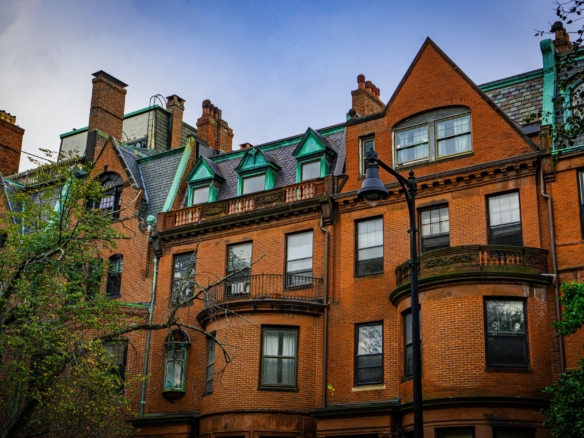
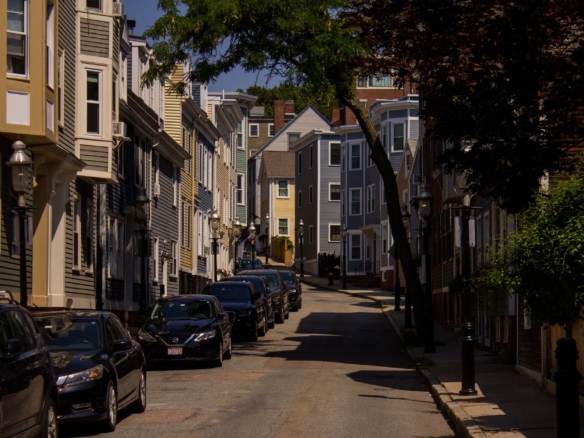
Medford, Massachusetts has quietly transformed into one of the most desirable communities in the Greater Boston area. With the long-awaited Green Line Extension finally operational, this historic city of roughly 60,000 residents now offers residents direct rapid transit access into Cambridge and downtown Boston. Whether you are a first-time homebuyer, a growing family seeking top-rated schools, or a young professional looking for urban convenience paired with suburban comfort, Medford delivers a compelling lifestyle at a price point that still makes sense in 2026. This comprehensive neighborhood guide from Homzora breaks down everything you need to know about living in Medford, from its distinct villages and school performance to housing costs and commute times.
Boston Renter Intelligence Survey
How does your rent compare?
Add your numbers and get an instant read on what share of your income goes to rent, measured against what Boston renters actually report. You will also get the Q3 report free on October 7.
See how your rent compares →Recommended Furniture for Boston Apartments
Furnish your Boston home with elegant and affordable modern furniture from Sicotas. Fast delivery to Greater Boston.
Beyond transit, Medford benefits from a revitalized restaurant and retail scene along Salem Street and Governors Avenue, continued investment in its parks system, and a tight-knit community culture that longtime residents fiercely protect. The city has managed growth thoughtfully, preserving its historic architecture while welcoming new mixed-use development near the new stations. For buyers who want to understand how Medford fits within the broader regional picture, the Boston Neighborhood Finder from Homzora is an excellent starting point for comparing communities side by side.
A Closer Look at Medford’s Distinct Neighborhoods
Medford is not a monolithic community. It contains several distinct neighborhoods, each with its own character, price range, and lifestyle appeal. Understanding these micro-markets is essential for any serious buyer or renter.
Medford Square
Medford Square serves as the civic and commercial heart of the city. City Hall, the public library, and a growing number of independent restaurants and coffee shops anchor this walkable downtown core. Housing here tends to be a mix of older multi-family buildings and converted Victorian homes. Prices are relatively accessible compared to neighborhoods with direct Green Line access, making it popular with buyers who prioritize character and community feel over a short walk to the train. Parking is manageable, and residents appreciate the sense of being at the center of local government and culture.
West Medford
West Medford occupies a special place in the hearts of longtime Boston-area residents. Its tree-lined streets, craftsman bungalows, and strong local identity give it a small-town warmth that is increasingly rare this close to a major city. The West Medford commuter rail stop on the Lowell Line provides a reliable connection to North Station in Boston, and several bus routes supplement public transit options. Single-family homes here are highly competitive, and well-maintained properties regularly receive multiple offers. Families with school-age children are particularly drawn to this area for its access to well-regarded elementary programs and its quieter residential streets.
Tufts University Area and College Avenue
The neighborhoods surrounding Tufts University have undergone the most dramatic transformation in recent years. The arrival of the Green Line at the College Avenue station turned this corridor into one of the most transit-accessible addresses in all of Medford. New mixed-use buildings have added rental inventory, while adjacent residential streets offer Victorian and colonial homes for buyers willing to compete in a fast-moving market. The energy of a university neighborhood, combined with rapid transit access, makes this area particularly attractive to young professionals and faculty.
South Medford and the Mystic River Corridor
South Medford borders Somerville and benefits from proximity to that community’s vibrant culture while maintaining Medford’s generally lower price points. The Mystic River Reservation runs through this part of the city, offering miles of walking and cycling paths, boat launches, and open green space that residents cherish. This neighborhood attracts outdoor enthusiasts and buyers who want easy access to nature without sacrificing urban amenities.
Wellington and the Route 16 Corridor
The Wellington area, anchored by the Wellington MBTA Orange Line station, appeals to commuters who prioritize direct access to downtown Boston without the premium pricing of neighborhoods closer to the Green Line. Housing here is largely composed of triple-deckers and modest single-family homes, and the price per square foot remains among the most competitive in the city. New development near the station has introduced modern apartment buildings, adding rental options to a neighborhood historically dominated by owner-occupied multi-family properties.
Medford Public Schools: What Families Need to Know in 2026
One of Medford’s most compelling selling points for families is the quality and diversity of its public school system. The Medford Public Schools serve approximately 5,000 students across elementary, middle, and high school grades, and the district has made measurable progress on state assessment benchmarks over the past several years.
Elementary Schools
Medford operates several neighborhood elementary schools, each serving distinct parts of the city. The Roberts School and the Columbus School have both earned strong parent reviews for their dedicated teaching staff and focus on foundational literacy and numeracy. The district has expanded dual-language and enrichment programs in recent years, responding to the increasingly diverse composition of its student body.
Andrews Middle School
The Andrews Middle School serves the majority of Medford’s sixth through eighth grade students. The school offers a range of extracurricular activities, a competitive athletics program, and a growing STEM curriculum. Families transitioning from elementary school often note the warm culture and the accessibility of school administration as particular strengths of the Andrews experience.
Medford High School
Medford High School is the flagship of the district and a genuine source of community pride. The school consistently produces students who matriculate to competitive four-year colleges and universities, and its Advanced Placement course offerings have expanded significantly. The performing arts program is particularly well regarded, and the school’s athletic teams compete with distinction in the Middlesex League. For families weighing Medford against neighboring communities, the high school is frequently a decisive factor in favor of choosing Medford.
Green Line Living: What the Extension Means for Commuters
The Green Line Extension represents the single largest infrastructure investment in Medford’s recent history, and its impact on daily life cannot be overstated. Residents living near the College Avenue or Tufts stations can now reach Lechmere in under ten minutes, Park Street in roughly twenty minutes, and destinations across the entire Green Line network without transferring. For professionals working in the Longwood Medical Area, Copley Square, or the Seaport District, Medford now competes directly with Brookline and Jamaica Plain as a viable transit-first community.
Are You a Licensed MA Real Estate Agent?
List your Boston rentals and properties free on Homzora. Zero fees. Zero commissions. Direct leads sent to you.
This accessibility has had a predictable effect on home values near the stations. Properties within a half mile of Green Line stops have appreciated at a faster rate than the rest of the city, a trend that Homzora has tracked closely through its Boston Housing Data platform. Buyers who are considering a home near these stops should be prepared for competitive bidding environments and should have their financing fully arranged before making an offer.
Medford Housing Market Data for 2026
The Medford housing market in 2026 remains competitive but slightly more balanced than the frenzied conditions of 2021 and 2022. Median single-family home prices hover in the range of $750,000 to $850,000 depending on neighborhood and condition, with premium properties near Green Line stations and in West Medford regularly exceeding $1,000,000. Condominiums and smaller units provide entry points in the $450,000 to $650,000 range, making Medford accessible to buyers who cannot yet compete in the single-family segment.
The rental market remains tight. One-bedroom apartments near College Avenue and Tufts typically range from $2,200 to $2,700 per month, while two-bedroom units in transit-accessible locations routinely command $2,900 to $3,500 per month. Renters evaluating affordability across the metro area should use the Boston Rent Affordability Calculator from Homzora to get a clear picture of how different price points align with their income and financial goals.
Practical Considerations for Buyers and Renters
Getting Your Credit in Order
Understanding Your Lease Agreement
Protecting Your Home After Purchase
Parks, Recreation, and Quality of Life
Medford punches well above its weight in terms of green space and recreational amenities. The Middlesex Fells Reservation, a 2,000 acre state park that borders Medford to the north, offers hiking trails, wildlife viewing, and year-round outdoor recreation just minutes from some of the city’s most desirable residential streets. The Mystic River Reservation provides waterfront access, picnic areas, and a boating program that is beloved by families throughout the community.
Locally, Wright’s Pond remains a cherished summer destination for swimming and informal gatherings. The city’s parks department has invested in playground renovations and sports field improvements over the past several years, and the result is a system of neighborhood parks that support everything from youth soccer leagues to community gardening programs. For families with children, this abundance of outdoor options significantly enhances the quality of daily life.
Dining, Culture, and Community in Medford
Medford’s dining scene has grown considerably more sophisticated over the past decade. Salem Street and its surrounding blocks host a rotating cast of independent restaurants covering Italian, Vietnamese, Ethiopian, Mexican, and contemporary American cuisines. The weekly farmers market during summer and fall months draws vendors from across the region and serves as a gathering point for the community. Local breweries and coffee roasters have added to the neighborhood commercial fabric, creating the kind of walkable retail environment that buyers increasingly prioritize.
The city’s arts and culture scene benefits enormously from its proximity to Tufts University, which regularly opens its galleries, performance spaces, and lecture programs to the broader community. The Medford Public Library system operates a robust programming calendar, and the city’s historical society maintains an active presence that connects residents to Medford’s surprisingly rich past as one of Massachusetts’s oldest European-settled communities.
Is Medford the Right Fit for You in 2026?
Medford offers a rare combination of genuine transit access, strong schools, diverse neighborhoods, abundant green space, and a community culture that resists the homogenization affecting many Greater Boston communities. It is a city that rewards those who take the time to understand its distinct neighborhoods and make a deliberate choice about where to put down roots.
Whether you are weighing Medford against Somerville, Malden, Arlington, or another community in the metro area, having reliable data and expert guidance makes all the difference. Homzora is committed to helping buyers, sellers, and renters navigate the Greater Boston market with clarity and confidence. Explore additional neighborhood comparisons, market trends, and affordability tools at homzorarealty.com and take the first step toward finding your ideal home in Medford or across the region today.
Stay Ahead of the Boston Market
Monthly insights on Boston rents, home tips, and investment opportunities delivered free to your inbox.
Premium Furniture for Your Boston Home
Elevate your Boston apartment or home with HERNEST modern furniture. Timeless designs built to last with fast delivery to Greater Boston.
Data sources and methodology
Rent data compiled from publicly available sources including the U.S. Census Bureau American Community Survey, Massachusetts Association of Realtors, Zillow Research, CoStar Group, and MBTA ridership reports. Neighborhood statistics reflect current market conditions as of 2026. Figures are estimates based on available market data and should be used for informational purposes only.
Related Boston Housing Resources
📚 Related Reading on Homzora
Related posts