Selling your Boston home is one of the most financially significant decisions you will ever make, and the difference between a quick sale at full price and a slow listing that lingers on the market often comes down to one thing: staging. Boston buyers are sophisticated, inventory is competitive, and first impressions happen in the first eight seconds of walking through a door. A room by room staging approach gives you a systematic, manageable way to prepare your home without feeling overwhelmed. This guide walks you through every space in your home, gives you a printable style checklist structure, breaks down realistic budgets per room, and tells you exactly how many days before your listing goes live each room should be staged and ready.
Before you begin, spend a few minutes reviewing current Boston Housing Data so you understand what buyers in your specific price range and neighborhood are expecting. A condo in the South End has very different buyer expectations than a single family home in West Roxbury or a townhouse in Charlestown. Knowing your buyer profile before staging begins will help you make smarter decisions about where to spend your money and where to save it.
Why a Room by Room Staging Strategy Works Better Than a Whole House Overhaul
Most homeowners make the mistake of trying to tackle staging all at once, which leads to burnout, inconsistent results, and wasted money. A room by room approach lets you prioritize high impact spaces first, set a realistic timeline, and allocate your budget where it will generate the greatest return. Studies consistently show that staged homes in competitive markets like Boston sell faster and for a higher percentage of the asking price than unstaged homes. When you break the process into manageable rooms with specific tasks, budgets, and deadlines, staging becomes a project plan rather than a source of anxiety.
Your Boston Home Staging Timeline Overview
The staging timeline below is built around a 30 day window before your listing goes live. If you have more time, you can spread the work out comfortably. If you are working on a tighter schedule, prioritize the rooms in the order listed here because they appear first in buyer flow and carry the most weight in photographs.
- 30 days before listing: Declutter the entire home, begin deep cleaning, and address any deferred maintenance that could show up in inspection
- 21 days before listing: Complete living room and kitchen staging, order any furniture rentals or accent pieces
- 14 days before listing: Stage the primary bedroom and all bathrooms
- 10 days before listing: Complete basement, storage areas, and secondary bedrooms
- 7 days before listing: Finalize curb appeal and outdoor staging, add plants and fresh mulch
- 3 days before listing: Do a full walkthrough, replace burned out bulbs, steam clean carpets, and add final styling touches
- 1 day before listing: Professional photography, remove all personal photos and prescription medications, and do a final scent check throughout the home
Entryway Staging
What Buyers Feel the Moment They Walk In
The entryway sets the emotional tone for every room that follows. Boston homes, especially older Victorians, brownstones, and triple deckers, often have narrow or dim entryways that can feel cramped. Your goal is to create a sense of arrival, not a sense of squeezing through.
Entryway Staging Checklist
- Remove all shoes, coats, bags, and everyday clutter from visible hooks and floors
- Add a single clean doormat in a neutral color or simple pattern
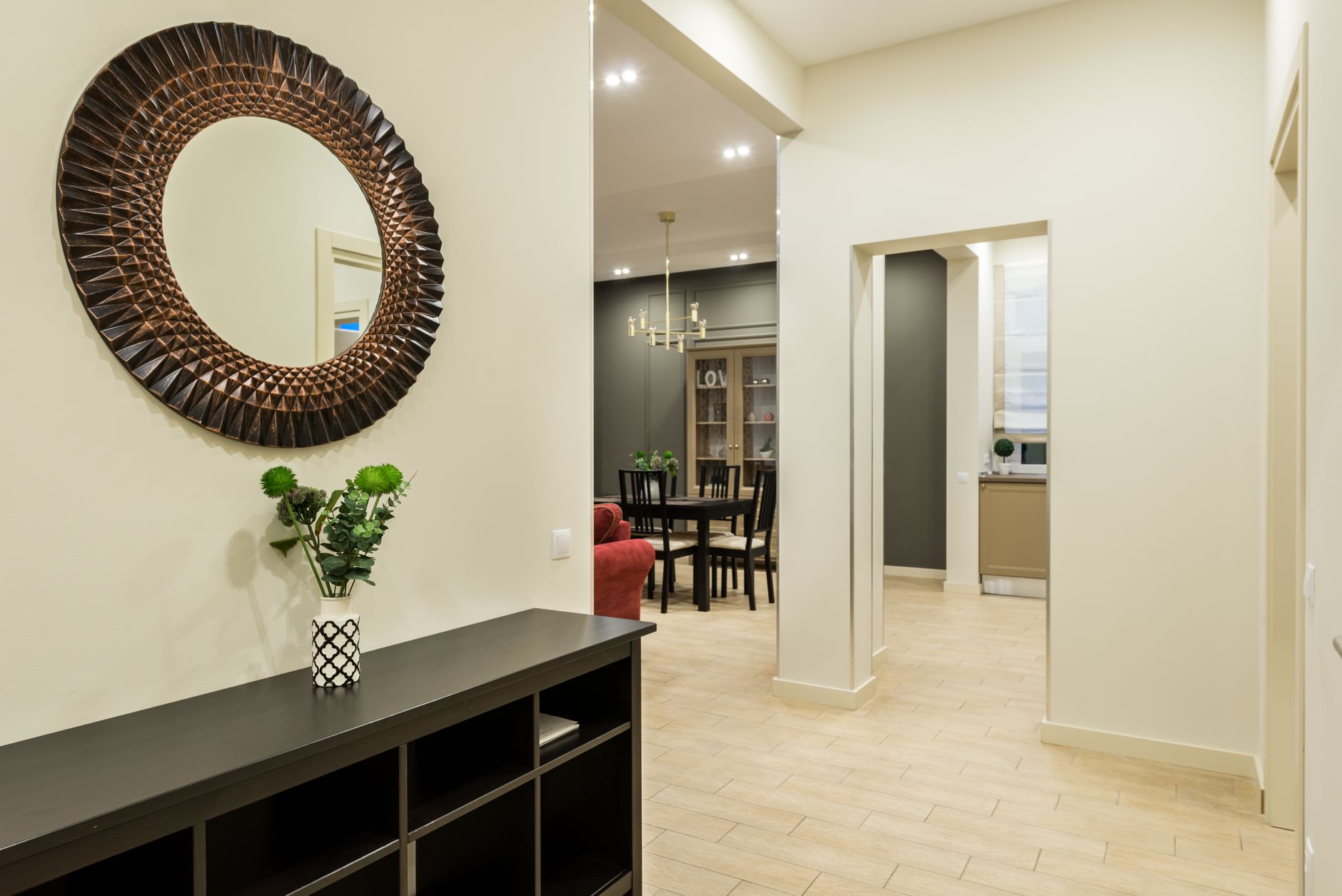
- Hang one piece of art or a mirror at eye level to draw the eye inward and create depth
- Replace any overhead fixture with a bulb of at least 2700K warmth to create a welcoming glow
- Add a small table or bench if space allows, styled with one plant and nothing else
- Paint the front door if it shows wear, a fresh coat of black or deep navy reads as polished and current
- Ensure the doorbell works and the address numbers are clean and legible
Entryway Budget
Plan to spend between $75 and $250 on the entryway. A new doormat costs $30 to $60, a mirror or piece of art runs $40 to $120, and a small plant with a clean pot costs $20 to $40. This is one of the highest return on investment spaces in the home relative to what you spend.
Timeline: Stage the entryway 21 days before listing so it is complete before photography day and you have time to make adjustments.
Living Room Staging
Creating the Room That Sells the Lifestyle
The living room is where buyers begin to imagine themselves living in the home. It needs to feel spacious, light filled, and neutral enough that a wide range of buyers can picture their own furniture and style in the space.
Living Room Staging Checklist
- Remove at least 30 percent of existing furniture to open up floor space and improve traffic flow
- Float the sofa away from walls rather than pushing everything to the perimeter
- Add a large area rug if hardwood floors are present, this grounds the seating area and adds warmth
- Replace throw pillows with two to three pillows in a coordinated neutral palette
- Remove personal photographs, sports memorabilia, and religious items
- Clean or replace window treatments to maximize natural light
- Add a tray with candles, a stack of books, and greenery to the coffee table
- Ensure all lamps are working and use bulbs between 2700K and 3000K
- Steam clean or replace any rugs that show heavy wear or pet staining
- Touch up baseboards and walls with matching paint where scuffs are visible
Living Room Budget
The living room typically requires the largest staging investment outside of the kitchen. Budget between $300 and $800 depending on how much furniture rental or replacement is needed. If your existing sofa is in good shape, much of the cost comes from accent pieces, a new rug, and lighting. A rental sofa from a local staging company in Boston runs $150 to $400 per month if needed.
Timeline: Complete living room staging 21 days before your listing date.
Kitchen Staging
The Room That Makes or Breaks a Sale
Boston buyers spend more time evaluating kitchens than any other room in the home. Even if your kitchen is older or smaller than ideal, strategic staging can shift focus to its strengths and minimize its weaknesses.
Kitchen Staging Checklist
- Clear every single item off the countertops except for one or two purposeful styling pieces
- Remove the coffee maker, toaster, knife block, and dish drying rack from counter visibility
- Deep clean the oven, refrigerator, and sink until they are spotless
- Replace hardware on cabinets if it is dated, brushed nickel or matte black are buyer favorites
- Paint cabinet doors if they are in poor condition, a crisp white or soft gray reads as a near renovation
- Add a small bowl of lemons or a single herb plant in a clean white pot as your only counter decor
- Remove refrigerator magnets, papers, and children’s artwork from appliance surfaces
- Ensure all cabinet doors and drawers open and close smoothly
- Add a clean folded dish towel in a coordinating neutral color near the sink
- If the backsplash is dated, consider peel and stick tile panels as an affordable refresh
Kitchen Budget
Kitchen staging without renovation ranges from $200 to $600. Cabinet hardware replacement can cost $80 to $200 depending on how many pieces you need. A professional deep clean from a Boston cleaning service runs $150 to $300. Peel and stick tile panels average $40 to $100 for a typical backsplash area.
Timeline: Complete kitchen staging 21 days before your listing date.
Primary Bedroom Staging
Staging the Room That Sells the Dream
The primary bedroom needs to feel like a retreat. Boston buyers, whether they are purchasing a condo in Back Bay or a colonial in Roslindale, are looking for a bedroom that feels calm, spacious, and luxurious without being over the top.
Are You a Licensed MA Real Estate Agent?
List your Boston rentals and properties free on Homzora. Zero fees. Zero commissions. Direct leads sent to you.
Primary Bedroom Staging Checklist
- Invest in crisp white or soft linen hotel quality bedding, this is the single most impactful staging purchase in the bedroom
- Add two matching nightstands with coordinating lamps even if that means purchasing or borrowing pieces
- Remove personal items from nightstand surfaces and leave only a lamp and one small decorative item per side
- Clear out at least half of all closet contents, buyers open closets and closet space perception matters enormously
- Organize remaining closet items by category and color for a polished look
- Remove any exercise equipment or home office items that do not belong in a bedroom
- Add a throw blanket draped casually across the foot of the bed
- Hang curtains as high as possible to create the illusion of taller ceilings
- Remove all medications and personal health items from sight
Primary Bedroom Budget
Budget between $200 and $500 for the primary bedroom. Hotel quality white bedding sets range from $80 to $200. Matching lamps can be sourced from HomeGoods or Target for $30 to $60 each. A throw blanket costs $25 to $50.
Timeline: Stage the primary bedroom 14 days before your listing date.
Bathroom Staging
Making Small Spaces Feel Spa Like
Boston bathrooms are often small, especially in older homes and condos. The goal of bathroom staging is cleanliness, brightness, and a spa like simplicity that makes buyers feel the room has been meticulously maintained.
Bathroom Staging Checklist
- Deep clean every surface including grout lines, the toilet base, around the faucet, and inside the medicine cabinet
- Replace the toilet seat if it shows any wear or staining
- Add white or linen towels folded neatly on towel bars or rolled in a basket
- Remove all personal toiletries from the shower, tub, and vanity countertop
- Add a single decorative soap dispenser and a small plant or candle as decor
- Replace any caulking that is yellowed, cracked, or moldy
- Install a new shower curtain and liner if the existing one is dated
- Replace mirrors if they are original builder grade and scratched
- Ensure all light fixtures are working and bright enough to eliminate shadows
- Add a small bath mat in white or a soft neutral to coordinate with the towels
Bathroom Budget
Budget between $100 and $350 per bathroom. A new toilet seat costs $25 to $60. Fresh towels and a bath mat run $40 to $80. A new shower curtain and liner costs $30 to $70. Recaulking is a DIY project that costs under $20 in materials.
Timeline: Stage all bathrooms 14 days before your listing date.
Basement and Storage Staging
The Hidden Value Most Sellers Overlook
Boston buyers place significant value on storage and usable basement space. A cluttered, dark basement can make buyers undervalue the home or worry about what is being hidden. A clean, well lit basement signals that the home has been properly maintained.
Basement and Storage Staging Checklist
- Remove all non essential items from the basement and either donate, sell, or store them offsite
- Clean the floors thoroughly and consider painting concrete floors if they are stained
- Add bright LED shop lights if the existing lighting is dim
- Organize any remaining storage neatly on shelves with labeled bins
- Ensure the mechanicals area is accessible and the furnace, water heater, and electrical panel are easy to see and document
- Check for any signs of moisture or water intrusion and address them before listing
- If the basement is finished or partially finished, stage it with purpose, add a gym setup, an office, or a lounge depending on the space
Basement Budget
Budget $50 to $200 for the basement depending on how much work it needs. Concrete floor paint runs $30 to $60 per gallon. LED shop lights cost $30 to $50 each. Storage bins and shelving can range from $40 to $150.
Timeline: Complete basement staging 10 days before your listing date.
Outdoor and Curb Appeal Staging
The Staging That Happens Before Buyers Even Open the Door
In Boston neighborhoods where homes are close together and buyers often do a drive by before scheduling a showing, curb appeal is your first marketing asset. The exterior of your home needs to look as polished and cared for as the interior.
Curb Appeal Staging Checklist
- Power wash the driveway, walkways, front steps, and siding
- Edge and mow the lawn and trim any overgrown shrubs or hedges
- Add fresh mulch to all planting beds for a manicured and maintained look
- Plant seasonal flowers in pots near the front door for color and welcome
- Paint or stain the front door and update the hardware including the knocker and handle
- Clean or replace outdoor light fixtures and ensure they work for evening showings
- Repair any cracked walkway sections, loose railings, or broken fencing
- Remove any vehicles, bikes, trash cans, or lawn equipment from sight on photography day
- Clean windows from the exterior and replace any cracked or broken panes
Curb Appeal Budget
Budget between $200 and $700 for curb appeal work. Power washing a typical Boston home exterior runs $150 to $300 if hired out. Seasonal flowers and potted plants cost $40 to $100. Fresh mulch for planting beds averages $50 to $100. A professional door painting costs $80 to $150 or can be done for the cost of a quart of exterior paint.
Timeline: Complete all exterior staging 7 days before your listing date to allow time for any final touch ups after landscaping settles.
Printable Style Room by Room Staging Checklist Summary
Use the summary below as your master reference during the staging process. Print it out and check off each item as you complete it room by room.
Pre Staging Phase (30 Days Out)
- Full home declutter complete
- Deep cleaning scheduled or underway
- Deferred maintenance items addressed
- Furniture rental or purchase orders placed
Stay Ahead of the Boston Market
Monthly insights on Boston rents, home tips, and investment opportunities delivered free to your inbox.
Related Boston Housing Resources