Back Bay
One of Boston’s most prestigious and expensive neighborhoods, yet the lowest-demand of the twelve scored, the clearest case of price and demand diverging.
What drives demand in Back Bay
Back Bay is the most counterintuitive entry in the rankings. Among the most prestigious and expensive neighborhoods in Boston, with median one-bedroom rents around $3,200, it nonetheless carries the lowest demand score of the twelve neighborhoods Homzora scores, at 58. It is the single clearest example of this year’s central finding: in Boston’s 2026 market, the priciest neighborhoods are not the most in-demand.
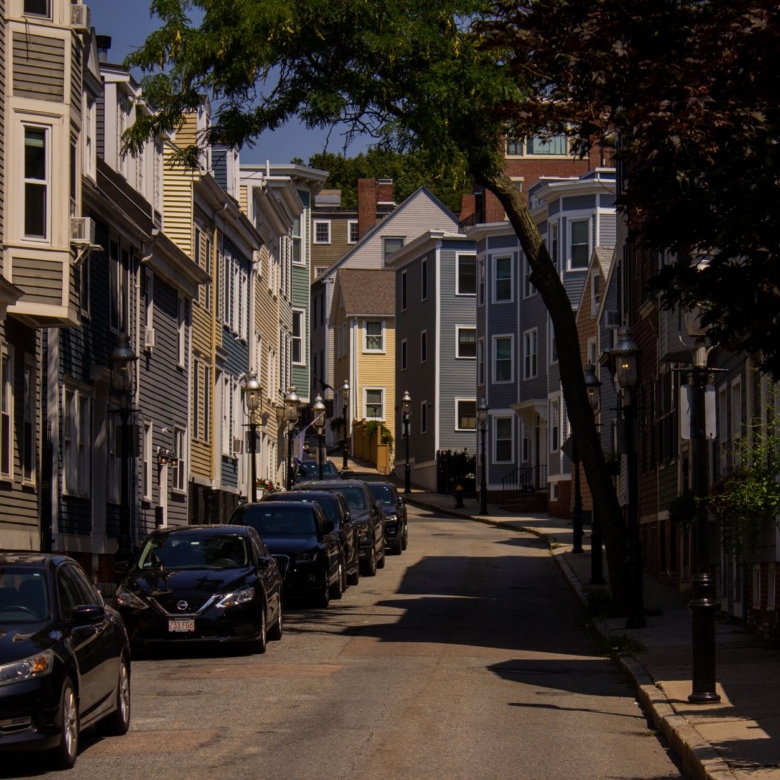
This does not mean Back Bay lacks appeal, far from it. Its Victorian brownstones, Newbury Street shopping, exceptional walkability, and Green and Orange Line access make it perennially desirable. But the high price point sharply narrows the pool of renters who can compete, so relative demand pressure, the number of applicants chasing each unit, sits below that of more affordable, transit-rich neighborhoods.
For renters, Back Bay is a premium, prestige choice with unmatched walkability and central location. The upside of its lower relative demand is that, for those who can afford it, the competition for any given unit is less intense than in the value-zone neighborhoods where many more renters are chasing fewer affordable options.
See Back Bay on the demand map
Compare Back Bay against every other Boston neighborhood by rent, demand, and transit.
B-NDI demand scores and rent figures are Q2 2026 baseline estimates from public data sources (US Census ACS, Zillow, Massachusetts Association of Realtors, MBTA). Studio and 2BR figures are estimates derived from typical Boston ratios. Independent vacancy and days-on-market data attributed to Boston Pads. Homzora’s survey-validated demand release publishes October 7, 2026.