Boston is one of the most historic cities in America, and its water infrastructure reflects decades of investment and maintenance. Yet even in a city known for its rigorous standards, tap water quality remains a concern for both renters and homeowners. Chlorine, chloramines, trace pharmaceuticals, heavy metals, and aging pipe systems can all introduce unwanted contaminants into your glass. That is why thousands of Boston residents are turning to advanced home filtration solutions, and the APEC Water Systems ROES-50 stands out as one of the most trusted options on the market today. This comprehensive guide covers everything you need to know about the ROES-50, from how it works and how to install it, to Boston-specific water quality data, landlord obligations, and a detailed cost breakdown that proves clean water is more affordable than you think.
Shop APEC Water Filter Systems on Amazon
Find top-rated products for Boston homeowners and landlords.
Understanding Boston Tap Water Quality
Boston receives its drinking water primarily from the Quabbin and Wachusett Reservoirs, managed by the Massachusetts Water Resources Authority. The MWRA consistently earns praise for meeting federal Safe Drinking Water Act standards, and its annual reports confirm that Boston tap water passes regulatory thresholds for most contaminants. However, passing legal thresholds and delivering truly pure water to your faucet are two different things.
According to the Boston Housing Data compiled by Homzora, older residential neighborhoods throughout Dorchester, Roxbury, Jamaica Plain, and the South End contain aging plumbing infrastructure that can leach lead and copper into drinking water between the main line and the tap. The MWRA treats the water before it leaves the reservoir, but it cannot control what happens inside aging building pipes. That gap between treatment facility and kitchen faucet is where filtration becomes essential.
Common issues found in Boston tap water include detectable levels of chloramines used for disinfection, trace amounts of trihalomethanes formed as disinfection byproducts, nitrates, and in older buildings, lead from legacy plumbing. Even at trace levels, these substances raise legitimate health concerns, especially for infants, pregnant women, elderly residents, and immunocompromised individuals. A five-stage reverse osmosis system like the APEC ROES-50 addresses all of these concerns simultaneously.
What Is the APEC Water Systems ROES-50
The APEC Water Systems ROES-50 is a five-stage reverse osmosis under-sink water filtration system designed and assembled in the United States. It is one of the most reviewed and highly rated home water filters available, consistently earning top marks for performance, durability, and value. The system is engineered to remove up to 99 percent of over 1,000 contaminants, including lead, chlorine, chloramines, fluoride, arsenic, bacteria, viruses, and a wide range of dissolved solids.
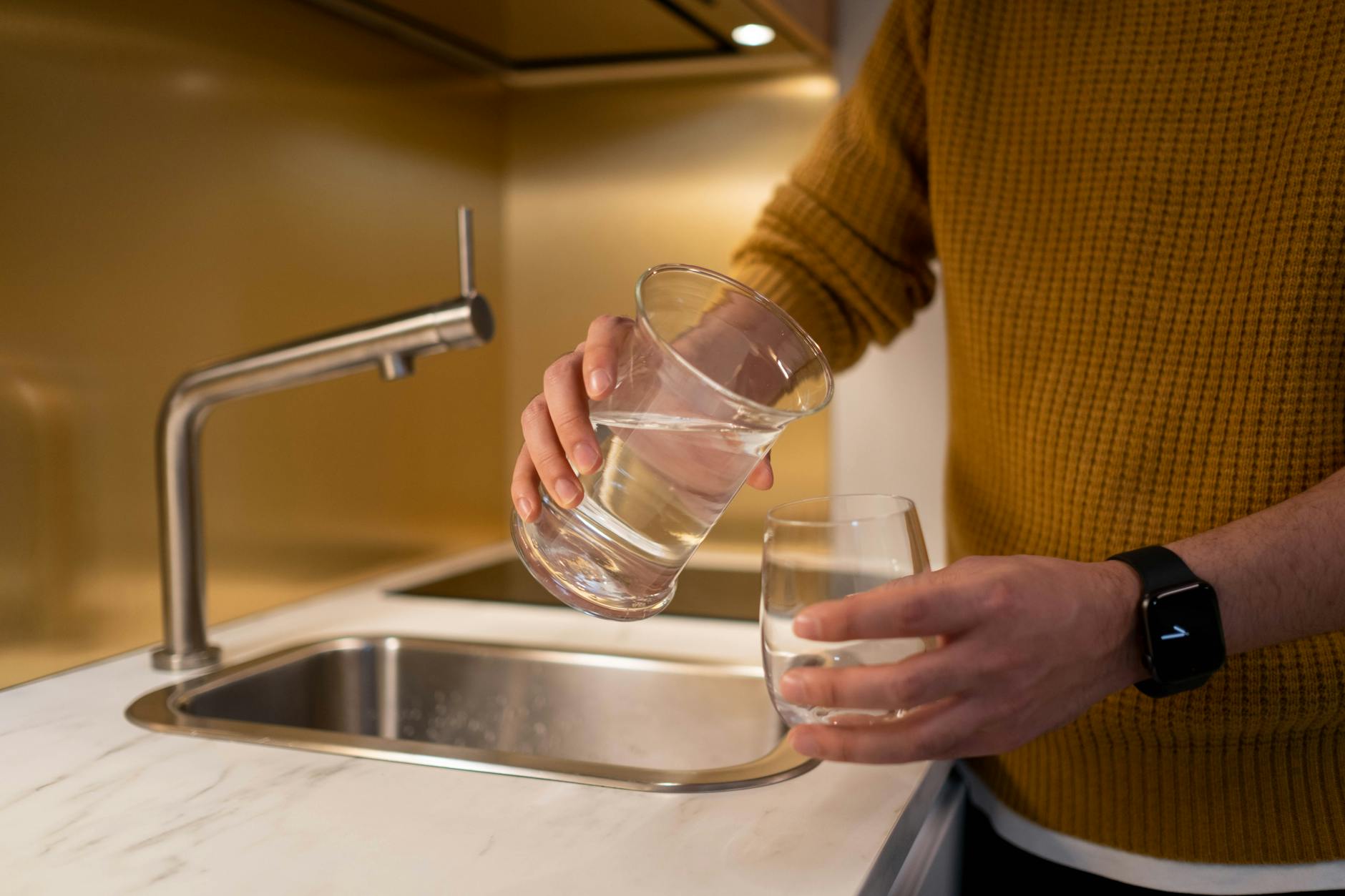
You can Shop APEC Water Filter Systems on Amazon and find the ROES-50 competitively priced with multiple bundle options that include everything needed for a complete installation. The system connects directly to your cold water line under the kitchen sink and feeds a dedicated faucet that delivers purified water on demand.
The Five Stages of Filtration Explained
Understanding exactly what happens to your water inside the ROES-50 helps you appreciate why five stages are necessary rather than a simple one or two filter approach.
- Stage 1, Sediment Filter: A five-micron polypropylene sediment filter captures dust, rust, particles, and larger contaminants before they can damage the more delicate downstream filters. This stage protects the entire system and extends the life of subsequent filter stages.
- Stage 2, Carbon Block Filter: A premium carbon block filter reduces chlorine, chloramines, taste, and odor. This stage is particularly important for Boston residents because the MWRA uses chloramines rather than plain chlorine, and chloramines are harder to remove than chlorine alone. Standard pitcher filters often struggle with chloramines, making this stage a major advantage of the ROES-50.
- Stage 3, Carbon Block Filter: A second carbon block filter provides an additional layer of protection and ensures thorough removal of chemical contaminants before water reaches the membrane. Double carbon filtration significantly extends the effective life of the reverse osmosis membrane.
- Stage 4, Reverse Osmosis Membrane: The heart of the system is a high rejection reverse osmosis membrane rated to remove up to 99 percent of dissolved solids, including lead, arsenic, fluoride, nitrates, bacteria, and viruses. Water is forced through pores so small that most molecular contaminants cannot pass through.
- Stage 5, Carbon Post Filter: A final carbon polishing filter refines the taste and odor of water as it exits the pressurized storage tank. This stage ensures that every glass of water tastes clean, crisp, and refreshing rather than flat or stale.
Why Boston Renters and Homeowners Need Water Filtration
Boston is a city of renters. With some of the highest concentrations of universities, hospitals, and research institutions in the world, Boston attracts a transient and diverse population that often lives in older apartment buildings with plumbing that has not been updated in decades. Whether you own your home or rent an apartment in Back Bay, Allston, Brighton, or Cambridge, the case for under-sink filtration is compelling.
Lead and Legacy Plumbing in Boston Neighborhoods
Homes built before 1986 may contain lead solder in their plumbing connections, and homes built before 1978 may have lead service lines connecting the building to the street main. When water sits in these pipes overnight, it can absorb measurable quantities of lead. No level of lead exposure is considered safe for children, and even low-level chronic exposure in adults has been linked to cardiovascular disease and cognitive decline. The APEC ROES-50 removes lead to below detectable limits, providing meaningful protection for families in older Boston housing stock.
Chloramines and Disinfection Byproducts
The MWRA switched from chlorine to chloramines as a primary disinfectant to comply with federal rules limiting the formation of trihalomethane disinfection byproducts. While this switch reduced one class of byproducts, it introduced chloramines, which can form their own class of disinfection byproducts and are associated with skin irritation and respiratory concerns at high concentrations. The dual carbon block stages of the ROES-50 are specifically effective at reducing chloramines, making it a superior choice compared to basic carbon pitcher filters that were designed primarily for chlorine removal.
Microplastics and Emerging Contaminants
Recent scientific research has identified microplastics in municipal water supplies across the country. While regulatory frameworks have not yet established legal limits for microplastics, the reverse osmosis membrane in the ROES-50 is effective at removing particles at the nanometer scale, which means it captures microplastic particles before they reach your glass. This protection against emerging contaminants that regulations have not yet caught up with represents significant long-term value.
Landlord Obligations and Tenant Water Quality Rights in Massachusetts
Massachusetts law requires landlords to provide tenants with safe and habitable housing, which includes access to clean drinking water. Under the Massachusetts State Sanitary Code, landlords are responsible for maintaining plumbing systems in good working order and ensuring that water supply meets health and safety standards. However, the law does not specifically require landlords to install water filtration systems, and the responsibility for water quality between the meter and the tap is often legally ambiguous.
Are You a Licensed MA Real Estate Agent?
List your Boston rentals and properties free on Homzora. Zero fees. Zero commissions. Direct leads sent to you.
Tenants who are concerned about water quality in their rental units should first request a copy of the building’s most recent water quality report from their landlord. In Boston, landlords of buildings with lead pipes or lead solder are required to disclose this information to tenants. If you discover that your building has lead plumbing and your landlord refuses to address it, you may have legal recourse under Massachusetts tenant protection law.
APEC ROES-50 Installation Guide
One of the most appealing aspects of the ROES-50 is that it is designed for DIY installation without requiring specialized plumbing knowledge. The system comes with a detailed instruction manual and a complete set of components, including color-coded tubing, a pressurized storage tank, a dedicated faucet, a drain saddle, and all necessary fittings. Most homeowners and renters can complete installation in two to four hours using only basic hand tools.
Step by Step Installation Overview
- Prepare the workspace: Clear out the area under your kitchen sink and shut off the cold water supply valve. Place a towel and a bucket under the work area to catch any drips during installation.
- Install the drain saddle: Attach the drain saddle to the vertical drain pipe under your sink using the included clamp. This creates the connection through which the system discharges the concentrated waste water that the reverse osmosis process generates.
- Connect to the cold water supply: Use the included feed water adapter to tap into the cold water supply line. The ROES-50 uses a simple compression fitting that does not require soldering or special tools.
- Mount the storage tank: Place the pressurized storage tank in the cabinet. The tank holds approximately three gallons of purified water so that you have a ready supply on demand without waiting for the membrane to process water in real time.
- Install the dedicated faucet: If your sink has an unused pre-drilled hole, install the included faucet there. If not, you may need to drill a small hole in your sink or countertop, which is straightforward on stainless steel sinks.
- Connect the color-coded tubing: Follow the included diagram to connect all five filter stages using the color-coded tubing. The push-to-connect fittings make this step simple and do not require clamps or tools.
- Flush the system: Before drinking water from the new system, run two full tank cycles through the drain to flush out any carbon dust or manufacturing residue from the new filter cartridges.
Ideal Placement and Space Requirements
The ROES-50 system requires approximately twelve inches of vertical clearance and about fifteen inches of horizontal space under your sink. In Boston apartments where under-sink space is often shared with garbage disposals, cleaning supplies, and drain pipes, a quick measurement before purchasing is advisable. The storage tank is upright and roughly the size of a small propane canister, making it easy to fit in most standard cabinets.
Filter Replacement Schedule and Maintenance Tips
Maintaining your ROES-50 correctly ensures that it continues to deliver clean water and extends the life of the expensive reverse osmosis membrane. APEC recommends the following replacement schedule based on average household usage of approximately three gallons per day.
Recommended Filter Replacement Timeline
- Stage 1 Sediment Filter: Replace every six to twelve months depending on local water turbidity. Boston water is generally clear, so annual replacement is typical for most households.
- Stage 2 and Stage 3 Carbon Block Filters: Replace every six to twelve months. Because Boston uses chloramines, which can be more demanding on carbon media than chlorine, some Boston households may prefer to replace these at six months to maintain optimal performance.
- Stage 4 Reverse Osmosis Membrane: Replace every two to three years under normal usage conditions. The membrane is the most expensive individual component, typically costing between forty and sixty dollars.
- Stage 5 Carbon Post Filter: Replace every twelve months alongside the pre-filters for optimal taste results.
Performance Monitoring and Water Testing
APEC includes a water quality meter with many ROES-50 purchases, allowing you to measure the total dissolved solids content of your filtered water at any time. Unfiltered Boston tap water typically measures between 150 and 250 parts per million of dissolved solids. Water processed by a healthy ROES-50 membrane should measure below 20 parts per million. If your TDS meter reading begins to climb, it is a signal that the membrane may be approaching the end of its useful life.
Cost Per Gallon Comparison
One of the most persuasive arguments for the APEC ROES-50 is its long-term cost efficiency compared to alternatives. Bottled water typically costs between one and three dollars per gallon at Boston grocery stores, and the environmental cost of single-use plastic waste is substantial. Over the course of a year, a family of four spending fifty dollars per month on bottled water spends six hundred dollars annually for water that is not necessarily purer than filtered tap water.
The ROES-50 system costs approximately two hundred to two hundred fifty dollars at initial purchase. Annual filter replacement costs run approximately sixty to one hundred dollars. Over a three-year period inclusive of one membrane replacement, the total cost of ownership for a household using approximately one thousand gallons of filtered water annually works out to approximately ten to fifteen cents per gallon. That represents a savings of approximately ninety percent compared to bottled water, with superior filtration results.
Stay Ahead of the Boston Market
Monthly insights on Boston rents, home tips, and investment opportunities delivered free to your inbox.
Related Boston Housing Resources