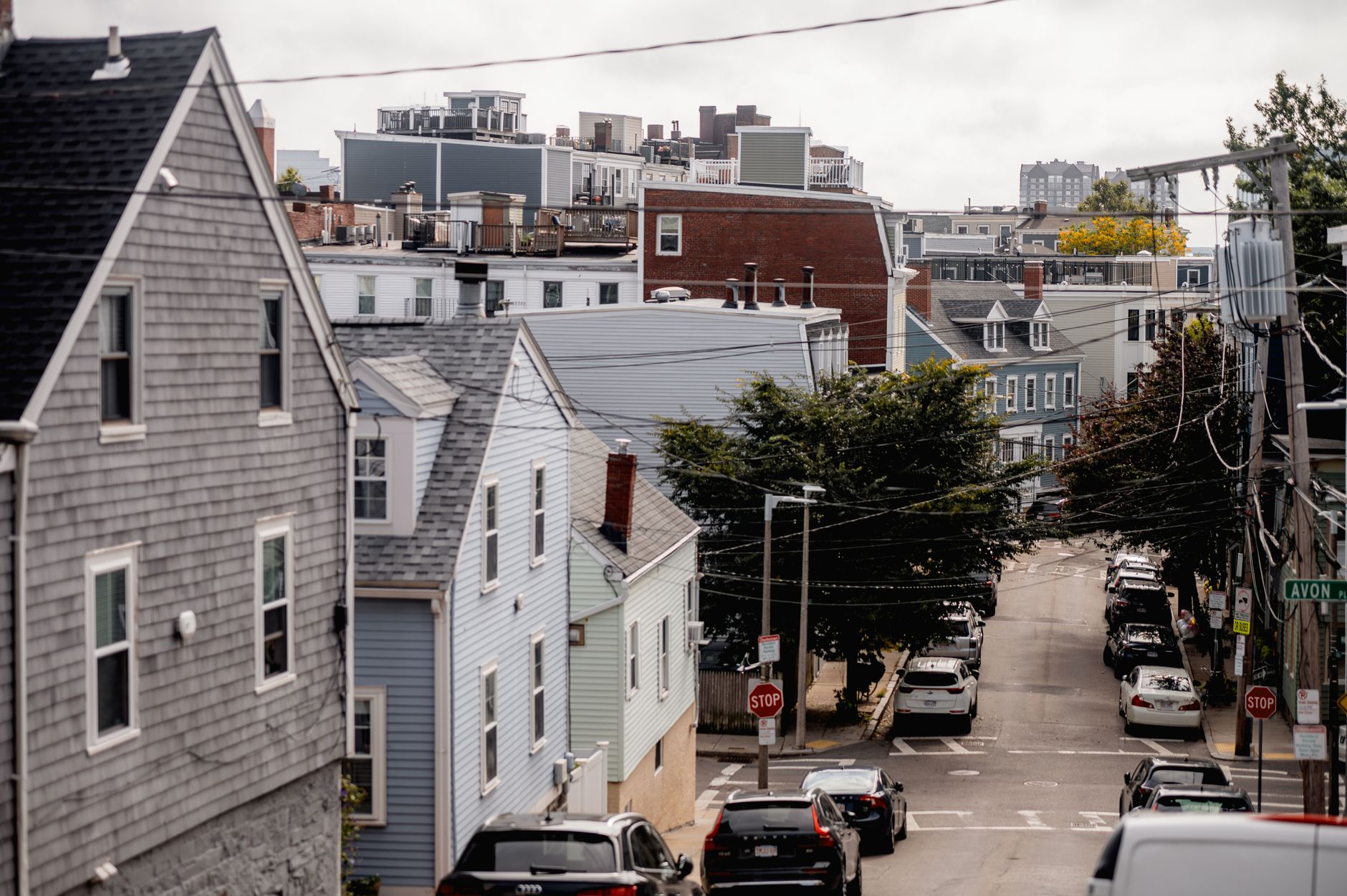
Buying a home in Greater Boston in 2026 is not simply a matter of choosing a neighborhood you like and hoping the prices work out. The reality is far more strategic. Your budget does not just determine what size home you can buy. It determines which communities are even worth your time to tour, what lifestyle compromises you will need to accept, and how much of your daily commute you are effectively trading for square footage or yard space. This guide is built around one core idea: match your price tier to the right geographic cluster first, understand the tradeoffs honestly, and then start touring. Skipping that filtering step wastes weekends and sets unrealistic expectations that slow down purchases by months.
Boston Renter Intelligence Survey
How does your rent compare?
Add your numbers and get an instant read on what share of your income goes to rent, measured against what Boston renters actually report. You will also get the Q3 report free on October 7.
See how your rent compares →How to Use This Guide as a Pre-Tour Filter
Most buyers approach the Greater Boston market by falling in love with a neighborhood from afar, then getting crushed when they discover that neighborhood is $300,000 above their ceiling. This guide inverts that process. Find your budget tier below, read the honest breakdown of what that money buys in each qualifying neighborhood, absorb the commute and lifestyle tradeoffs, and build your short list before you ever contact an agent to schedule a showing. This approach alone can save four to six weeks of wasted time in a competitive market where sellers rarely wait for unprepared buyers.
You can also use the Boston Neighborhood Finder to cross-reference your priorities against current inventory as you read through each tier below.
Under $500,000: Where First Time Buyers Actually Have Options
Finding a livable, appreciating property under $500,000 in Greater Boston in 2026 requires geographic flexibility and a willingness to prioritize future value over immediate lifestyle convenience. This budget is still viable, but it requires honest eyes.
Neighborhoods and Communities to Target
At this price point, buyers should focus their search on communities like Brockton, Lynn, Haverhill, Fitchburg, and Lowell. Within Boston proper, condominiums in Hyde Park, Mattapan, and parts of Dorchester occasionally appear in this range, though competition is fierce and condition varies significantly. Worcester has emerged as one of the strongest under-$500,000 markets in the region, offering two and three bedroom single family homes with reasonable transit access and a downtown that has genuinely improved over the past four years.
What Buyers Compromise at This Tier
Buyers in this range almost always compromise on at least two of the following three factors: school district quality, commute time, and property condition. Homes priced under $500,000 in walkable, well-served areas often need significant work. Buyers who want move-in ready homes are typically pushed to communities that sit 35 to 55 miles from the Boston core. This is not a dealbreaker, but it must be planned around.
Commute Reality at This Price Point
From Worcester, commuters using the MBTA Commuter Rail reach South Station in roughly 75 to 90 minutes one way. From Lowell, the Lowell Line gets riders downtown in about 60 minutes. From Haverhill and Brockton, similar commute windows apply. If you drive, budget for 45 to 75 minutes in normal traffic conditions, more during peak hours. Buyers at this tier who need to be in downtown Boston or Cambridge five days a week should budget for the time cost honestly because it affects quality of life significantly.
Neighborhoods That Overperform Their Price
Worcester is the clearest overperformer in this tier. Its arts district growth, improving restaurant scene, and UMass Medical anchor make it more dynamic than its prices suggest. Lynn is another market where proximity to the water, direct rail to North Station, and ongoing commercial investment make it look underpriced relative to neighboring communities. Lowell has received consistent institutional attention and its Acre and Centralville neighborhoods offer genuine value relative to what the same money buys elsewhere.
The $500,000 to $800,000 Tier: The Most Competitive Band in Greater Boston
This budget range is where the greatest number of buyers compete simultaneously. First time buyers who stretched their savings, move up buyers from the under-$500,000 tier, and downsizers from larger suburban homes all converge here. That means multiple offer situations are still common, and properties that are correctly priced move quickly.
Neighborhoods and Communities to Target
This tier opens up a significantly broader map. Quincy, Medford, Malden, Waltham, Watertown, Arlington, and Belmont condominiums all fall within or adjacent to this range. In Boston proper, Jamaica Plain, parts of South Boston, and select areas of East Boston offer condominiums and smaller multi-family properties at this price point. On the North Shore, Beverly, Salem, and Swampscott provide single family options with genuine neighborhood character. On the South Shore, Weymouth and Abington offer more space per dollar.
What Buyers Compromise at This Tier
At the lower end of this band, buyers in desirable communities often end up in condominiums rather than single family homes. Parking can be limited, outdoor space is frequently shared, and HOA fees reduce effective purchasing power by $200 to $500 per month in many cases. Buyers who want a detached single family home in this price range typically need to accept either a smaller footprint in a prime location or a larger footprint in a community that requires a longer commute. It is rarely possible to have both at this tier without significant compromise.
Commute Reality at This Price Point
The 500k to 800k range starts to bring genuine commuter options closer. Medford, Malden, and Waltham are within 20 to 35 minutes of Boston by transit in most cases. Quincy is served directly by the Red Line. Arlington is close enough to Cambridge that cycling becomes a realistic option for warmer months. Beverly and Salem on the North Shore sit on the Newburyport and Rockport Commuter Rail lines with approximately 45 to 60 minute travel times to North Station. This tier gives buyers meaningful choices between proximity and space in a way the under-$500,000 tier does not.
Neighborhoods That Overperform Their Price
Malden consistently overdelivers for buyers in this range. Its Orange Line access, improving downtown corridor, and still-reasonable prices relative to neighboring Somerville and Medford make it one of the clearest value plays in Greater Boston. Beverly on the North Shore has a genuine downtown with restaurants, arts venues, and a walkable character that punches well above its price. Quincy, often underestimated, provides Red Line access and strong community infrastructure at prices that remain meaningfully below comparable neighborhoods to the north.
You can review current sales data and median pricing trends across all of these communities at the Boston Housing Data page before building your target list.
The $800,000 to $1.2 Million Tier: Where Space and Location Begin to Align
At this budget level, buyers in Greater Boston start to find that the chronic tradeoff between proximity and property quality begins to ease. This is the tier where well-maintained single family homes in suburbs with strong schools become realistic. It is also the tier where buyers within Boston proper can access larger condominiums and the occasional smaller townhouse in prime neighborhoods.
Are You a Licensed MA Real Estate Agent?
List your Boston rentals and properties free on Homzora. Zero fees. Zero commissions. Direct leads sent to you.
Neighborhoods and Communities to Target
The $800,000 to $1.2 million range opens up communities like Newton, Needham, Lexington, Concord, Westwood, and Canton for buyers willing to commit to the suburbs. In Boston proper, South End condominiums, select Beacon Hill properties, and parts of the Fenway and Back Bay fringe fall here. On the North Shore, Manchester by the Sea, Newburyport, and Gloucester offer character-rich options. Brookline at the lower end of this tier is achievable for the right property, and Cambridge occasionally presents smaller units within range.
What Buyers Compromise at This Tier
Buyers at this level are not compromising on quality in the same way lower tiers are, but they are still making choices. In Newton and Lexington, $900,000 to $1.1 million buys a solid home but not a large or completely updated one. Kitchens and bathrooms may be functional but dated. Buyers who want truly turnkey condition in a prime suburb often find themselves needing to stretch toward the top of this range or accept that renovation costs will follow the purchase. Within Boston, this budget delivers comfort and location but not abundant square footage. A 1,200 to 1,600 square foot condo in the South End is attainable here, which is genuinely livable but not expansive.
Commute Reality at This Price Point
Newton, Needham, and Lexington all offer Commuter Rail or express bus access with 25 to 40 minute commutes to the core of Boston. Westwood provides Route 128 highway proximity for car commuters and a dedicated rail station. Concord sits on the Fitchburg Line and delivers a quieter, more rural feel while remaining accessible to Boston in under an hour by rail. At this tier, commute time is manageable by design, and buyers have enough options to optimize around their specific employer location rather than making blanket compromises.
Neighborhoods That Overperform Their Price
Canton consistently surprises buyers in this tier with its school quality, community feel, and highway access relative to its pricing, which still sits below comparable communities like Westwood and Norwood. Gloucester on the North Shore offers a dramatically different lifestyle, with genuine coastal character and lower prices than you would expect given its setting. Newburyport, while rising steadily in price, still delivers walkability and downtown vitality at values that compare favorably to equivalent communities on Boston’s western suburbs.
Over $1.2 Million: The Luxury Tier and What It Actually Delivers
Above $1.2 million, the Greater Boston market shifts its logic. Below this threshold, buyers are largely navigating a supply constrained market where demand dictates terms. Above it, the pool of competing buyers shrinks, negotiation becomes more possible, and the distinctions between properties become more about lifestyle alignment than raw financial pressure.
Neighborhoods and Communities to Target
Weston, Wellesley, Dover, Lincoln, and Sherborn define the traditional luxury suburban tier in Greater Boston. Within the city, the full Back Bay, Beacon Hill, Seaport condominiums, and premium South End properties occupy this range. Cambridge at the higher end of the price spectrum, particularly in Avon Hill and Brattle Street adjacent areas, belongs here as well. On the North Shore, Manchester by the Sea and the upper reaches of Marblehead command luxury tier prices. On the South Shore, Duxbury and Hingham at their upper price points fall into this category.
What Buyers Compromise at This Tier
At this level, compromise is more nuanced than at lower tiers. In Weston and Wellesley, buyers are choosing exceptional school systems and land but accepting communities that are almost entirely car dependent. There is no commuter rail stop in the heart of Weston, and the walkability scores are low. Dover and Lincoln offer magnificent privacy and land but require full car dependency for essentially all daily tasks. Within Boston, luxury condo buyers often sacrifice outdoor private space, garage availability, and noise in exchange for unmatched urban access and architectural quality. The compromise is real but different in character from the under-$500,000 tradeoffs.
Commute Reality at This Price Point
Wellesley is served by the Framingham Worcester Commuter Rail line and delivers a 25 to 35 minute ride to South Station, which is excellent for a community at this price level. Weston has no direct rail and requires a car or connection to the Mass Pike, meaning a 30 to 50 minute drive to Boston depending on traffic. Dover and Lincoln are similar in their car dependency. Urban luxury buyers within Boston obviously have no commute concern by definition, but parking costs and urban logistics replace the suburban driving burden with their own friction.
Neighborhoods That Overperform Their Price
Hingham on the South Shore is one of the most consistent overperformers at the luxury tier. Its ferry access to downtown Boston, walkable downtown village, and community quality stand up strongly against communities that cost $300,000 to $500,000 more per property. Lincoln is another surprise performer. Its land conservation culture, excellent school access through the Lincoln Sudbury district, and rural feel compare favorably against Weston at significantly lower price points within the luxury band. Manchester by the Sea, while increasingly well known, still delivers coastal character and genuine community identity at prices that trail comparable North Shore communities.
Preparing Your Credit Before You Tour
Regardless of which tier applies to your situation, walking into any Greater Boston neighborhood tour without a solid credit profile and pre-approval in hand is a strategic mistake. Sellers and listing agents take offers from financially prepared buyers more seriously, and in competitive situations your credit score and debt-to-income ratio determine not just whether you qualify but at what rate. Reviewing your credit before you start touring through a resource like SmartCredit gives you time to correct errors or address issues that could affect your rate or approval before it matters.
A Note for Investors and Those Considering Multi-Family Purchases
Building Your Neighborhood Short List Before You Tour
The framework laid out in this guide is designed to do one specific thing: eliminate the 80 percent of Greater Boston communities that are not realistic for your budget before you invest time and emotional energy in touring them. Once you have identified your tier, noted the overperforming neighborhoods within it, and understood what commute and lifestyle compromises come with each option, you are ready to build a focused short list of three to five communities to research further.
That short list should account for where you actually work, what school situation you need, whether you have a car or depend on transit, and what your renovation tolerance looks like. A buyer who works in Kendall Square has a fundamentally different optimal neighborhood map than one who works in the Financial District, even at the same budget tier. Do not skip this personalization step after using the tier framework as your first filter.
The goal is not to find the most prestigious address your budget will support. The goal is to find the neighborhood where your budget, commute, and lifestyle needs align well enough that you will still be satisfied in year five, not just at closing. That alignment is where Homzora focuses its guidance, and it is what separates smart 2026 buyers from buyers who overpay for the wrong fit.
Ready to take the next step?
Stay Ahead of the Boston Market
Monthly insights on Boston rents, home tips, and investment opportunities delivered free to your inbox.
Related Boston Housing Resources