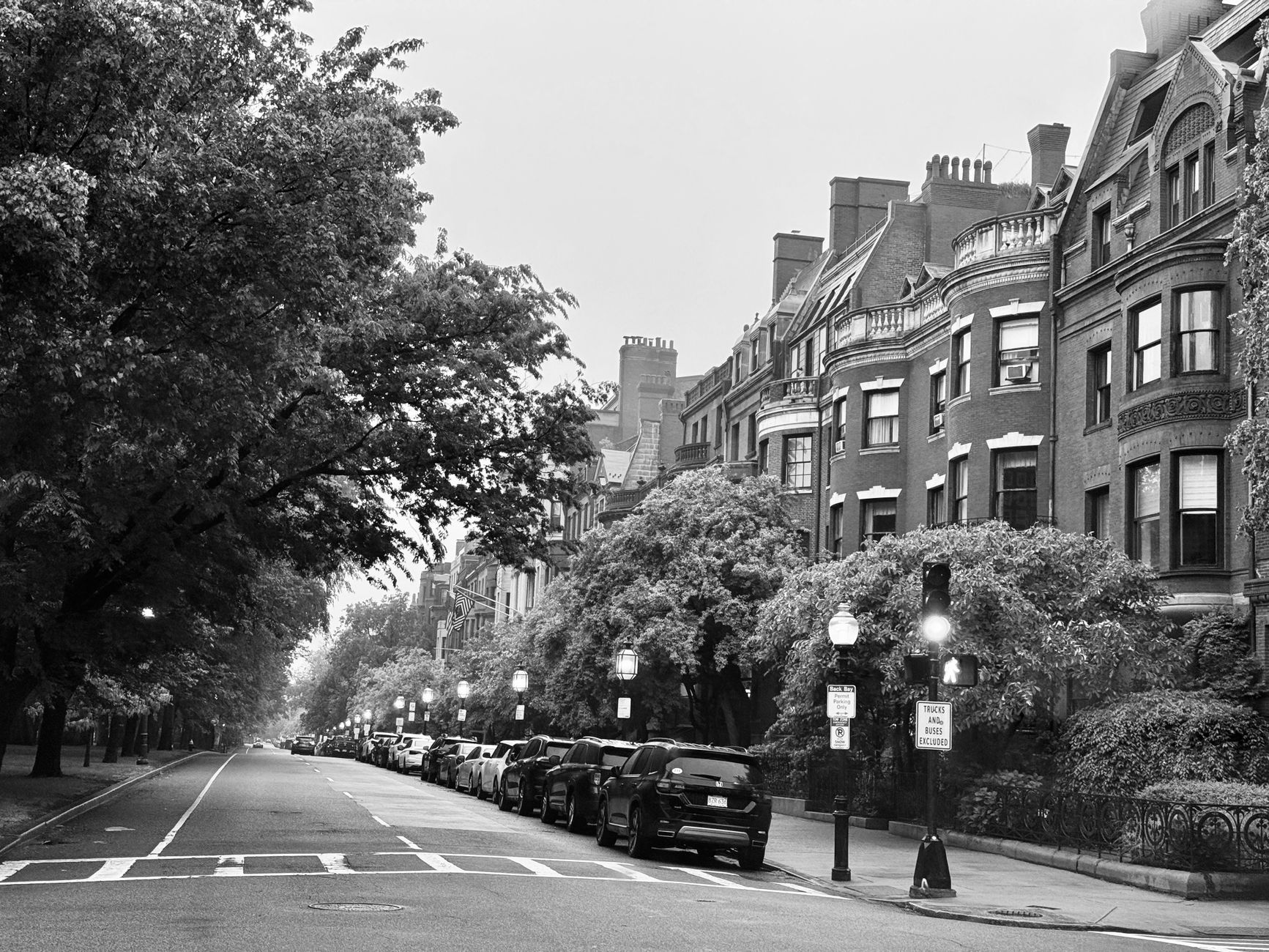
Boston is one of the most expensive cities in the United States, and within Boston, South End and Back Bay sit at the very top of the price spectrum. But knowing that both neighborhoods are expensive does not tell you nearly enough when you are trying to plan a realistic monthly budget. This article cuts through the lifestyle marketing and gets into the actual numbers. Whether you are a single professional weighing your options or a family trying to figure out what life genuinely costs in each neighborhood, this detailed cost of living comparison for 2026 will give you the financial clarity you need before signing a lease or closing on a purchase.
Boston Renter Intelligence Survey
How does your rent compare?
Add your numbers and get an instant read on what share of your income goes to rent, measured against what Boston renters actually report. You will also get the Q3 report free on October 7.
See how your rent compares →Why South End and Back Bay Attract Similar Buyers and Renters
Both neighborhoods sit within walking distance of each other, both offer Victorian and brownstone architecture, and both carry strong reputations for dining, culture, and walkability. The similarities end there when you start looking at the monthly financial picture. Back Bay is more commercial, more tourist facing, and carries a higher baseline cost for nearly every expense category. South End is more residential, more community oriented, and slightly more forgiving on a monthly basis, though neither neighborhood is cheap by any definition. Understanding these cost differences at a granular level is the only way to make a financially sound decision.
Before diving into specific numbers, it helps to review current market conditions using up to date Boston Housing Data so you have context for where these figures come from and how they may shift over the course of 2026.
Monthly Budget Comparison for a Single Person
Rent or Mortgage Payment
For a single person, the most common choice in either neighborhood is a studio or one bedroom unit. In Back Bay, a studio apartment averages between $2,400 and $2,900 per month in 2026, while a one bedroom typically runs between $3,100 and $3,800 per month depending on floor, building amenities, and proximity to Newbury Street or Commonwealth Avenue. In South End, studios range from $2,100 to $2,600 per month, and one bedrooms generally fall between $2,700 and $3,400 per month.
Single Person Monthly Budget Summary
- Rent or mortgage: Back Bay $2,400 to $3,800 renting, South End $2,100 to $3,400 renting
- Groceries: Back Bay $400 to $500 per month, South End $350 to $450 per month
- Dining out: Back Bay $500 to $700 per month, South End $400 to $600 per month
- Utilities: Back Bay $120 to $180 per month, South End $130 to $200 per month
- Public transit: Back Bay $90 to $110 per month, South End $90 to $110 per month
- Parking: Back Bay $350 to $500 per month, South End $200 to $350 per month
- HOA or condo fees: Back Bay $600 to $1,200 per month, South End $400 to $900 per month
- Estimated total monthly spend excluding mortgage or rent: Back Bay $1,560 to $2,690, South End $1,370 to $2,410
When you add rent to those figures, a single person renting in Back Bay should budget between $3,960 and $6,490 per month for basic living expenses. A single person renting in South End should budget between $3,470 and $5,810 per month. The gap between neighborhoods ranges from roughly $400 to $700 per month depending on lifestyle choices.
Monthly Budget Comparison for a Family
Housing Costs for Families
Families need at least two bedrooms and in most cases three, which pushes costs significantly higher in both neighborhoods. In Back Bay, two bedroom apartments rent for between $4,200 and $5,500 per month, while three bedrooms, when available, typically command $6,000 to $8,500 per month. Three bedroom units in Back Bay are rare and often in older buildings with fewer amenities.
In South End, families have more options in the two to three bedroom range. Two bedroom apartments rent for $3,600 to $4,800 per month, and three bedroom units range from $4,800 to $6,500 per month. South End also has more townhouse style units that work well for families, sometimes offering private outdoor space at price points that remain lower than comparable Back Bay listings.
Family Monthly Budget Summary
- Rent or mortgage: Back Bay $4,200 to $8,500 renting, South End $3,600 to $6,500 renting
- Groceries for a family of four: Back Bay $900 to $1,200 per month, South End $750 to $1,050 per month
- Dining out as a family: Back Bay $800 to $1,200 per month, South End $600 to $1,000 per month
- Utilities for larger unit: Back Bay $200 to $320 per month, South End $220 to $350 per month
- Public transit for two adults: Back Bay $180 to $220 per month, South End $180 to $220 per month
- Parking for one or two cars: Back Bay $350 to $1,000 per month, South End $200 to $700 per month
- HOA or condo fees: Back Bay $800 to $1,500 per month, South End $600 to $1,200 per month
- Estimated total monthly spend excluding housing: Back Bay $3,230 to $5,440, South End $2,550 to $4,520
A family renting a two bedroom unit in Back Bay should expect total monthly expenses in the range of $7,430 to $13,940. A family renting a comparable unit in South End should expect total monthly expenses between $6,150 and $11,020. That is a difference of roughly $1,280 to $2,920 per month, which over a year amounts to between $15,360 and $35,040 in savings by choosing South End over Back Bay.
Grocery and Dining Costs in Detail
Where You Will Shop and What It Costs
Back Bay residents have Whole Foods on Newbury Street as their primary full service grocery option, along with Trader Joe’s on Boylston Street. Both stores carry premium pricing, and while Trader Joe’s offers some budget friendly options, a typical weekly grocery run for a single person averages $95 to $130. South End residents have access to the Stop and Shop near Massachusetts Avenue as well as a Whole Foods on Washington Street, giving them a slightly broader pricing range. A weekly grocery run for a single person in South End averages $85 to $115.
For dining, Back Bay commands some of the highest restaurant prices in Boston. Newbury Street and Boylston Street are lined with full service restaurants where a dinner for two without drinks routinely costs $80 to $140. Lunch options in Back Bay average $18 to $28 per person for a sit down meal. South End is home to some of Boston’s most celebrated restaurants as well, but it also has a broader range of price points, with neighborhood spots offering dinner for two at $60 to $110 and lunch averaging $14 to $24 per person. Both neighborhoods have excellent food scenes, but South End gives you more value per meal on average.
Parking Costs in Back Bay vs South End
Parking is one of the starkest financial differences between these two neighborhoods. In Back Bay, a dedicated parking spot in a garage typically costs between $350 and $500 per month for a reserved indoor space, with some premium garage locations exceeding that figure. Street parking is heavily restricted and permit only zones require a Boston resident permit, but the availability of street spots is extremely limited given the density of the area. Metered parking on commercial streets can cost $1.25 to $2.00 per hour.
Are You a Licensed MA Real Estate Agent?
List your Boston rentals and properties free on Homzora. Zero fees. Zero commissions. Direct leads sent to you.
In South End, a reserved parking spot in a garage or lot typically costs between $200 and $350 per month, and some smaller private lots in residential areas offer spots at the lower end of that range. Street parking is also competitive but slightly less saturated than Back Bay, and the permit system is the same citywide. For families with two cars, Back Bay parking can represent an additional $700 to $1,000 per month in expenses compared to perhaps $400 to $700 in South End.
Utility Costs and How Building Age Affects Them
Both neighborhoods are dominated by older buildings, which means utility costs deserve careful attention. Victorian era brownstones and converted rowhouses often have older heating systems, poor insulation relative to modern construction, and window configurations that allow heat loss in winter. Boston winters are significant, and heating costs between November and March represent a meaningful budget line item.
HOA and Condo Fee Comparison
Condo fees in both neighborhoods reflect the cost of maintaining historic buildings, doormen or concierge services where present, elevator maintenance, landscaping, and building insurance. In Back Bay, condo fees for a one bedroom unit average between $600 and $1,200 per month, with luxury buildings on Commonwealth Avenue or near the Public Garden at the higher end of that range. Two and three bedroom units carry fees from $800 to $1,500 per month or more.
South End condo fees are lower on average, though not dramatically so. One bedroom units typically carry fees of $400 to $900 per month, and two to three bedroom units run $600 to $1,200 per month. The difference often reflects building amenities, with Back Bay buildings more likely to include full time staff, fitness centers, and rooftop access. South End buildings frequently have elevator access and common area maintenance but with smaller staff footprints and correspondingly lower fees.
Public Transit Costs and Commute Time
MBTA Access and Monthly Passes
Both neighborhoods offer excellent public transit access, and this is one area where costs are essentially identical. The MBTA LinkPass, which covers all subway and local bus routes, costs $90 per month in 2026. A single subway ride costs $2.40. Both Back Bay and South End residents can access the Orange Line, Green Line, and several key bus routes within comfortable walking distance of most addresses.
Commute times differ slightly depending on destination. Back Bay residents have the advantage of Back Bay Station, a major commuter rail and Amtrak hub in addition to subway service, making it slightly more convenient for those commuting to outlying areas or traveling frequently. South End residents are typically a five to ten minute walk from the nearest Orange Line station at Back Bay or Tufts Medical Center, and bus access is strong along Washington Street and Massachusetts Avenue. For commutes to the Financial District, Government Center, or Kendall Square, both neighborhoods offer roughly comparable door to door times of 15 to 30 minutes depending on the specific destination.
For a single person, monthly transit costs are essentially the same at $90 to $110 per month. For a family with two working adults, plan on $180 to $220 per month. Neither neighborhood requires a car for daily commuting, which makes the parking cost savings even more relevant when deciding whether to maintain a vehicle at all.
Overall Affordability Verdict
The Bottom Line by Household Type
South End is the more affordable neighborhood in virtually every spending category examined in this comparison. The margin is not enormous in any single category, but when the differences compound across rent or mortgage, groceries, dining, parking, and condo fees, the cumulative annual savings of choosing South End over Back Bay range from approximately $5,000 to $35,000 depending on household size and lifestyle. For a single person living a relatively moderate lifestyle, South End saves roughly $400 to $700 per month compared to Back Bay. For a family, that savings grows to $1,200 to $3,000 per month.
Back Bay commands its premium for reasons that are real and tangible. The location directly adjacent to the Public Garden, the prestige of addresses on Commonwealth Avenue or Marlborough Street, the concentration of retail and dining on Newbury Street, and the access to Back Bay Station all contribute to a genuine quality of life advantage for some residents. But that premium is significant, and for residents who value neighborhood character, community feel, and slightly more breathing room in the monthly budget, South End delivers comparable quality of life at a meaningfully lower cost.
Who Should Prioritize Each Neighborhood on a Budget Basis
- Single professionals with household incomes above $150,000 who value prestige addresses and walkable retail will find Back Bay worth the premium
- Single professionals or couples with incomes between $100,000 and $150,000 will find South End significantly more comfortable on a monthly basis
- Families with children will almost universally find South End more financially sustainable, particularly given the availability of larger units at lower prices
- Investors and buyers focused on long term value will find competitive appreciation potential in both neighborhoods, though South End offers more entry points
- Remote workers or those with flexible commuting needs will benefit similarly from both neighborhoods given comparable transit access
For deeper neighborhood level analysis and to explore listings across both areas, the Boston Neighborhood Finder is an excellent starting point for narrow
Stay Ahead of the Boston Market
Monthly insights on Boston rents, home tips, and investment opportunities delivered free to your inbox.
Related Boston Housing Resources